



The Uganda Police Force has unveiled a groundbreaking innovation—a digital assistant chatbot designed to transform the way the public engages with law enforcement.

Launched at Police Headquarters in Naguru, the tool is part of the force’s ongoing efforts to digitize operations and embrace community-oriented policing in an era of rapid technological change.
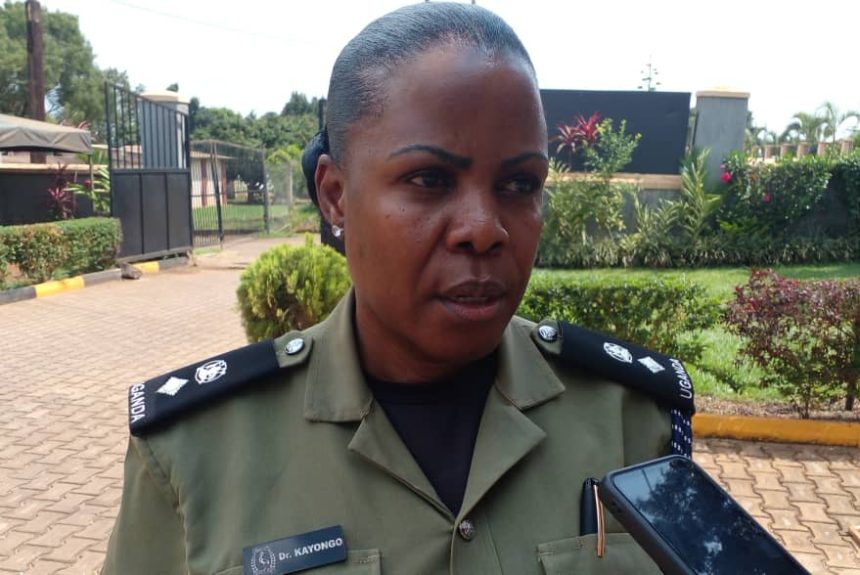
Speaking at the launch, SP Dr. Aisha Kayongo, Senior Police Officer in the Directorate of the Chief Political Commissar, said the innovation underscores the institution’s commitment to modernizing services and bridging the communication gap between the police and the public.
“This chatbot is expected to be an interaction tool where citizens can send in their questions and instantly receive guidance as though they were speaking directly to a police officer,” she explained.
The police chatbot, also referred to as the Digital Police Assistant, is designed to provide fast, accessible information to citizens. Through an AI-powered interface, users can ask common questions about police roles, procedures, and contacts and receive immediate responses.

The system aims to reduce the reliance on physical visits to police stations, particularly for queries that do not require in-person follow-up.
According to Dr. Kayongo, the launch is timely as the country prepares for the 2026 elections. “As a country, we expect to use this tool to support peaceful elections while ensuring security and stability. It will be especially useful for candidates, journalists, and ordinary citizens seeking clarity on the police’s role during the electoral process,” she noted.
The chatbot is pre-loaded with frequently asked questions relating to election security, candidate safety, and general law enforcement, ensuring that stakeholders can access clear and accurate information at any time.
Superintendent of Police George Mafuko, acting SSP in the Department of Research, Planning and Innovation, elaborated on the technical capabilities of the chatbot. He described it as a “first-line service assistant” that will initially be available through the official police website.

Plans are underway to integrate it with other institutional platforms such as government agencies such as URA and private companies , expanding access to users beyond traditional government portals.
Recognizing the country’s diverse demographics, the Uganda Police is also working to make the chatbot inclusive. Mafuko revealed that future upgrades will include SMS and voice support, allowing citizens without smartphones to interact with the system.
“Someone who cannot write will be able to speak in their language, and the chatbot will process and respond in kind. We are also exploring localization so that Ugandans who only speak Luganda, Runyankore, or other languages can still use the tool effectively,” he said.
Beyond elections, the chatbot is designed to provide general-purpose policing information. Whether it is guidance on how to respond to crimes such as domestic violence, assault, or theft, or simply finding the nearest police station, the tool will act as a management guide.

For example, a user reporting child abuse will not directly file the case through the chatbot but will be directed to the relevant station, hotline, or WhatsApp channel for follow-up. “It is not a reporting platform but a guide on how to manage events safely and effectively,” Mafuko clarified.
The Uganda Police believes that the chatbot will also enhance its community policing mandate by fostering greater collaboration and trust with citizens.
“For a long time, people in rural areas have lacked easy access to police information. This tool bridges that gap and allows us to work hand in hand with communities to build a safer country,” Dr. Kayongo emphasized.
The innovation highlights a broader trend of digital transformation in Uganda’s public sector, where artificial intelligence is increasingly being deployed to improve service delivery. By investing in such technologies, the police hope to strengthen transparency, improve public confidence, and enhance the speed of information sharing in times of need.
As Uganda heads into a politically charged period, the Digital Police Assistant is being positioned not just as a technological milestone but also as a national security tool.
“We must all work together to preserve our country’s peace and security,” Dr. Kayongo urged. “The chatbot is one step in ensuring that the public has the right information, at the right time, from the right source.”
With continued improvements, including multi-language support and cross-platform integration, the Uganda Police chatbot could become a model of digital policing in the region—one that redefines how citizens and law enforcement interact in the digital age.