



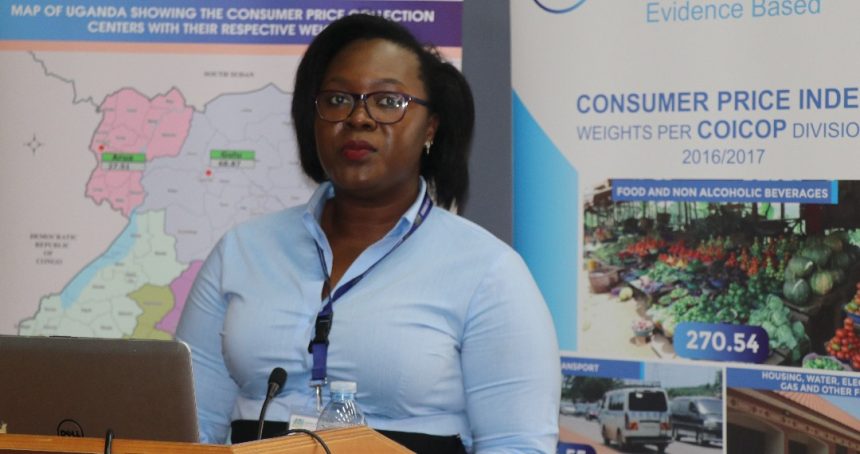
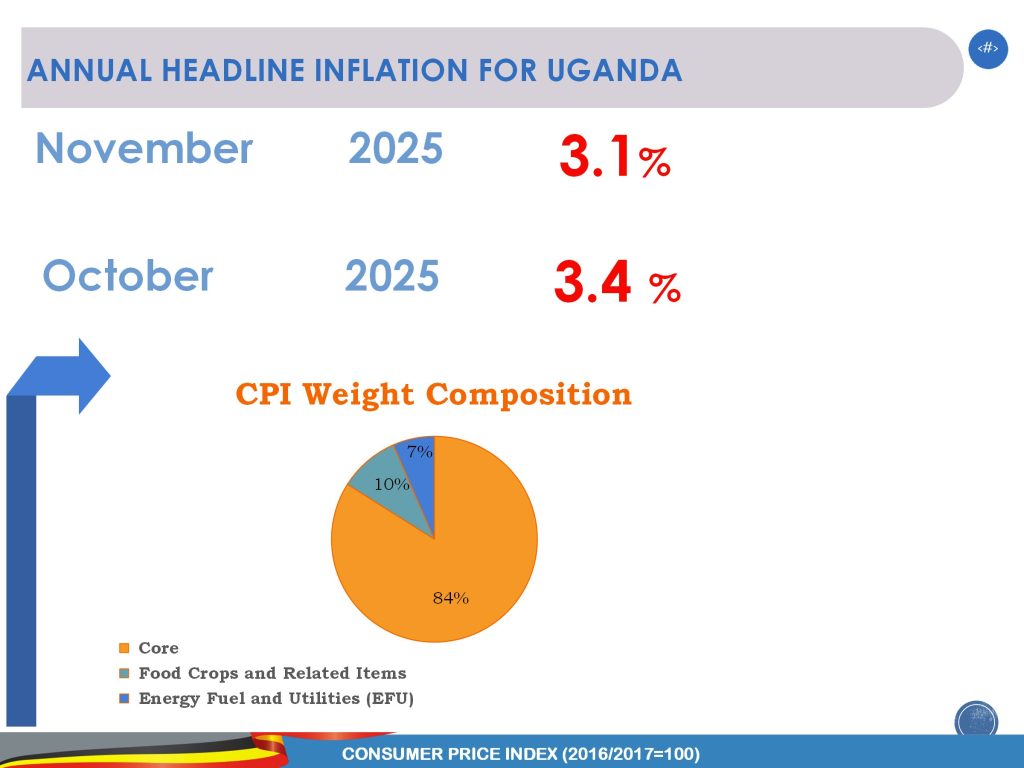
Uganda’s annual headline inflation slowed to 3.1 percent in November 2025, down from 3.4 percent in October, according to the latest Consumer Price Index (CPI) release from the Uganda Bureau of Statistics (UBOS).
Presenting the findings in Kampala, Principal Statistician Juliet Nakayenga said the country continues to experience rising prices, but at a noticeably slower pace than earlier in the year.
Nakayenga emphasized that the decline reflects easing pressures in key sectors, especially food crops and some core goods.
“Prices are still going up, but at a lower rate,” she noted, adding that core inflation — which excludes volatile items such as food crops and energy — also dropped to 3.2 percent from 3.4 percent in October. Core inflation, which accounts for about 84 percent of the CPI, remains the main driver of the national inflation trend.
Significant declines were recorded in prices of items like maize flour, sugar, fresh tilapia and beef, all of which showed reduced annual inflation rates compared to the previous month.
Services inflation within the core category also eased, with annual service inflation dropping to 4.2 percent from 4.5 percent in October. Air transport costs were notably cheaper, registering a –2.0 percent change compared to last year.
Food crops and related items, often influenced by weather and seasonal harvests, registered a substantial reduction in inflation, falling to 4.0 percent from 6.1 percent.
Items such as tomatoes, onions, mangoes, matoke, beans and papaya posted lower increases or outright reductions in price compared to both October and November last year. Nakayenga attributed this to improved market supply, especially for early-season produce like fresh beans.
Energy, fuel and utilities saw mixed movements, with the category rising to 0.6 percent from 0.1 percent, driven mainly by increases in firewood and diesel prices, though petrol prices continued to decline.
Regionally, Kampala High Income registered the highest inflation at 4.4 percent, followed by Masaka at 4.2 percent, while Mbale City recorded the lowest at 0.7 percent.
On a monthly basis, Uganda experienced a slight 0.1 percent reduction in overall prices, signaling short-term relief for consumers as food prices in particular continued to drop.