



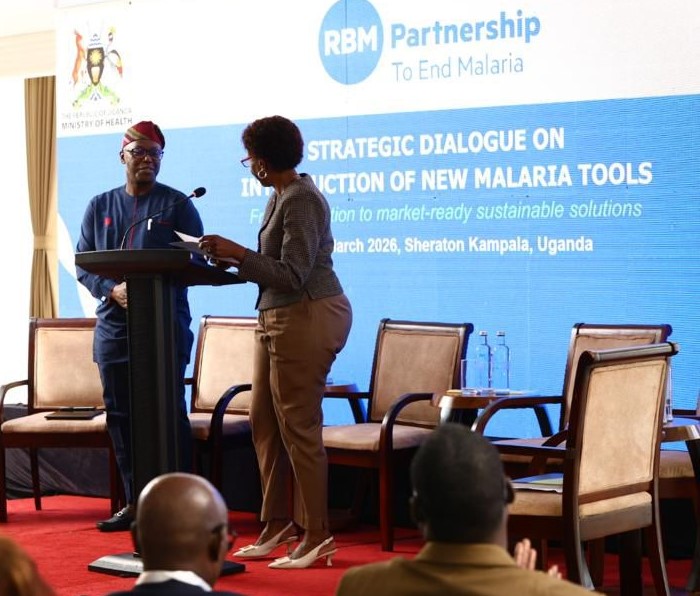
Uganda and its global partners are ramping up efforts to fast-track a new generation of malaria-fighting tools, raising fresh hope that one of the world’s deadliest diseases could be eliminated sooner than previously thought.
At a high-level strategic dialogue convened by the Ministry of Health Uganda in partnership with the RBM Partnership to End Malaria, experts warned that delays in deploying innovations could reverse years of progress against malaria, which still claims about 600,000 lives globally each year.
The meeting in Kampala brought together scientists, policymakers, donors and private sector players to map out how to move promising technologies from research pipelines into widespread, affordable use.
In recent years, malaria control has seen major scientific breakthroughs. Two vaccines approved by the World Health Organization are already being rolled out in parts of Africa, alongside dual-insecticide mosquito nets and improved treatments for infants.
Researchers are also developing long-acting injectable drugs that could offer months of protection, while innovations such as drones and artificial intelligence are helping track mosquito breeding grounds more precisely.
More experimental approaches, including gene-drive technology that alters mosquito populations to stop disease transmission, are also advancing, with African scientists playing a leading role.
Uganda’s Health Minister, Jane Ruth Aceng Ocero, said the country is committed to accelerating access to these tools, stressing that success will depend on sustained investment.
Experts caution, however, that the fight against malaria is entering a fragile phase. Rising resistance to drugs and insecticides, combined with climate change and conflict, could trigger a resurgence if interventions stall.
A 2025 report by RBM partners estimates that a collapse in prevention efforts could lead to nearly one million additional deaths and cost Africa up to $83 billion in lost economic output. Conversely, staying on track toward global malaria targets could unlock as much as $230 billion in economic gains by 2030.
RBM CEO, Michael Adekunle Charles, described the current moment as pivotal, calling for a coordinated “Big Push” to align funding, political will and innovation.
Participants at the Kampala dialogue emphasized that stronger cross-border collaboration and increased financing will be critical to ensure new tools reach the communities that need them most, turning scientific promise into real-world impact.