



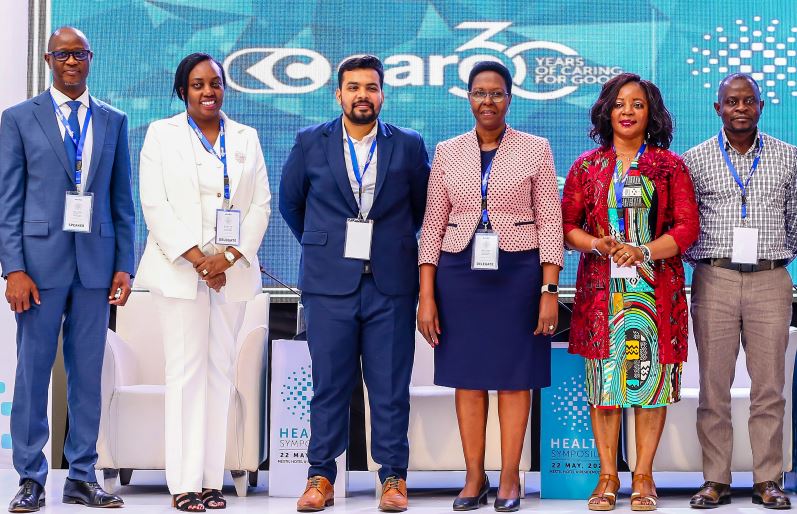
Healthcare leaders, researchers, and medical specialists gathered in Kampala this week for the 2026 C-Care Health Symposium, where conversations focused on how Uganda’s health sector can adapt to rising disease burdens, growing patient expectations, and rapid technological change.
Held at Mestil Hotel & Residences under the theme “Evolution in Healthcare: From Innovation to Excellence,” the symposium brought together surgeons, physicians, radiologists, nurses, policymakers, and academics for discussions on the future of healthcare delivery in Uganda.
Organised by C-Care Uganda, the event explored how innovation, specialised medicine, and patient-centred care can help strengthen health systems in Uganda and across East Africa.
The discussions come at a time when Uganda’s healthcare sector faces increasing pressure from both communicable and non-communicable diseases.
According to the Ministry of Health, non-communicable diseases account for nearly a third of deaths in Uganda, while the World Health Organisation estimates that Africa carries 24 per cent of the global disease burden despite having only 3 per cent of the world’s health workers.
Those realities shaped much of the symposium’s dialogue, with speakers repeatedly emphasising the need for healthcare systems that are technologically advanced, resilient, affordable, and humane.
Throughout the day, experts led sessions on internal medicine, radiology, neurosurgery, laboratory diagnostics, nursing practice, and emergency medicine. Research abstracts presented during the symposium also highlighted emerging trends in Ugandan healthcare, including the growing role of digital medicine and integrated care systems.
One of the key presentations was delivered by renowned surgeon and academic Moses Galukande, who challenged healthcare professionals to embrace innovation as an essential part of modern medicine.
“The future of healthcare will not only be determined by the sophistication of our technology, but by how intentionally we use innovation to solve everyday patient challenges,” Prof. Galukande said.
He added that healthcare excellence should be measured through responsiveness, adaptability, research, empathy, and continuous improvement, especially in low-resource settings where access to advanced treatment remains limited.
Prof. Galukande also stressed the need for Uganda to invest more heavily in mentorship, research, and local scientific innovation to reduce dependence on imported medical solutions.
Another major theme during the symposium was the growing importance of multidisciplinary collaboration. Sessions on radiology and internal medicine examined how early diagnostics and coordinated care models are improving treatment outcomes for chronic illnesses.
Discussions around emergency and trauma care highlighted the mounting pressure facing hospitals as road traffic injuries continue to rise. According to the Uganda National Institute of Public Health, road accidents remain among the leading causes of death in the country, with emergency units experiencing increasing demand due to urbanisation and motorisation.
Speaking as Guest of Honour, Rosemary Byanyima commended the symposium for creating a platform where healthcare professionals could openly discuss the future of medicine in Uganda.
“Healthcare is evolving globally, and Uganda cannot afford to remain static,” Dr Byanyima said. “We must continue investing in innovation, training, research, and strong health systems that put patients first.”
She also called for stronger collaboration between public and private healthcare institutions to bridge service delivery gaps and improve access to specialised care.
A panel discussion moderated by Sheila Aboth, Manager Brand Experience at C-Care Uganda, focused on healthcare financing sustainability and brought together Dr Andre Mugalu, Dr Miriam Musinga, Dr Isaac Musubu, and Dr Kevin Maracha.
The panelists stressed the need for sustainable financing models capable of making advanced healthcare more affordable and accessible. They also highlighted preventive healthcare, innovation, and partnerships between insurers, policymakers, and private healthcare providers as critical to improving healthcare access in Uganda.
Delivering closing remarks, the Chief Executive Officer of C-Care East Africa called for stronger collaboration between government, academia, and private healthcare providers to drive long-term improvements in patient care.
“What healthcare needs today is collective intelligence,” the CEO said. “Innovation becomes meaningful when it improves access, shortens recovery time, enhances diagnosis, and ultimately restores dignity to patients.”