



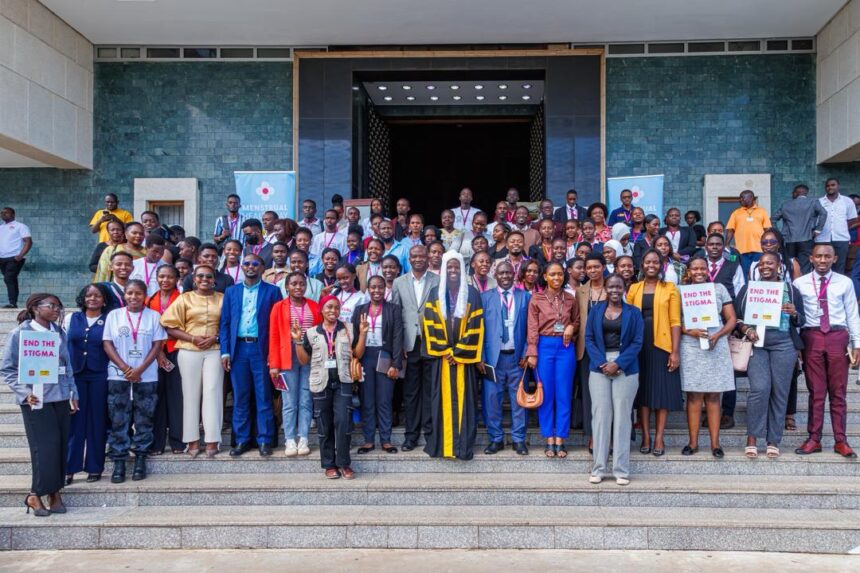
Young people from across Uganda have called on Parliament and government leaders to urgently prioritise menstrual health financing, strengthen policy implementation, and improve access to affordable menstrual products ahead of Menstrual Hygiene Day on May 28.
The call was made during the Youth Mock Parliament on Menstrual Hygiene Management held at the Parliament of Uganda on Friday, May 22, 2026.
The high-level engagement, organised by the Parliament of Uganda in partnership with AHF Uganda Cares, World Vision, United Nations Population Fund and several civil society organisations, was held under the theme: “Menstrual Hygiene in the Spotlight: Advancing Policy and Financing for Dignified Menstruation and Equitable Access.”
The youth-led session brought together Members of Parliament, development partners, government officials, civil society actors, students, and young advocates to discuss persistent menstrual health challenges affecting girls and young women in Uganda.
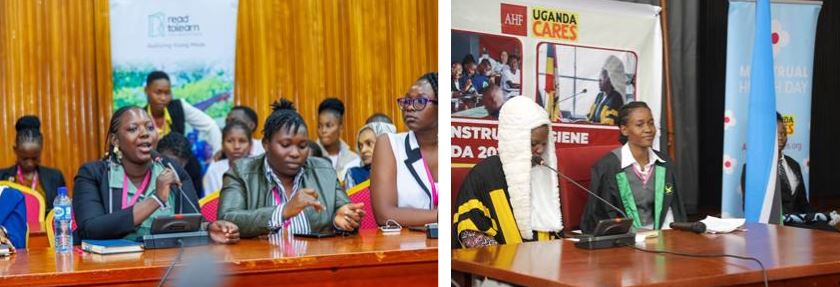
Key concerns raised included period poverty, stigma, inadequate sanitation facilities, limited menstrual health education, and insufficient funding for menstrual hygiene management programmes.
Speaking during the opening session, Henry Magala, Country Program Director at AHF Uganda Cares, said menstrual hygiene management should not be treated solely as a health issue but also as a matter of education, gender equality, economic empowerment, and human rights.
He noted that many girls, particularly in rural and low-income communities, continue to miss school during menstruation due to lack of sanitary products and safe hygiene facilities.
During the plenary discussions, Mercy Akello Phiona, a Girls Act member at AHF Uganda Cares, highlighted the daily struggles faced by girls who cannot afford sanitary products.
“Many girls continue to miss school because they cannot afford sanitary pads. Some are forced to use unsafe materials like old cloths and tissue paper, while others suffer in silence due to stigma and shame. Menstrual health should never determine whether a girl stays in school or not,” she said.
Akello urged government leaders to move beyond symbolic conversations and invest in sustainable solutions that protect the dignity and future of girls and young women.
According to an issues paper presented during the engagement, nearly one in five girls in Uganda miss school during menstruation because of lack of menstrual products, pain, stigma, and poor sanitation facilities.
Participants also raised concerns over the high cost of sanitary pads, inadequate WASH facilities in schools, lack of private changing spaces, and harmful cultural beliefs surrounding menstruation. The youth delegates called for dedicated national and district budget allocations for menstrual health programming, as well as increased investment in the local production of affordable sanitary products.
Speaking at the event, Silas Aogon commended the young people for boldly raising issues affecting girls and women across the country.
“Menstrual health is not a private burden for girls to carry alone; it is a national development issue that requires policy attention, financing, and collective action. We must listen to the voices of young people and ensure that no girl is left behind because of menstruation,” Aogon said.
He further called on Parliament to strengthen oversight and accountability on menstrual health commitments, particularly in relation to school sanitation, access to menstrual products, and implementation of existing government pledges.
The Youth Mock Parliament mirrored formal parliamentary proceedings while placing young people at the centre of leadership, dialogue, and decision-making on menstrual health priorities.
Through plenary debates and committee discussions focusing on health, education, gender, and financing, participants developed several recommendations, including increased funding for menstrual health programmes, improved sanitation facilities in schools and public spaces, access to free or subsidised menstrual products for vulnerable girls, comprehensive menstrual health education, and greater involvement of boys, men, parents, and community leaders in ending menstrual stigma.
The engagement concluded with renewed commitments from legislators, development partners, and youth advocates to continue pushing for menstrual health to be recognised as a national development priority tied to education, health, gender equality, and the dignity of girls and women in Uganda.