



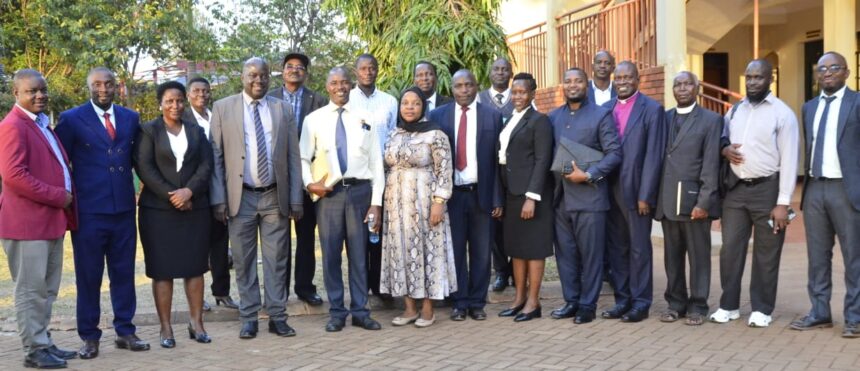
More than 300 inmates at Masindi Government Prison have applied for plea bargains in one of Uganda’s largest prison-based criminal justice exercises, highlighting the Judiciary’s growing reliance on Alternative Dispute Resolution (ADR) to tackle case backlogs, reduce prison congestion and deliver faster justice.
The three-day plea bargain camp, which ran from July 8 to July 10, brought together High Court judges, magistrates and judicial officers to hear hundreds of pending criminal cases, many involving capital offences that have remained before the courts for years.
According to the Judiciary, the prison camp is handling some of the region’s most serious crimes, including about 100 murder cases, 54 aggravated robbery cases, 36 rape cases and nine aggravated trafficking cases.
By the end of the first day alone, judges had already disposed of 83 cases, demonstrating the speed at which plea bargaining can resolve criminal matters compared to the traditional trial process.
The exercise is being led by Justice Jane Okwo Kajuga, the Judiciary’s Plea Bargain Focal Judge, alongside Justice Prof. Andrew Khaukha, the Alternative Dispute Resolution Focal Judge and Executive Director of the Judiciary Training Institute.
They are joined by Resident Judges Mary Babirye, Vincent Opyeno and Johnson Karemani, while Masindi Chief Magistrate Gumtwero Olal is handling the committal of capital cases that had not yet reached the High Court.
Plea bargaining is a legally recognised process under Uganda’s criminal justice system in which an accused person voluntarily agrees to plead guilty, often in exchange for a negotiated sentence or the withdrawal of certain charges, subject to court approval.
Unlike mediation, which mainly resolves civil disputes, plea bargaining applies to criminal cases and requires the accused to admit responsibility voluntarily after understanding the legal consequences.
A judge must also be satisfied that the plea is made freely and that the agreement serves the interests of justice before it is adopted.
The Judiciary has increasingly promoted plea bargaining as a practical response to Uganda’s heavy criminal case backlog.
Court records show that more than 10,000 cases were concluded through plea bargaining during the previous financial year, significantly reducing the time suspects spend on remand while saving judicial resources that would otherwise be consumed by lengthy trials.
Masindi High Court Registrar Juliet Nakitende said the court is still managing 336 pending criminal cases, underscoring the need for wider public acceptance of ADR mechanisms.
The prison exercise was complemented by a meeting between the Judiciary and court-annexed mediators from Masindi and Hoima, where ADR Registrar Justine Atukwasa warned mediators against soliciting payments from litigants.
She stressed that mediation services must remain lawful, transparent and free from extortion, cautioning that charging parties could result in disciplinary action and the cancellation of accreditation.
Legal analysts say the twin approach of expanding plea bargaining in criminal cases and mediation in civil disputes reflects a broader shift in Uganda’s justice system towards resolving cases more efficiently without compromising fairness.
However, they argue that sustained public sensitisation, judicial training and adequate funding will be essential if ADR is to meaningfully reduce case backlogs while preserving public confidence in the administration of justice.