



By Namutebi Phiona
The Minister of State for Primary Education, Phyllis Chemutai, has expressed concern over the persistent violence against learners in schools, saying the continued abuse of children threatens their safety, well-being and ability to learn.
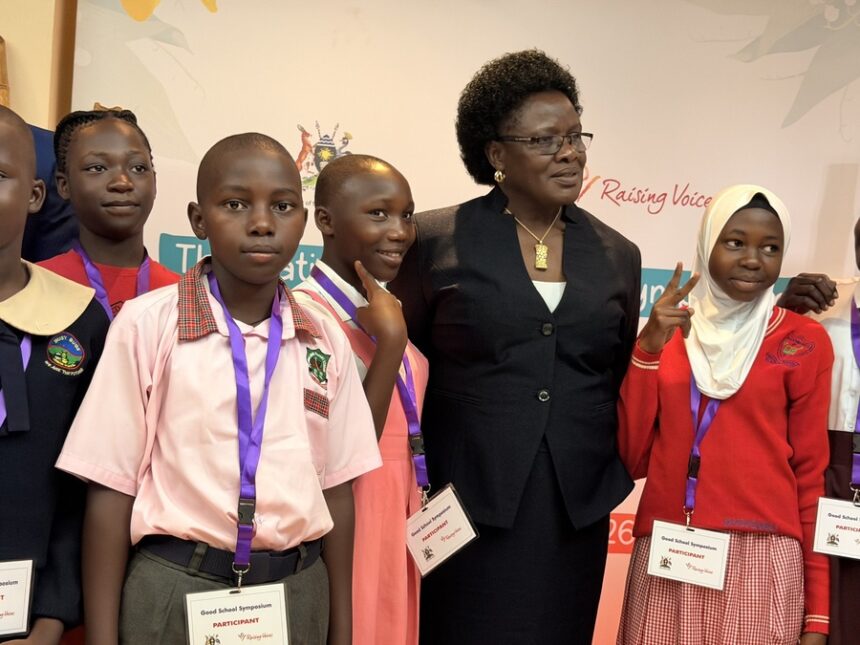
Speaking at the two-day National Good School Symposium, Chemutai said that although Uganda has made significant progress in strengthening child protection through laws, policies and guidelines, many learners continue to experience violence in schools.
She cited corporal punishment, sexual abuse, bullying and other forms of mistreatment as practices that continue to undermine children’s rights and negatively affect their academic performance.
The minister called on school administrators, teachers, parents and education stakeholders to work collectively to eliminate violence from learning institutions and create environments where every child feels safe, respected and supported.
She said schools must move beyond academic excellence and place equal emphasis on protecting learners, noting that a secure and inclusive environment is essential for children to realise their full potential.
Chemutai also warned schools operating without meeting the required child protection standards, particularly privately owned institutions, saying non-compliance exposes learners to unnecessary risks and weakens national efforts to improve education outcomes.
She urged school proprietors and administrators to fully implement government child protection policies and establish mechanisms that safeguard the rights, dignity and welfare of every learner.
According to the minister, compliance with child protection standards should not be viewed as a regulatory requirement alone but as a fundamental responsibility for every institution entrusted with the education and care of children.
Education experts have consistently warned that violence in schools contributes to absenteeism, poor academic performance, school dropout and long-term psychological effects on learners, making prevention an important component of improving education quality.
Meanwhile, child rights advocates called for more strategic and accountable use of the limited resources available to combat violence against children in schools.
Mastula Nakiboneka, Technical Manager for the Violence Against Children Prevention Department at Raising Voices, said inadequate funding remains one of the biggest challenges facing violence prevention programmes. However, she noted that effective planning and accountability can ensure the available resources produce meaningful and sustainable results.
Nakiboneka urged government agencies, development partners and education stakeholders to prioritise investments in interventions that have proven effective, including teacher training, strengthening school child protection systems and promoting positive discipline approaches that discourage the use of violence.
She added that building the capacity of teachers and school leaders to identify, prevent and respond to cases of abuse is critical to creating safer learning environments.
Participants at the symposium also highlighted the importance of collaboration among government institutions, schools, civil society organisations, communities and development partners in addressing violence against children.
They noted that protecting learners requires sustained commitment, adequate investment and stronger accountability mechanisms at all levels of the education system.
The National Good School Symposium brought together government officials, education stakeholders, civil society organisations and development partners to share experiences and discuss practical strategies for preventing violence in schools and promoting positive school cultures.
The meeting focused on identifying sustainable approaches to strengthen child protection systems, improve learner welfare and ensure that schools across Uganda become safe, inclusive and supportive environments where every child can learn free from fear, abuse and discrimination.