



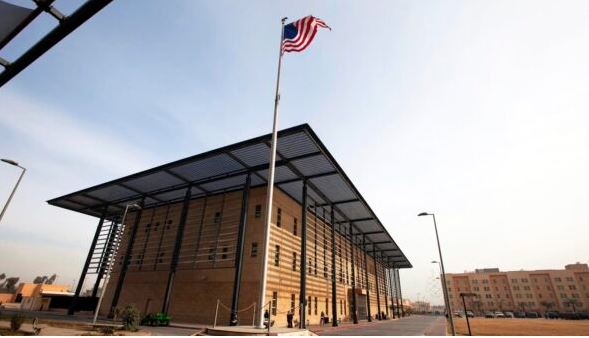
The U.S. State Department has directed all American embassies within range of Iranian retaliation — spanning the Middle East, Eastern Europe, and North Africa — to convene Emergency Action Committees (EACs) and report on measures to mitigate risks amid escalating tensions in the region.
The move follows intelligence suggesting Israel may unilaterally strike Iranian nuclear facilities, a scenario that could provoke widespread instability. As a precaution, the U.S. Embassy in Baghdad is preparing to evacuate nonessential staff, according to officials cited by the Associated Press.
“We are constantly assessing the appropriate personnel posture at all our embassies,” a State Department official said, citing a decision to reduce the footprint of the U.S. mission in Iraq.
The Washington Post reports that the Pentagon has approved the voluntary departure of military families across the region, while the U.S. remains on “high alert.”
President Donald Trump, whose administration has been negotiating with Iran over its nuclear program, acknowledged waning optimism. “I’m less confident now than I would have been a couple of months ago,” he told the New York Post. “Something happened to them.”
U.S. Central Command has delayed congressional testimony by General Michael Kurilla as military readiness intensifies. The Trump-imposed deadline on nuclear negotiations expires today, with Sunday’s scheduled sixth round of talks in Oman now uncertain.
A senior diplomat told WaPo, “We think it’s more serious than any other time in the past.”
Global markets reacted swiftly, with oil and gold prices surging on the news. Meanwhile, Iran urged diplomacy, stating, “Iran is not seeking a nuclear weapon, and U.S. militarism only fuels instability.”
As diplomatic channels narrow, the region braces for potential conflict.
Source:Agencies