



African leaders have issued a stark warning that without urgent and sustainable financing, the continent risks reversing decades of gains in the fight against malaria, as new data shows progress has stalled and funding is shrinking.
At the 39th African Union Summit in Addis Ababa, the African Union’s 2025 Malaria Progress Report revealed that member states accounted for 270.8 million malaria cases in 2024—96 percent of the global burden—and 594,119 deaths, representing 97 percent of global fatalities.
Since 2015, progress has largely stagnated, with only five countries meeting the 2025 targets under the AU Catalytic Framework to End AIDS, TB and Eliminate Malaria by 2030.
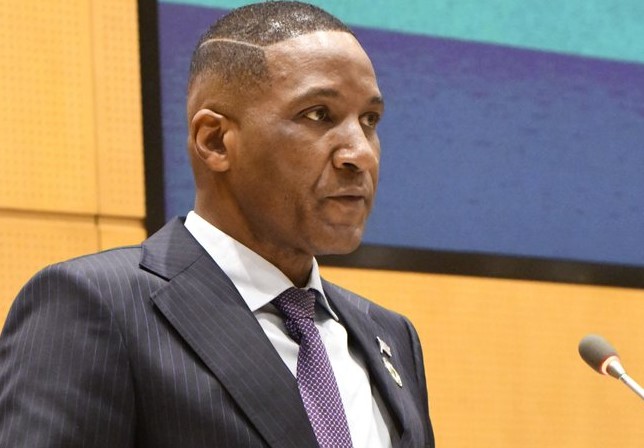
Presenting the report, President Advocate Duma Gideon Boko of Botswana, Chair of the African Leaders Malaria Alliance, warned that a 30 percent reduction in malaria funding would have devastating consequences.
The continent could see 146 million additional cases, 397,000 more deaths—three quarters among children under five—and a $37 billion loss in GDP by 2030. Cases could surge beyond 400 million annually, with deaths surpassing one million each year.
The financing crisis is already visible. Official development assistance for health in Africa has declined by 70 percent in just four years, while the latest replenishment of the Global Fund fell short of its $18 billion target.
Leaders are now calling for a renewed World Bank Malaria Booster Programme, similar to the 2005–2010 initiative that committed more than $1 billion and delivered transformative results.
In response, African governments are pledging increased domestic resource mobilisation, innovative financing mechanisms and national health financing sustainability plans.
End Malaria Councils and Funds in 12 countries have mobilised over $200 million through public-private partnerships, signalling a shift toward multisectoral financing models that engage the private sector, philanthropies and the diaspora.
Investment in next-generation tools is also accelerating. In 2025, 74 percent of insecticide-treated nets distributed were dual active-ingredient nets, significantly more effective against resistant mosquitoes.
Twenty-four countries have introduced WHO-approved malaria vaccines for children under five, with 28.3 million doses distributed last year.
Leaders also stressed health sovereignty, noting that Africa imports 99 percent of its vaccines and 95 percent of its medicines. Countries such as Nigeria are pursuing local production of antimalarial treatments and diagnostics, while the African Medicines Agency is harmonising regulatory systems to speed up access to new commodities.
Health experts estimate that fully funding and deploying existing and new tools could save 13.2 million lives over the next 15 years and boost African economies by more than $140 billion.
With returns of $19 for every dollar invested through the Global Fund, leaders argue that malaria financing is not just a health imperative but an economic strategy.