



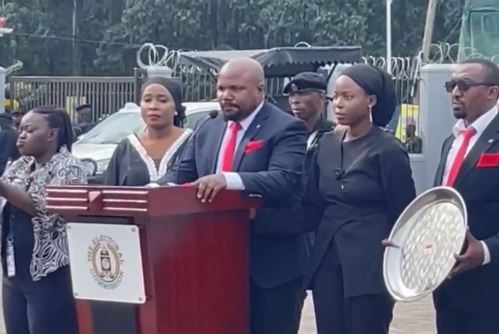
Common Man’s Party presidential candidate Mubarak Munyagwa has pledged sweeping policy changes, including abolishing the use of Swahili in Uganda’s education and public systems.
Speaking on the campaign trail, Munyagwa argued that Swahili—recently made a compulsory subject in schools and adopted as an official language—offers limited benefit to Ugandans. Instead, he proposed replacing it with French, which he said would unlock broader international opportunities in trade, diplomacy, and education.
“French is spoken across many parts of Africa and Europe. If we embrace it, our children will have more doors open for them on the global stage,” Munyagwa told supporters.
The former legislator also took aim at Uganda’s immigration policies, vowing to deport foreigners he claims are residing in the country illegally. He accused them of exploiting local resources while contributing little to national development.
“Our people are struggling to find jobs and affordable land, yet illegal foreigners are reaping where they did not sow. This must end,” he declared.
Munyagwa’s proposals are already stirring debate. Advocates of Swahili say the language is key to fostering regional integration within the East African Community, where it is widely spoken. Critics, meanwhile, warn that mass deportations could strain Uganda’s foreign relations and hurt investment.
As campaigns heat up ahead of next year’s elections, Munyagwa’s pledges signal a populist strategy aimed at appealing to frustrations over unemployment and sovereignty, while challenging government policies on language and immigration.
There are rising concerns of increasing numbers of Eritreans,Somalis,South Sudanese and Chinese all of whom are accused of dominating the trade and real estate sector.
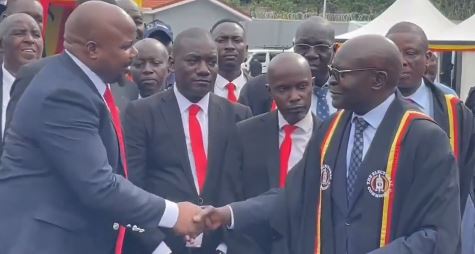
Following his nomination,he has been provided with a security vehicle and bodyguards for his protection, as a standard operation procedure for duly nominated presidential candidates.
Electoral Commission Chairperson Justice Simon Byabakama states that the Commission will cover both the salaries of the bodyguards and the fuel for the vehicle.