



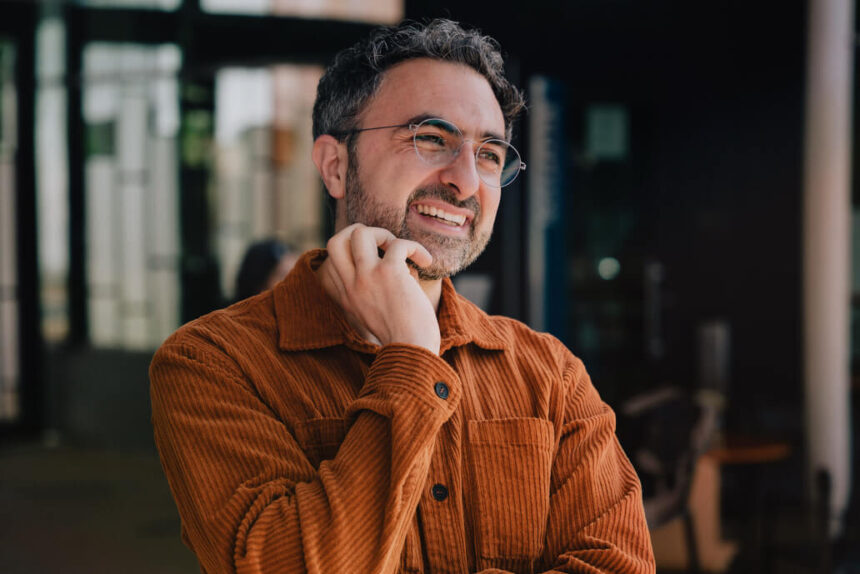
Microsoft AI CEO Mustafa Suleyman has delivered a stark warning to the artificial intelligence industry: don’t confuse control with cooperation.
Critiquing the race toward superintelligent systems, Suleyman argues that companies are dangerously blurring the line between containment—actually limiting what AI can do—and alignment, which focuses on ensuring AI acts in humanity’s best interest.
“You can’t steer something you can’t control,” Suleyman wrote in a recent post on X. “Containment has to come first—or alignment is the equivalent of asking nicely.” His message underscores a fundamental challenge in AI development: before teaching these systems to want the right things, we must first ensure we can prevent them from doing the wrong ones.
Suleyman stresses that containment and alignment are often mistakenly treated as interchangeable. Containment enforces limits and restricts AI’s agency, keeping systems within safe boundaries. Alignment, by contrast, ensures AI acts according to human values. Attempting alignment without strong containment, Suleyman warns, is putting the cart before the horse.
In his essay “Towards Humanist Superintelligence”, published on the Microsoft AI blog, Suleyman outlines a vision that prioritizes human control and targeted, domain-specific applications over autonomous, general-purpose systems.
Speaking to Bloomberg in December, he described containment and alignment as “red lines” that no company should cross—an approach he acknowledges is still novel in the industry.
Suleyman’s approach, dubbed Humanist Superintelligence, focuses on practical applications such as medical diagnostics and clean energy solutions rather than pursuing unrestricted artificial general intelligence.
Microsoft AI recently achieved an 85% success rate on the New England Journal of Medicine’s challenging case studies—compared with roughly 20% for human doctors.
Since joining Microsoft 18 months ago, the former DeepMind co-founder has been building a superintelligence research team aimed at keeping humans in control.
With the revised OpenAI agreement enabling independent development, Suleyman is positioning Microsoft to demonstrate that domain-specific AI can deliver superintelligent capabilities while avoiding the most severe risks of runaway systems.