



Uganda’s financial markets sit at an important inflection point. As global financial conditions tighten and investors become more selective, market depth, transparency and product diversity have emerged as decisive factors in attracting capital.
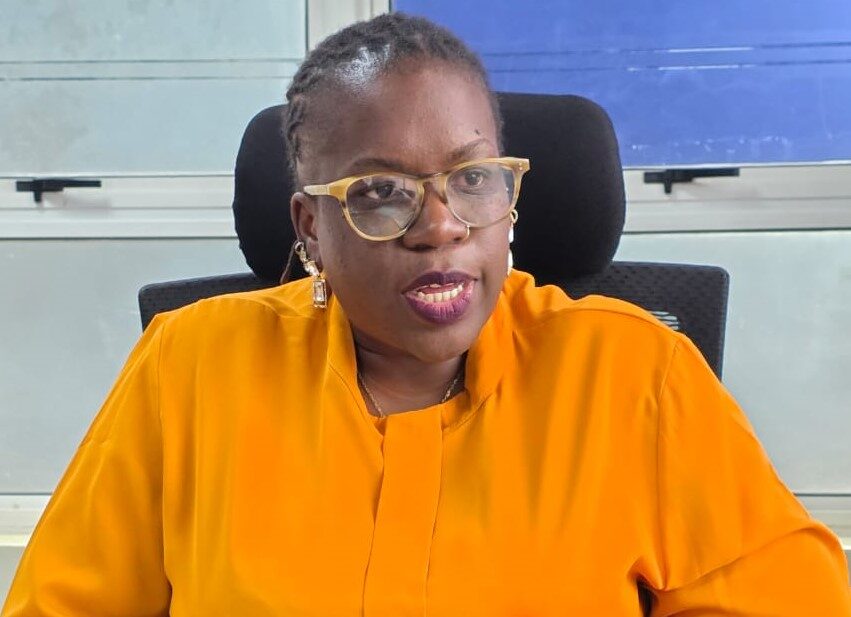
In a wide-ranging interview with The Highflyer Report, Catherine Kijjagulwe, Head of Trading at Absa Bank Uganda, speaks to Edwin Muhumuza, a journalist at The Highflyer Report, on the structural constraints holding back liquidity, while outlining reforms that could significantly elevate Uganda’s standing in Africa’s financial ecosystem based on the Absa African Financial Markets Index 2025
……………………………………………………………………………………………………………………………………………………….
Q1: Liquidity remains a key challenge across Africa. From Uganda’s perspective, what are the main structural constraints limiting liquidity in our equity and bond markets, and how can they be addressed in the short to medium term?
From Uganda’s perspective in terms of liquidity, equity and bond markets, one of the key challenges that we’ve seen, I think, for Uganda, especially in the capital markets, we have limited securities that are listed, so investors do not have a variety of instruments to invest in. And then we’ve also seen heavy reliance on some investors, specifically having a large holding of the securities that are already listed, so there’s minimal trading.
A key for the capital markets is for us to have more diversified instruments as we continue to educate the public on the benefits of investing in the capital markets. This also covers the bond markets where they still need to continue educating, especially the retail investors, on the benefits of investing in the bond markets, but then also the ability to be able to trade these instruments in the secondary market as we continue to also attract offshore investors. And then also look at other products like corporate bonds being listed in our market that will also attract some liquidity, and even ESG bonds, which other markets have adopted infrastructure bonds.
So this diversity in instruments can therefore also enhance the liquidity in the market, but key also is to continue educating about the benefits such that we have a bigger pool of investors also participating in these markets.
Q2: Uganda is among the four new countries to adopt the FX Global Code. How significant is this step for improving investor confidence and foreign capital flows into Uganda’s financial markets?
When we look at the FX Global Code of Conduct, this is a code of conduct that has been adopted globally by most of the countries. It provides transparency and also guides traders and dealers in being ethical as they conduct transactions with investors, so it’s very key in improving investor confidence in markets where they’re dealing, especially in financial instruments, because it’s usually overseen by the regulators who ensure that there’s no activity that’s against investors, and it is actually guided by the norms of the Global Code of Conduct, so it is very key in improving investor confidence.
Q3: Despite global tightening financial conditions, some markets have expanded product diversity through ESG bonds and repurchase agreements. Where does Uganda currently stand in innovating its financial instruments, and what gaps still exist?
When we look at Uganda in terms of innovating and its financial instruments, we see that Uganda, yes, has adopted the ESG framework. A number of workshops and papers have been written to have green bonds issued. However, we haven’t yet seen these instruments being actively issued in the market yet, but the groundwork has been done, and the capital markets, Bank of Uganda, and other stakeholders are really keen to see how we can then have these instruments come through such that we see an uptick in these ESG instruments, because the frameworks have already been put in place in terms of monitoring and ensuring that these products are actually guided by the frameworks that ensure that they are for climate financing or sustainability financing.
So it’s just a matter of implementing and actually coming out to issue these instruments such that investors are able to start investing, and they need to identify which projects will be covered by these instruments. Others, the frameworks have been put in place.
Q4: Pillar 1 shows declining scores for many countries due to weakened market depth. How vulnerable is Uganda to these pressures, and what policy actions could help cushion the domestic market from global volatility?
When we look in terms of market depth and how Uganda would be vulnerable from global volatility, of course Uganda is impacted by anything that happens globally. When we look at government securities like the Bank of Uganda Governor highlighted, we have offshore investors with about 14 percent holding in our government securities. So anything that happens globally can definitely impact our market. But the advantage that the Ugandan market has so far as one of the markets in Africa is that it’s a liberalized FX regime, so investors who deploy their capital are still able to easily get these capital flows out of the market.
The Bank of Uganda has kept the currency free-floating, and they usually just come in to intervene in terms of significant volatility, basically for price stability. So we’ve continued to see this liberalized market as a positive for Uganda when we look at it. But then the other thing in order to enhance the market depth for Uganda, like we mentioned earlier, we need more instruments, because offshore investors are always looking for diversity. So if we’re able to diversify and see more instruments issued, either on the capital or financial markets, then we may not be very adversely impacted by anything that happens globally, and that will also increase our market depth.
Q5: Under Pillar 2, reserve adequacy and interbank liquidity declined in several economies. How well-positioned is Uganda’s central bank to manage sudden capital outflows or FX market stress?
When we look at reserves, we have seen Bank of Uganda proactively build the country’s reserves. These had gone down earlier in the year, but they’ve been in to either purchase dollars or come up with instruments like the cross-currency repos, where they’ve been able to build these reserves to about 4.2 months of import cover, which cushions Uganda against any sudden capital outflows, and it’s able to meet any of its commitments with sufficient reserves.
They continue to build these reserves either through their auctions, but then also looking at other instruments that they can use to build their reserves, and then also the gold program that they’ve been speaking about as another initiative to be able to enhance the reserves for the country. And then as we also start to see inflows coming in from oil, we may continue to see a build-up in these reserves and also continued offshore activity coming into our market.
Q6: Uganda recorded a five-point improvement under Pillar 6 after expanding use of the Global Master Repurchase Agreement. What practical impact does this have on market efficiency and participation by international counterparties?
When we look at Pillar 6, speaking about adoption of legal documentation, like the Global Master Repurchase Agreement, so the advantage of having the Global Master Repurchase Agreement is in diversity of instruments that the market can trade in.
With the Global Master Repurchase Agreement, market participants can participate in repos, which would enhance the products in the financial markets, but also with the growth in a repo market, it also increases the growth in the secondary market activity in government securities. And we’ll also continue to see offshore investors who actively trade in these products continuing to come through.
In addition, also the ISDA, International Swaps and Derivative Association Agreement, also enables market players to participate in instruments like the FX swaps, which also help in market liquidity and also increasing the depth and also an instrument that offshores usually like to transact in.
Q7: Transparency and ESG integration are becoming increasingly important for investors. How is Uganda progressing on financial market transparency and ESG disclosure, especially compared to regional peers?
Uganda is making progress, especially with the ESG frameworks already in place. While we haven’t yet seen active issuance of these instruments, the groundwork, monitoring frameworks, and stakeholder engagement are already there. This positions Uganda well relative to regional peers and sets the stage for eventual issuance and improved transparency.
Q8: With pension fund assets declining relative to listed securities in many countries, how can Uganda better leverage domestic institutional investors to deepen capital markets and support long-term financing?
One of the things, of course, still key is education of the masses to be able to save, first of all, but how can we encourage them to save? We also need to see that there’s increased livelihoods, the livelihoods are improved of the population and government has started to come up with a number of programs like the Parish Development Model and other initiatives to see that it’s able to enhance especially the key sector, which is agriculture, such that people are able to have better livelihoods. That would enable them to be able to set aside some money as savings and as a result be able to invest in some instruments, either unit trusts or government securities, and this would definitely support long-term financing, especially the government bonds, which would be able to support the government’s long-term financing.
But then also as the market deepens and we have more instruments in the capital markets and equities, then investors become more and more sophisticated and we’ll see some of these savings targeting some of these other investments in the capital markets.
Q9: Mobile and online access to domestic financial assets is improving across Africa. How transformative can digital access to capital markets be for Uganda, particularly in broadening retail investor participation?
Digital access is also another key one, especially for retail investors. We’ve seen significant growth in the number of people who utilize mobile money. Bank of Uganda now coming up with Okusevinga, initially a pilot where it’s a unit trust where clients can utilize their mobile money balances and be able to invest, and we’ve also seen a number of fund managers coming up with unit trusts where investors can save from their mobile money.
The next step will be to move into investments in government securities from their mobile phones, which will also increase investor participation by ease of access to the auctions by just a click on their mobile phones, and that will also definitely grow the investor base because smaller amounts indeed can grow into a large volume as more and more investors become aware of the benefits and the return that they can earn from their mobile money balances.
Q10: Looking ahead, which two or three reforms would have the biggest impact on improving Uganda’s ranking in the Absa Africa Financial Markets Index over the next few years, and why?
One of them, like we’ve spoken about, we need a diversity of instruments on the capital markets, on the financial markets, if we can see more and more instruments that increase the market depth, that should improve Uganda’s ranking, and then also in terms of the pension, we need a bigger investor base, more education of the masses about the benefits of saving and investing, but especially mostly investing in instruments in the capital and the financial markets, that would be also very key for Uganda. And then being able to adopt some of the ESG instruments for the Ugandan market, since we already have the framework, I think that would also continue to improve Uganda’s ranking in the ABSA Africa Financial Markets Index.