



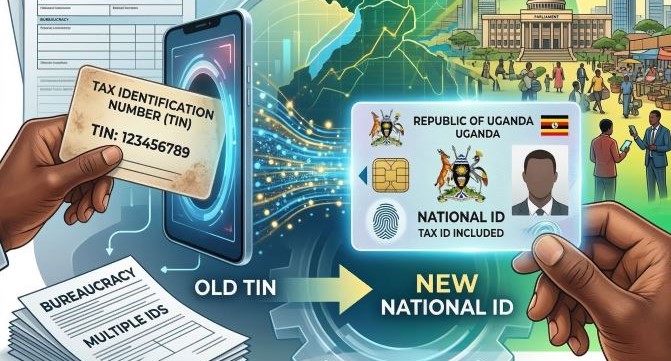
A quiet but far-reaching reform inside Uganda’s tax administration is set to reshape how millions of businesses and individuals interact with the government.
The Uganda Revenue Authority (URA) is moving to replace the long-standing Tax Identification Number (TIN) with the National Identification Number (NIN), effectively merging multiple government identity systems into a single digital identifier.
On paper, the reform appears straightforward: one number for taxes, licenses, payments, and other government services. But behind the policy lies a deeper strategy to widen Uganda’s tax net and tighten oversight of economic activity.
Currently, individuals and businesses must navigate a maze of identification numbers issued by different agencies. URA maintains its own taxpayer database, while the National Identification and Registration Authority manages the national identity system. Under the new framework, citizens will simply use their NIN when interacting with the tax system.
Officials argue the reform will eliminate duplicate records, reduce tax evasion and simplify compliance. Uganda currently has about 4.8 million registered taxpayers, a figure authorities want to expand significantly as government spending pressures increase.
But analysts say the implications go far beyond administrative efficiency.
By linking taxation directly to the national identity system, the government effectively gains a powerful tool to track economic participation across sectors—from employment and property ownership to digital payments and licensing.
Supporters say the system will streamline government services and support the country’s push toward a digital economy under the Vision 2040 strategy.
Critics, however, warn that the reform could also expose gaps in Uganda’s national ID coverage. Millions of citizens remain without updated biometric registration, meaning they may struggle to access financial or regulatory services tied to the new system.
As the reform rolls out, the real question is whether it will simplify doing business—or quietly become the state’s most powerful tax enforcement tool.