



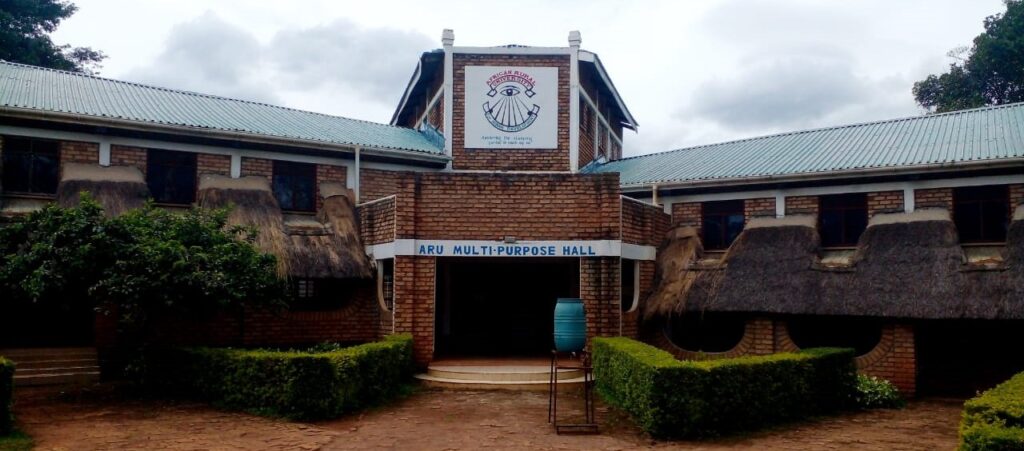
In the rolling countryside of Kagadi District, the Uganda Rural Development Training Centre–Africa Rural University stands as a bold experiment in redefining education through African values.
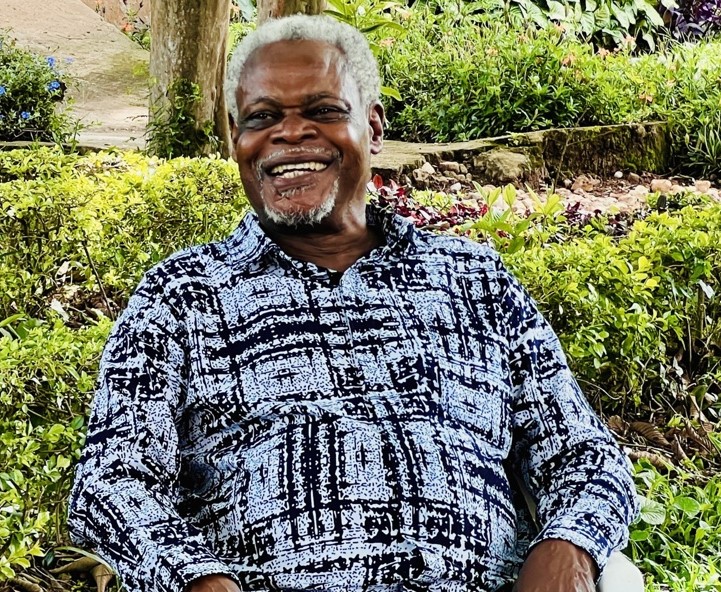
At the center of this vision is Dr Mwalimu Musheshe, a thinker, educator, and cultural advocate whose life has been shaped by a growing conviction that Africa’s development must be rooted in its own identity.
Prof. Musheshe’s intellectual journey began within conventional academic systems, but over time he became increasingly critical of what he describes as “detached education”—a system that produces graduates who are knowledgeable, yet disconnected from their cultural foundations.
This realization pushed him toward building institutions that challenge this model, culminating in his work at Africa Rural University, an all-girls institution designed to produce transformative leaders grounded in African realities.
“We are very small as an organization,” he reflects, “but we want all young people in this country to have an opportunity to learn about their culture, to interface with it.”
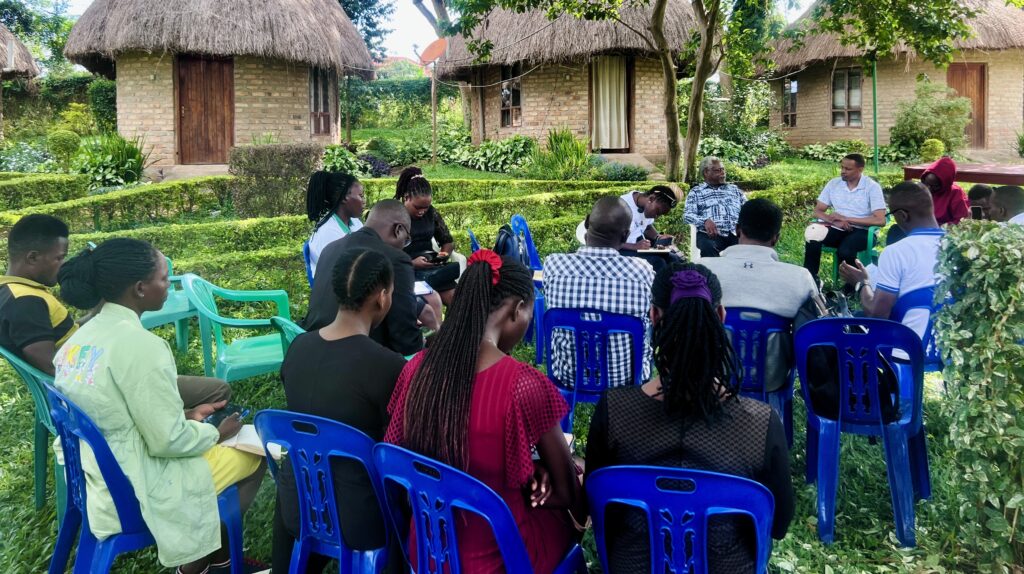
This belief underpins the university’s structure, where learning is deliberately split between theory and practice, ensuring students engage directly with the communities they are meant to serve.
A central theme in Prof. Musheshe’s message is the question of agency. He challenges Africans to critically examine who controls the systems shaping their lives. “If you don’t have agency,” he says, “who is your agent now to change that?” For him, reclaiming agency is the first step toward meaningful transformation.
He draws lessons from past ideological efforts such as Kyankwanzi Leadership Institute, which aimed to instill African socialism and authenticity. However, he notes that such initiatives struggled because participants often approached them with a Western mindset.
“They wanted to learn about Adam Smith and classical economics,” he explains. “Taking them through where we have come from, how science and technology started here—that was seen as boring.”
This disconnect, he argues, continues to undermine efforts to re-center African knowledge systems. He points to the paradox within Uganda’s education reforms, where progressive ideas are introduced but poorly implemented.
With the Support of the Cross-Cultural Foundation of Uganda ( CCFU) and the National Curriculum Development Centre, he has integrated “culture” education into the national curriculum. Yet, he warns that without the right teachers, the initiative risks failure.
“Who is the midwife for this curriculum?” he asks. “If they are not oriented, the new curriculum is a waste of time. You have no teacher, and eventually a good idea still births.”
Prof. Musheshe is also deeply concerned about the erosion of African cultural identity, particularly through language and religion. He questions why foundational academic texts were never translated into local languages.
“Why is the Bible translated in all vernaculars,” he asks, “and no mathematical book, no science book, no history book has been translated?” To him, this reflects a deliberate shaping of African thought systems.
He further critiques how African identities have been reshaped through naming and religious practices. “There was a time you could not baptize a child with an African name,” he notes. “People believe being John is Christian. But John existed before Christianity. So how does it become a Christian name?”
At Africa Rural University, these concerns are addressed not just in theory but in practice. Cultural expression is embedded in the curriculum through music, dance, and theatre. “Music is not just for entertainment,” he emphasizes. “What is the message in the music? The state organizes itself to capture the mass psyche—you can also use music, drama, and theatre to educate.”
He also highlights resistance from within society itself, noting that some teachers and communities reject cultural education, labeling it as backward or even “satanic.” “You even have teachers who don’t believe in what you are teaching,” he says. “They will refuse to deliver certain content because of their own beliefs.”
Despite these obstacles, Prof. Musheshe remains resolute. He acknowledges that Africa’s transformation will not happen overnight, warning against the continent’s tendency to seek quick fixes. “We are in a hurry,” he says. “Everything we want, we wanted yesterday. But real innovation takes time.”
For him, the greatest challenge is not the absence of ideas, but the lack of sustained commitment. “The good news is that we have started these conversations,” he observes. “The bad news is that we treat them as events. We are not committed to long-term change.”
His call to Ugandans and Africans is to embrace honest, even uncomfortable conversations about identity, history, and culture. “We need courageous conversations,” he insists, “to examine where we are and how we can rebuild on our own terms.”