



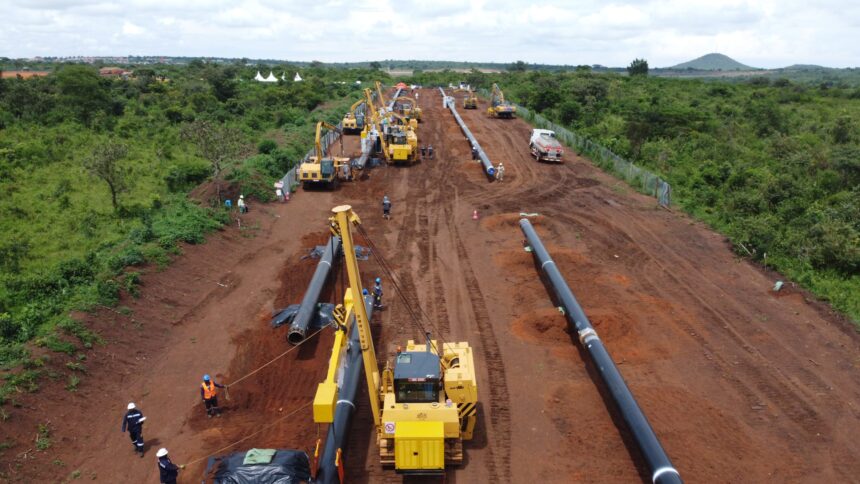
Uganda’s long-awaited oil industry is edging closer to commercial production, with major infrastructure projects nearing completion and expectations rising across the economy.
The East African Crude Oil Pipeline (EACOP) is reportedly over 80 percent complete, marking a significant milestone in Uganda’s energy ambitions.
Government officials say oil production could begin within 2026, unlocking billions in projected revenue over the coming decades.
While speaking at an energy meeting recently in Kampala, Energy Minister Ruth Nankabirwa said: “We are in the final stages of readiness. The infrastructure is taking shape, and we are confident Uganda will join the league of oil-producing nations very soon.”
The project has also attracted international attention from investors and development partners.
The Director General Uganda Investment Authority Robert Mukiza noted: “Oil will transform Uganda’s export base and significantly increase foreign exchange earnings.”
However, civil society groups continue to raise concerns about environmental risks and displacement linked to pipeline construction.
Dickens Kamugisha, Chief Executive Officer of AFIEGO-an environmental coalition stated: “While oil presents economic opportunities, it must not come at the cost of ecosystems and local livelihoods.”
Economists project that oil revenues could contribute significantly to GDP growth, but caution against overdependence on a single commodity.