



Rwanda has unveiled a fresh wave of reforms and financing that analysts say could reposition the country as one of Africa’s most compelling investment destinations, particularly in real estate, infrastructure and manufacturing.
According to Kigali-based investment strategist Eric Mugisha, the government’s latest moves mark a shift “from potential to proof,” as the country aligns large-scale financing with ambitious economic targets.
At the centre of this momentum is a newly finalised $650 million financing package secured from a coalition that includes the World Bank, the Asian Infrastructure Investment Bank and European partners. Unlike traditional budget support, the funds are earmarked for strategic sectors expected to unlock long-term growth.
A significant portion of the financing will go into energy infrastructure, aimed at expanding Rwanda’s national grid to support industrial activity, particularly around Bugesera. The government is also investing in high-end tourism infrastructure to reinforce its positioning as a premium, low-volume destination on the continent.
At the macro level, Rwanda has revised its 2026 GDP growth target to 7.5%, well above the regional average. The growth is expected to be driven largely by expansion in manufacturing and construction—signalling a deliberate shift towards a more industrialised economy.
Equally important for investors is the country’s monetary stability. The central bank has set a 4% inflation target for 2026, a move seen as critical in maintaining investor confidence. Analysts note that this combination of strong growth and controlled inflation creates favourable conditions for long-term capital deployment, particularly in real estate where asset values can rise without eroding purchasing power.
Nowhere is this transformation more visible than in Bugesera, an emerging industrial hub anchored by the Bugesera Special Economic Zone. With Phase I of the zone already reaching 85% occupancy, demand for industrial space is rapidly tightening.
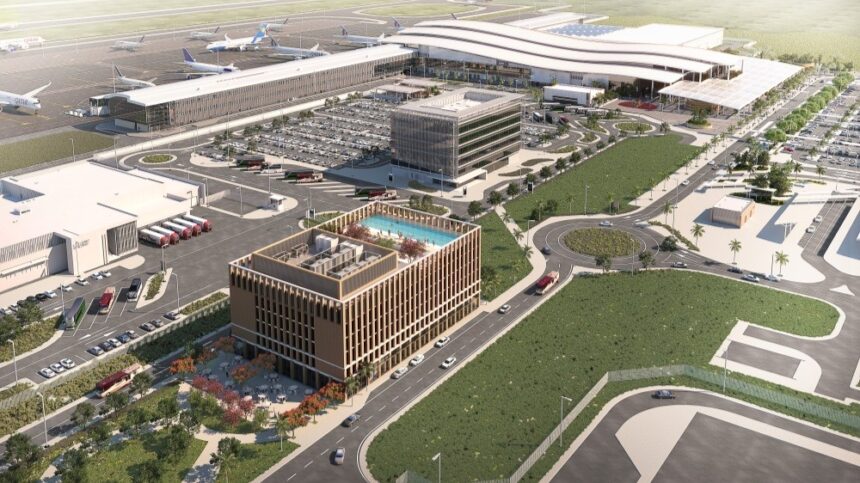
The near-completion of the Bugesera International Airport is further accelerating this trend. Proximity to the airport has driven a 20–35% increase in the value of industrial and logistics land, as manufacturers and distributors position themselves for regional trade.
This surge in industrial activity is also triggering a secondary wave of investment. As factories and logistics hubs expand, demand is rising for worker housing, commercial services and mixed-use developments. However, Mugisha notes a key market inefficiency: while industrial plots are being quickly acquired by multinational firms, surrounding residential and flexible-use land remains relatively underpriced.
For investors, this gap presents a potential early-entry opportunity before values fully adjust to the broader economic expansion.
The evolving dynamic reflects what analysts describe as the “infrastructure effect”—a phased investment cycle in which public capital lays the foundation through roads, energy and policy support; institutional investors follow with large-scale industrial and commercial projects; and private investors ultimately capture value through real estate and ancillary services.
With sovereign-backed infrastructure, rising industrial demand and a stable macroeconomic environment converging, Rwanda is increasingly positioning itself as a high-growth market in East Africa.
However, the window for early movers may be narrowing. As growth projections begin to materialise and infrastructure projects near completion, land and property prices—particularly in Bugesera and Kigali’s central business district—are expected to adjust rapidly.
For investors watching the region, Rwanda’s latest policy and financing moves suggest that the next phase of growth may already be underway.