



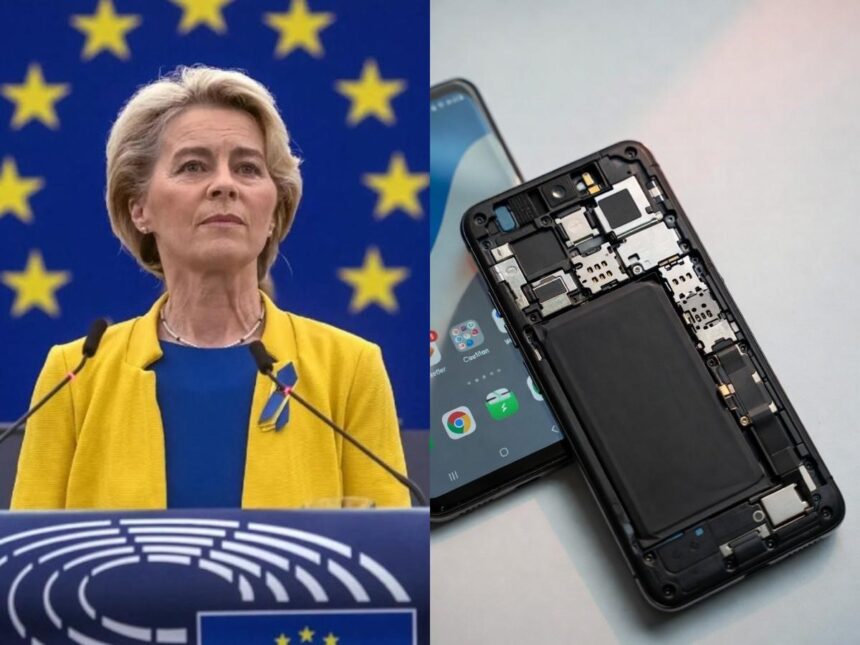
Smartphone manufacturers selling devices in the European Union will from 2027 be required to redesign their products to include user-replaceable batteries, marking one of the most significant regulatory shifts in the global consumer electronics market.
The new rules form part of the EU’s updated battery regulation, which aims to extend product lifespans, reduce electronic waste, and give consumers more control over device maintenance. Under the directive, batteries must be durable enough to withstand hundreds more charging cycles than many current models, while remaining easy for users to remove and replace without specialized tools.
For manufacturers, the implications are substantial. Companies will also be required to supply spare parts and detailed repair manuals for at least 10 years after a smartphone model is released—far longer than the current industry average of three to five years.
This is expected to increase after-sales service obligations and reshape product design strategies, particularly for brands that have prioritised sealed, ultra-thin devices.
The EU estimates that electronic waste is one of the fastest-growing waste streams globally, with over 5 million tonnes generated annually in Europe alone. Smartphones contribute significantly to this figure due to limited repairability and short upgrade cycles, often averaging just two to three years per user.
Analysts say the regulation could have ripple effects beyond Europe, as global manufacturers may opt to standardise production lines rather than create region-specific designs.
This could indirectly benefit consumers in emerging markets, including Africa, where access to affordable repairs and longer-lasting devices remains a key concern.
While the policy is likely to raise initial manufacturing costs, it could lower total cost of ownership for consumers over time by reducing the need for frequent device replacements.
For investors and industry players, the shift signals growing regulatory pressure to align profitability with sustainability in the $500 billion global smartphone market.