



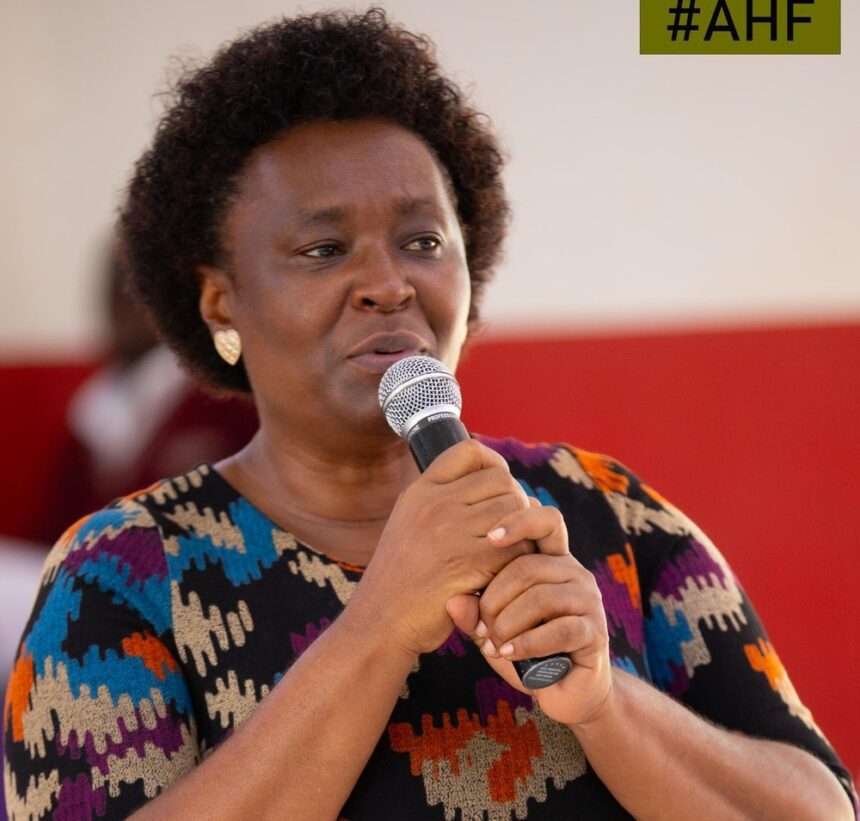
At a candlelight memorial event held at Kitante Hill School in Kampala, Martha Mbabazi of AHF Uganda Cares delivered a forceful appeal for Uganda to accelerate youth-focused HIV interventions and strengthen domestic financing mechanisms if the country is to achieve its goal of ending AIDS as a public health threat by 2030.
Mbabazi, who works in advocacy and marketing coordination at AHF Uganda Cares, framed Uganda’s HIV response as entering its “final and most decisive stretch,” with just about four years remaining to the 2030 target.
“This is a moment of remembrance, but also recommitment,” she said, noting that the event honors those who have died of AIDS-related illnesses while reinforcing national resolve to eliminate new infections.
Uganda has made measurable progress in reducing HIV prevalence and improving treatment coverage. Mbabazi cited a decline in prevalence to about 5.4% and significant reductions in mother-to-child transmission, achievements largely attributed to the Elimination of Mother-to-Child Transmission (EMTCT) programme championed by First Lady Janet Kataaha Museveni.
Despite these gains, she warned that the epidemic remains far from over, particularly among young people. She stressed that adolescent girls and young women continue to bear the heaviest burden of new infections, making them the most critical demographic in Uganda’s next phase of HIV programming.
“Young people must be at the center of the response,” Mbabazi said. “If we design messages with them, not just for them, they will own the solutions and drive change.”
She emphasized that HIV communication strategies must be co-created with youth to ensure relevance, uptake and long-term behavior change—an approach she said is essential to meeting the 2030 target.
A second major concern raised by Mbabazi was the sustainability of HIV financing in Uganda. She warned that declining donor funding is already straining prevention and treatment programs, forcing a shift toward domestic financing that is itself constrained by rising national debt obligations.
Uganda’s growing debt burden, she argued, risks limiting fiscal space for critical health investments, particularly youth-targeted HIV programs. She called for a multisectoral policy response to address debt sustainability and protect essential health financing.
“We are challenged by dwindling donor support, and domestic financing alone is under pressure from debt servicing,” she said, urging both government and international lenders to reconsider financing frameworks that restrict long-term health investments.
Mbabazi also called for stronger integration of HIV response efforts across sectors, stressing that ending AIDS cannot be achieved by the health sector alone. She highlighted the role of religious leaders, cultural institutions, schools, families and communities in reducing stigma and strengthening prevention.
The event was held under the national theme “Ending AIDS by 2030: Embracing the Role of Women,” reflecting the central role of women and girls in Uganda’s epidemic dynamics.
Her remarks were reinforced by Dr. Vincent Bagambe of the Uganda AIDS Commission, who noted that Uganda has reduced HIV prevalence from 18% in the 1990s to about 4.9% today, with 90% of people living with HIV now on treatment.
However, Bagambe warned that new infections remain concentrated among adolescent girls and young women, underscoring the urgency of targeted interventions in the final push toward 2030.
The Candlelight Memorial brought together government officials, civil society, development partners and community leaders, all reaffirming Uganda’s commitment to ending AIDS—while acknowledging that success will depend on financing, youth engagement, and sustained political will.