




MTN Uganda has launched the second phase of its Advancing Women Entrepreneurs (AWE) programme, doubling down on efforts to transform women-owned small businesses into corporate-ready enterprises capable of competing for large-scale procurement contracts and investment opportunities.
The expansion comes after the telecom giant says the programme’s first phase enabled more than 40 women-led businesses to secure contracts worth over UGX 18 billion, highlighting growing momentum behind supplier diversity and inclusive procurement initiatives in Uganda’s private sector.
The second phase, launched in Kampala under the theme “She Means Business,” shifts focus from basic supplier onboarding toward scaling women-led enterprises into formal, investment-ready businesses with the systems, governance and digital capabilities required to compete within corporate supply chains.
For Uganda’s fast-growing SME sector — where women own a significant share of informal businesses but remain underrepresented in large procurement ecosystems — the initiative signals a broader shift in how major corporations are approaching enterprise development.
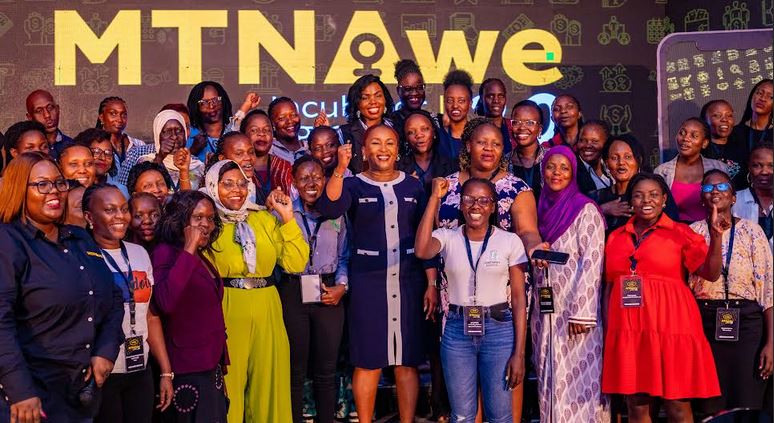
“Women entrepreneurs are essential contributors to Uganda’s economy,” said Sylvia Mulinge, Chief Executive Officer of MTN Uganda. “Through the second phase of AWE, we are creating opportunities for women-led businesses to access corporate markets, strengthen their operational capacity and grow sustainably.”
Originally launched in October 2023 as a three-year programme running through November 2026, AWE was designed to increase participation of women-owned enterprises within MTN Uganda’s supply chain across sectors including information technology, technical network services, commercial operations and facilities management.
The programme forms part of a wider corporate trend across Africa where multinational companies are increasingly embedding supplier inclusion into sustainability and economic empowerment strategies.
MTN Uganda says it onboarded 118 women entrepreneurs in 2024 alone as part of its broader target to integrate at least 250 women suppliers into its procurement ecosystem by 2025.
The telecom operator now wants participating businesses to move beyond survival-stage operations into scalable enterprises capable of attracting investors, accessing formal financing and sustaining long-term growth.
To achieve that, the second phase of AWE will provide mentorship, procurement-readiness training, financial literacy support, digital transformation tools and investor preparedness coaching.
Participating businesses will also gain access to networking platforms, accelerator programmes, supplier development sessions and investor pitch opportunities throughout 2026.
The initiative is being implemented alongside several ecosystem partners including DFCU Bank Women in Business, American Tower Corporation Uganda, Private Sector Foundation Uganda, Innovation Village and NSSF Hi Innovators.
The programme addresses one of the biggest barriers facing women-owned SMEs in Uganda: the transition from informal entrepreneurship into structured enterprises capable of meeting corporate procurement standards.
Eligibility requirements for the programme include businesses that are at least 50% woman-owned, operational for more than one year, tax compliant and generating annual revenues above UGX 60 million.
The emphasis on digital systems and operational formalization also aligns with Uganda’s broader push toward digital economic inclusion, particularly as SMEs increasingly adopt technology to improve efficiency, financial management and market access.
For MTN Uganda, the initiative reinforces its strategy of positioning itself not only as a telecommunications provider but also as a broader enabler of economic transformation through digital and financial inclusion.
As competition intensifies across East Africa’s corporate supply chains, programmes like AWE are becoming increasingly important in helping small businesses — particularly women-led enterprises — secure access to procurement opportunities traditionally dominated by larger, established firms.
It remains to be seen whether Uganda’s growing startup and SME ecosystem can evolve from fragmented informal businesses into a pipeline of scalable companies capable of participating in regional and global value chains.