



Uganda’s decision to stop funding national public holiday celebrations from the 2026/27 financial year is being presented as a bold step toward fiscal discipline.
Yet while the move may save millions of shillings previously spent on commemorations such as Independence Day, Labour Day and International Women’s Day, it has also reignited debate about whether government is targeting the right areas for expenditure cuts.
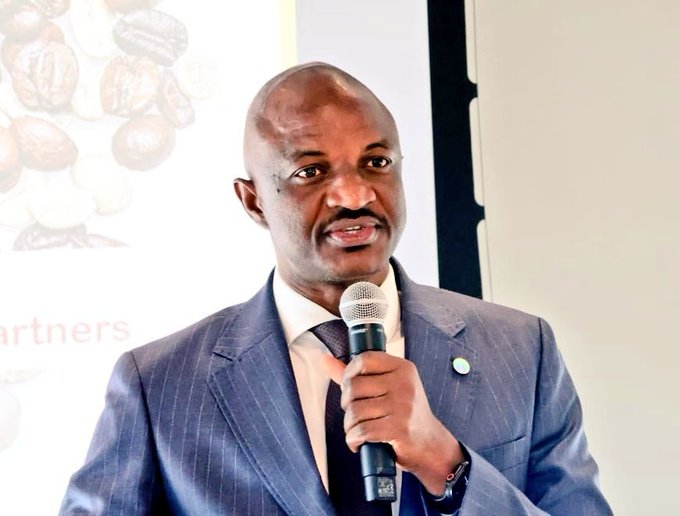
Permanent Secretary and Secretary to the Treasury Dr. Ramathan Ggoobi recently announced that government will no longer spend money organising most public functions associated with national celebrations. Instead, President Yoweri Museveni will address the country through radio and television broadcasts from State House, while resources previously allocated to such events will be redirected to priority sectors under the government’s economic transformation agenda.
The policy forms part of a broader campaign to rationalise public expenditure as government seeks to finance its ambitious development agenda amid growing fiscal pressures.
Uganda’s budget has expanded rapidly over the years, reaching Shs78.2 trillion for the 2026/27 financial year, while public debt has continued to climb, increasing pressure on the Treasury to justify every shilling spent.
Government argues that savings from ceremonial functions will support investments in Agro-industrialisation, Tourism Development, Mineral-based Industrialisation, and Science, Technology and Innovation—the pillars collectively known as ATMS.
However, economists and governance analysts are asking a more difficult question: how much money will actually be saved, and does cutting public celebrations address the largest sources of government expenditure?
The announcement comes against the backdrop of the Rationalisation of Agencies and Public Expenditure (RAPEX) programme, under which government merged and dissolved several agencies to eliminate duplication and reduce operational costs. Yet even as agencies were being consolidated, the size of government itself remained largely untouched.
Uganda currently has one of Africa’s largest cabinets, with more than 80 ministers, ministers of state and deputy ministers. Maintaining such a large executive carries significant costs, including salaries, official vehicles, security details, fuel, travel allowances, office operations and support staff.
The question increasingly being asked by taxpayers is whether the expanded cabinet delivers value commensurate with its cost. Critics argue that many ministerial portfolios overlap in mandate, while others appear designed more for political accommodation than administrative necessity.
The issue becomes even more pronounced when viewed alongside Parliament’s expenditure. Uganda’s Parliament, comprising more than 550 legislators following the creation of additional constituencies and special-interest seats, remains one of the country’s largest recurrent expenditure centres. Legislators receive salaries, allowances, vehicle facilitation and other benefits that collectively consume a significant share of public resources.
This debate is not unique to Uganda. Several countries facing fiscal strain have recently undertaken far more extensive austerity measures. Argentina’s President Javier Milei cut the number of ministries from 18 to nine as part of an aggressive cost-cutting campaign.
Ghana has repeatedly faced calls from the International Monetary Fund and civil society groups to reduce the size of its government after criticism over one of Africa’s largest ministerial teams.
In Kenya, President William Ruto’s administration has also faced pressure to reduce government expenditure and trim public sector costs amid rising debt concerns.
These examples suggest that meaningful expenditure rationalisation often extends beyond symbolic spending cuts and into politically sensitive areas such as cabinet size, public sector payrolls and legislative spending.
For Uganda, the decision to eliminate funding for public holiday celebrations sends an important signal that government recognises the need for fiscal restraint.
Yet the long-term credibility of the rationalisation agenda may ultimately depend on whether similar scrutiny is applied to larger and more politically consequential expenditure items.
As government asks citizens to embrace austerity, taxpayers will increasingly demand evidence that sacrifice is being shared across all levels of the state—not only in public ceremonies, but also in the structures of power that consume a far greater share of the national budget.