



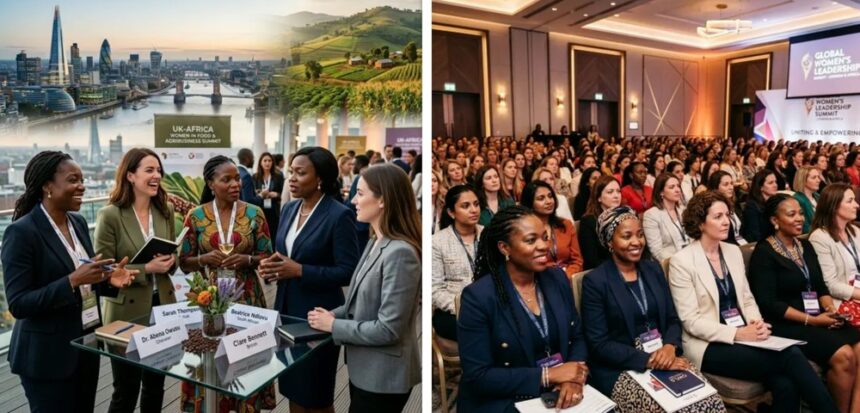
As Africa grapples with the dual challenge of feeding a rapidly growing population while creating sustainable economic opportunities, a major UK-based investment summit this week will place women entrepreneurs at the center of the continent’s agrifood transformation agenda.
The UK-Africa Women in Food & Agribusiness Investment Summit, scheduled for June 3-5 in London, comes at a time when global investors are increasingly viewing Africa’s agricultural sector as one of the world’s most undercapitalized yet high-potential growth frontiers.
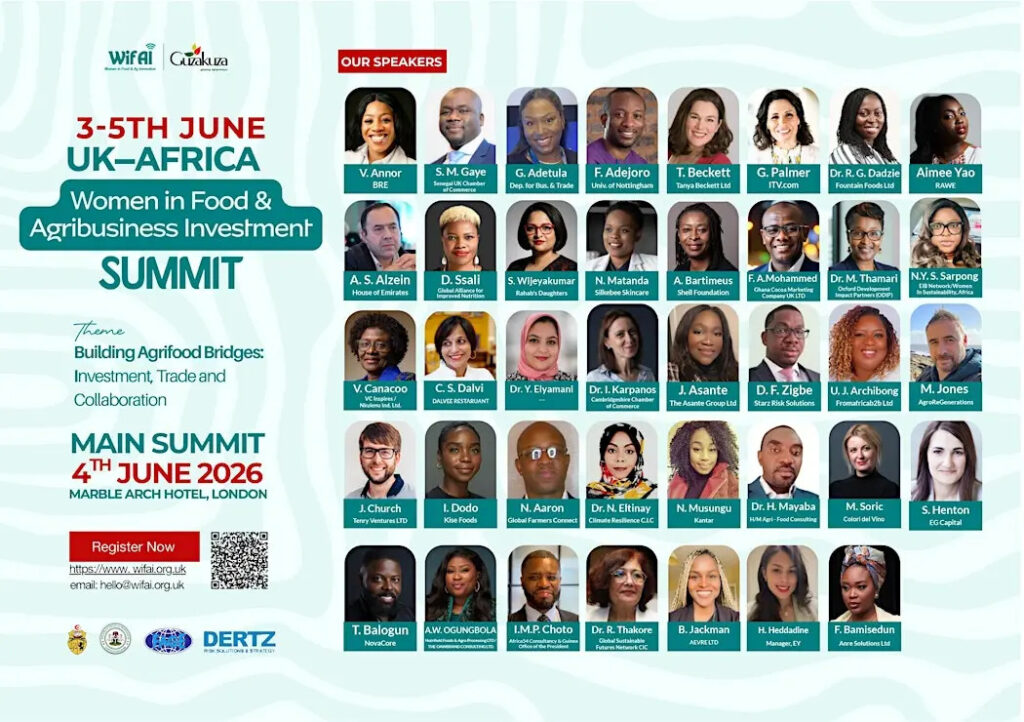
Hosted at the Marble Arch Hotel under the theme “Building Agrifood Bridges: Investment, Trade and Collaboration,” the summit seeks to move beyond conversations about women’s economic inclusion and focus on practical pathways for unlocking investment, expanding trade, and building commercially viable agrifood enterprises across Africa.
The gathering is expected to attract investors, policymakers, agribusiness leaders, buyers, development finance institutions, and women entrepreneurs from both Africa and the United Kingdom.
Bridging a Persistent Financing Gap
Despite women accounting for nearly half of Africa’s agricultural workforce, they continue to face significant barriers in accessing finance, technology, land ownership, and export markets. According to various development finance studies, female-led businesses across Africa receive a disproportionately small share of available investment capital, limiting their ability to scale and compete internationally.
Organizers say the summit is designed to address this challenge by creating direct engagement between investors and women-led agribusinesses while fostering partnerships that can drive long-term growth.
“This year’s summit is about moving from ideas to action,” organizers noted in a statement. “We are building the bridge that connects capital, trade opportunities, and strategic collaboration for women in agrifood.”
From Networking to Deal-Making
Unlike many traditional conferences, the three-day programme has been structured around practical outcomes.
The first day will focus on ecosystem visits, market intelligence briefings, industrial exposure tours, and discussions on raising capital across borders.
The main summit on June 4 will feature keynote addresses, investor panels, policy discussions, and collaboration workshops designed to connect entrepreneurs with potential funders and buyers.
The final day will shift attention to deal-making, partnership clinics, investor follow-ups, and action planning aimed at converting conversations into tangible business opportunities.
Expected speakers include V. Annor of BRE, S.M. Gaye from the Senegal-UK Chamber of Commerce, G. Adetula of the UK’s Department for Business and Trade, and A.S. Alzein from the House of Emirates, among other industry leaders.
Why the Summit Matters
The event comes as global concerns over food security, climate change, and supply chain disruptions continue to reshape agricultural investment priorities.
Africa possesses approximately 60 percent of the world’s uncultivated arable land, yet the continent remains a net food importer. Analysts argue that greater investment in agribusiness, particularly in value addition, logistics, climate-smart agriculture, and market access, could significantly increase productivity while creating millions of jobs.
For the UK, the summit also aligns with broader efforts to strengthen post-Brexit trade relationships with fast-growing African economies. For African entrepreneurs, it offers an opportunity to tap into international capital, expertise, and export markets at a time when access to finance remains one of the sector’s biggest constraints.
Beyond networking, the real measure of success will be whether the summit generates bankable deals, sustainable partnerships, and new investment commitments that can help women-led agribusinesses scale from local enterprises into regional and global players.
If successful, the London gathering could become an important platform in redefining how capital flows into Africa’s agricultural sector—one that places women entrepreneurs not on the margins, but at the forefront of the continent’s food and economic future.