



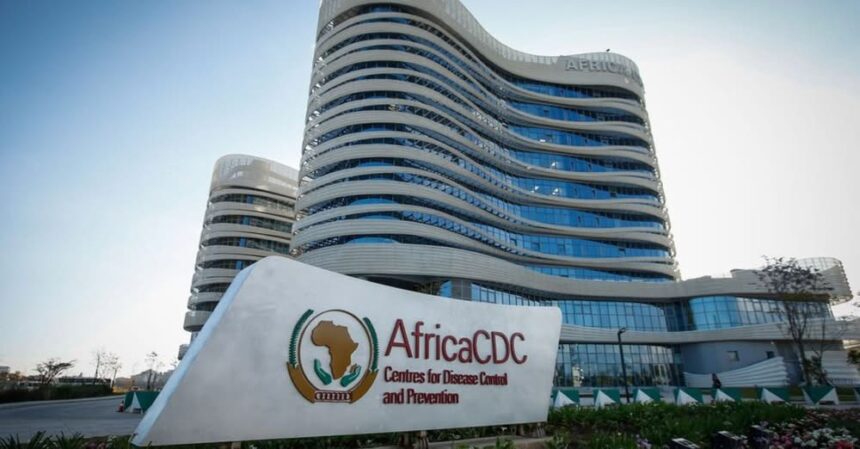
The Governing Board of the Pandemic Fund has formally approved the accreditation of the Africa Centres for Disease Control and Prevention (Africa CDC) as an Implementing Entity.
This decision grants the continental agency direct authority to access, manage, and deploy international financing for pandemic prevention, preparedness, and response across African Union Member States.
By bypassing traditional international intermediaries, Africa CDC becomes the first African Union institution—and the first continental public health agency globally—to attain this status. It is only the second African institution to achieve this classification, following the African Development Bank.
Historically, global health financing has operated under a heavily decentralized, paternalistic model. Wealthy nations and multilateral funds typically route emergency capital destined for Africa through Western-headquartered United Nations agencies or global non-governmental organizations.
While well-intentioned, this structural pipeline frequently delays deployment and fragments resources because external entities manage the funds rather than local institutions.
By transitioning to an authorised Implementing Entity, Africa CDC eliminates these middle tiers of management. It establishes a direct pipeline to the Pandemic Fund, allowing the continent to set its own operational priorities, execute localised procurement, and rapidly deploy funds during outbreaks.
The Pandemic Fund’s Accreditation Panel based its recommendation on a comprehensive review of Africa CDC’s internal structure. To qualify for direct asset pooling, the agency had to prove that its financial management, risk compliance, and internal safeguards met international fiduciary benchmarks.
Much of this structural overhaul stems from the institutional reforms launched in 2023 under Director General Dr. Jean Kaseya. His administration introduced the “New Deal for Africa CDC,” which systematically overhauled the agency’s budget execution, expanded internal audit controls, and formalised social and environmental risk safeguards.
The resulting compliance framework reassures international capital markets and sovereign donors that an indigenous African institution can oversee large-scale multilateral funds with strict financial transparency and accountability.
While this policy shift represents an important step toward regional health independence, Africa CDC must navigate several deeply entrenched structural challenges to fully capitalise on its new funding access. First, the co-financing trap remains a major issue, as multilateral grants from the Pandemic Fund frequently require recipient nations or regional bodies to provide matching domestic co-investments.
Given that many African states face constrained fiscal conditions and high debt loads, securing reliable domestic capital to complement these global funds remains a persistent challenge.
Second, absorptive capacity bottlenecks must be managed because direct access to millions of dollars in international health capital requires strong administrative capacity at the national level. Africa CDC must quickly upgrade the operational systems of individual National Public Health Institutes to ensure member states can efficiently deploy and report on complex funds without administrative delays.
Finally, geopolitical supply chain realities persist, as financial autonomy does not instantly translate into manufacturing autonomy. Even with direct funding pipelines, Africa remains reliant on foreign markets for over 99 percent of its routine vaccine supplies and a vast majority of its specialized diagnostic reagents, meaning money from the fund must still navigate volatile international medical supply chains.
This accreditation arrives at a critical juncture for the region, coinciding with coordinated responses to active viral outbreaks across Central and Eastern Africa.
It validates Africa CDC’s strategic evolution into an autonomous, technically mature authority capable of commanding international capital.