



While limited funding is routinely blamed for the poor implementation of gender equality laws across Africa, the true bottlenecks preventing women from rising in diplomacy and leadership are deep-rooted institutional biases and a lack of societal support systems.
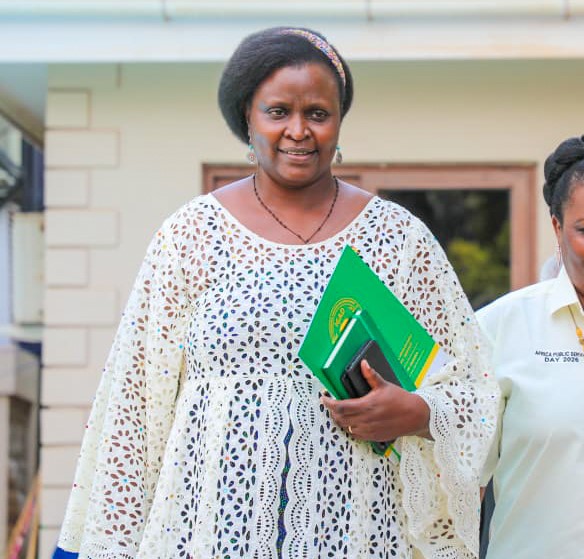
This was the central message delivered by Jocelyn Bigirwa, the Head of Mission for the Intergovernmental Authority on Development (IGAD) to Uganda.
Speaking ahead of the International Day of Women in Diplomacy, Bigirwa addressed a high-level session in Kampala themed, “Women in Diplomacy: Advancing Inclusive Leadership and Global Cooperation.”
Bigirwa strongly pushed back against the narrative that women lack the confidence or interest to pursue high-profile diplomatic roles.
Drawing from her extensive experience, she noted that women and young girls frequently apply for these positions in large numbers, but the real breakdown occurs at the hiring and screening stage.
She emphasised that the problem is entirely about who is allowing women into these spaces, rather than what is stopping women from getting there. Because men predominantly occupy recruitment positions, unconscious gender biases often dictate who gets selected.
“For women to break through, top leadership must be actively committed to gender transformation, much like IGAD’s Executive Secretary who has consciously kept the doors open for female leaders,” she remarked
Beyond institutional bias, the IGAD Head of Mission highlighted how a lack of structural and domestic support systems forces women to turn down career-advancing opportunities, such as international travel or demanding field assignments.
Reflecting on her own journey when she joined IGAD six years ago, Bigirwa shared that her family initially questioned how her household and children would be managed. She revealed that if her husband had not explicitly assured her that he would take care of the children, she would have stayed back.
She noted that the successful women leaders seen today have made it because their families have been supportive, while those without that crucial backing are pulled back and left unable to move forward.
To bridge these gaps, Bigirwa called on African governments to move beyond merely passing policies and focus on funding major structural changes. This includes investing heavily in media campaigns and community sensitisation to change how society views women’s leadership, dedicating resources to capacity building, and establishing practical workplace infrastructure like childcare facilities.
She challenged both public ministries and private sector entities to audit their own environments, noting that without basic daycare facilities, women are unfairly left behind when family demands conflict with professional duties. True diplomatic inclusivity, Bigirwa concluded, requires an intentional, fully-funded ecosystem that supports a woman from her home to the highest corridors of international multilateralism.