



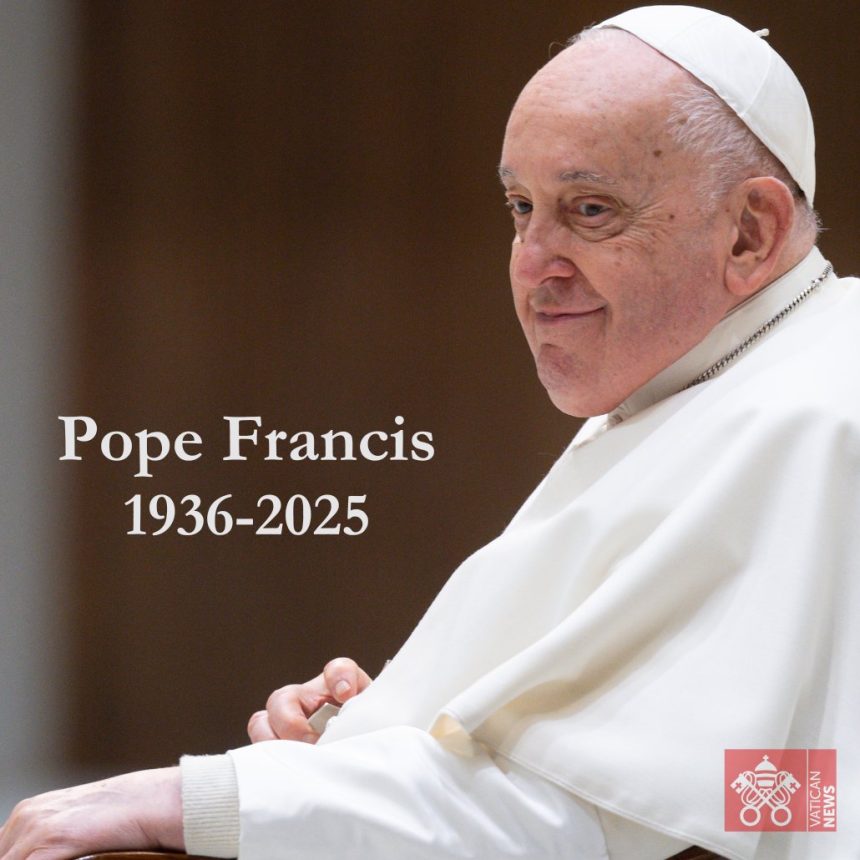
Pope Francis has died, the Vatican announced in a solemn video statement on Monday, marking the end of a papacy that profoundly reshaped the Catholic Church.
Known for his humility, compassion, and reformist zeal, Francis shunned the grandeur traditionally associated with the papal office.
From the moment he appeared on the balcony of St. Peter’s Basilica in a simple white cassock, he signaled a new era—one of service over ceremony.
His reign was anything but quiet. Determined to breathe life into a rigid institution, he confronted long-standing scandals, called out inequality, and gave voice to the marginalized.
Yet, his bold reforms often met fierce resistance from within the Vatican’s inner circles, fueling a papacy marked by both hope and tension.
Francis’s legacy will endure beyond the walls of the Vatican. He championed climate action, interfaith dialogue, and mercy over judgment, winning admiration from believers and skeptics alike.
As news of his passing spread, tributes poured in from around the world, many calling him the “People’s Pope.”
He changed the face of the modern papacy—not with grand declarations, but with gestures of radical simplicity.
In death, as in life, Pope Francis remains a symbol of humility, courage, and a Church striving to be closer to its people.