



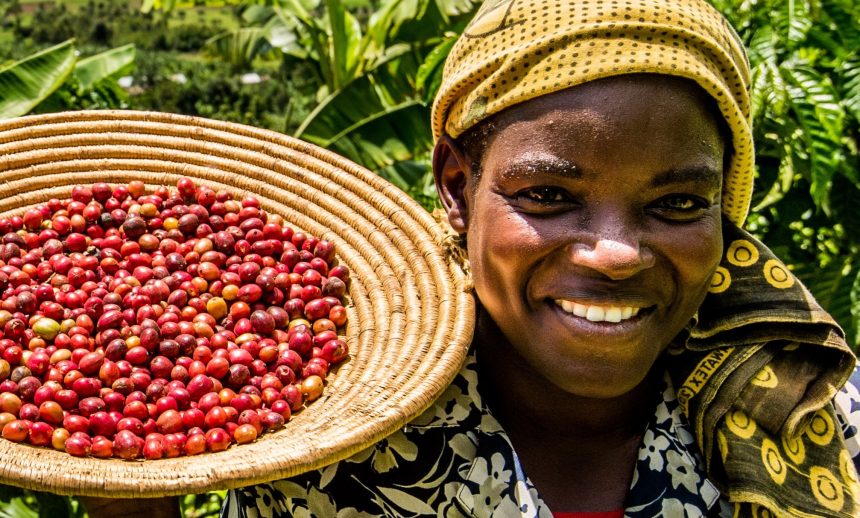
dfcu Foundation has launched the Financial Expansion for Agribusiness Transformation (FEAT) Program, a flagship initiative designed to accelerate the growth of Uganda’s agribusiness sector through improved access to finance, markets, and business skills.
The program is set to support 2,280 agribusinesses and positively impact over 100,000 individuals engaged in key value chains such as coffee, livestock-dairy, cereals, and oilseeds. With a deliberate focus on women, youth, and vulnerable communities, FEAT is expected to reach over 400,000 Ugandans through household-level impact, including training 80,000 learners, half of whom will be women.
Funded by dfcu Foundation in partnership with Rabo Foundation, FEAT seeks to tackle some of the biggest challenges that smallholder farmers and agribusiness enterprises face—ranging from limited financing to inadequate technical skills and weak market access.
The initiative will channel UGX 100 billion in financial linkages and introduce a Catalytic Revolving Fund Facility to support early-stage enterprises that are not yet eligible for commercial credit.
Alongside financing, farmers and entrepreneurs will gain training in financial literacy, leadership, marketing, climate-smart agriculture, and risk management through a network of Management Business Advisors, AgriTech specialists, and digital learning tools including dfcu Foundation’s SOMA platform and the Bean Book for coffee exporters.
Speaking at the launch, Mabel Ndawula, Executive Director of dfcu Foundation, said the program reflects a collaborative push to unlock opportunities for smallholder farmers and SMEs.
“At its heart, FEAT is a collaborative effort to unlock real opportunities for farmers and entrepreneurs—through access to finance, markets, and skills. The combined strength of Rabo Foundation’s global expertise and dfcu’s deep local commitment ensures that smallholder farmers and SMEs can move from subsistence to prosperity, driving inclusive growth and resilient rural economies,” she said.
dfcu Bank CEO Charles Mudiwa emphasized the centrality of agriculture to Uganda’s economy, noting that FEAT fits into the bank’s long-term mission of empowering rural communities.
“Agriculture remains the backbone of Uganda’s economy, and supporting its transformation is central to dfcu’s purpose of building better lives and businesses. Through FEAT, we are not only expanding access to finance but also investing in the skills, technologies, and partnerships that make agribusiness more competitive, resilient, and inclusive,” he stated.
Sonja Timmer, Lead Impact Finance for Africa at Rabo Foundation, said FEAT represents more than just another intervention but a catalyst for transformation.
“The FEAT program builds on our longstanding partnership with dfcu Foundation. It reflects our shared belief that entrepreneurship in smallholder value chains is key to sustainable growth. FEAT aims to be a catalyst for change, equipping agri-entrepreneurs and farmers with training, tools, and financial solutions to scale their businesses sustainably and improve livelihoods.”
Agriculture employs 73 percent of Uganda’s workforce, yet most farmers still face barriers to finance, markets, and business expertise. By combining blended finance, capacity building, and digital innovation, FEAT seeks to address these barriers while prioritizing inclusivity, competitiveness, and climate resilience in Uganda’s agribusiness sector.