



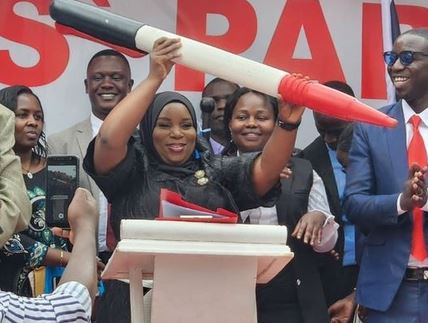
The National Peasants Party (NPP) has plunged into crisis after its leaders announced the dismissal of party president Hajjat Stecia Mayanja, accusing her of conduct unbecoming and tarnishing the party’s image.
The dramatic decision was revealed on Friday at the NPP headquarters in Kasubi, where senior party officials confirmed that they had formally withdrawn confidence in Mayanja.
The fallout follows her appearance at a boda boda riders’ rally at Kololo Independence Grounds earlier this month, where President Yoweri Kaguta Museveni addressed supporters.
According to the NPP executive, Mayanja’s participation at the event created the impression that the opposition-leaning party had forged ties with the ruling National Resistance Movement (NRM), a move they said contravenes the party’s constitution.
Shariff Sentongo Nambaale, the NPP Secretary General, said the party’s executive committee convened on September 25 to deliberate on the matter. Mayanja, however, declined to attend the meeting despite being summoned to defend herself.
“Stecia has tarnished the name of our party, making people think we work with Museveni, which is not true,” Sentongo said.
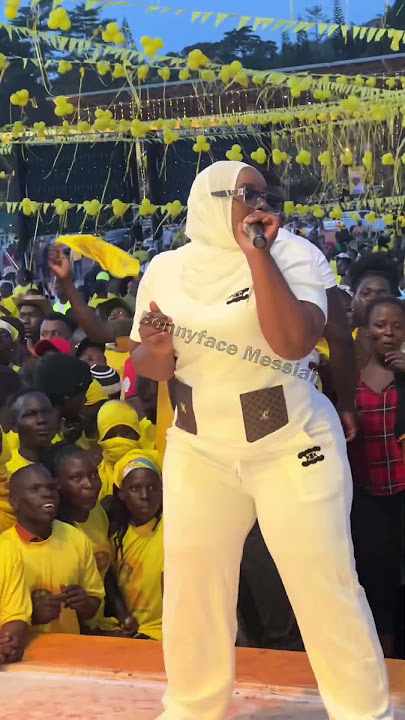
“We invited her to explain herself and submit her academic documents, but she refused. Instead, she lied that her mother was sick, only for us to see her performing at Museveni’s rally.”
Sentongo further accused the embattled president of attempting to run for Kampala Woman Member of Parliament without presenting the required academic papers, undermining the credibility of the party she led.
“Ugandans should stop associating her with the NPP,” Sentongo added. “Political parties collapse because of selfish leaders who use them for personal gain.”
But in a swift and fiery rebuttal, Mayanja dismissed the party’s announcement, insisting that she remains the rightful leader of the NPP.
“I am the pillar of this party. I started it, and if you try to push me out, lightning will strike you,” she declared. Mayanja, a celebrated musician before entering politics, defended her participation in the Kololo event, saying her career as an artist should not be weaponized against her.
“I was an artist long before I joined politics, and Ugandans know me for my talent. Don’t insult me because of my profession. I have always respected my colleagues, but I am the backbone of this party,” she said.
Mayanja urged her colleagues to redirect their energy toward strengthening the NPP instead of engaging in internal wars, which she described as common in political organizations.
Despite her defiance, NPP leaders confirmed that they are moving forward with plans to replace her, though they did not disclose any potential candidates.
The standoff now casts uncertainty over the future of the NPP, a small but ambitious party that has attempted to position itself as a grassroots alternative in Uganda’s crowded political field.
With general elections on the horizon, analysts say the leadership wrangles could weaken the party’s organizational capacity and limit its ability to mount a credible challenge.
For now, the NPP remains divided between those standing by its founding president and those eager to chart a new course without her.