



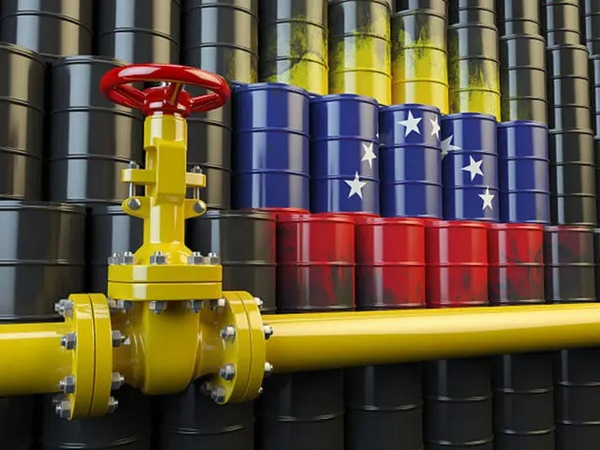
Global oil markets have reacted with immediate volatility following the unprecedented capture and detention of Venezuelan President Nicolás Maduro in New York, where he is facing federal narcotics and terrorism-related charges.
The extraordinary event — involving a U.S. military operation in Caracas and the transfer of the Venezuelan leader and his wife to a federal detention center in New York — has injected a new geopolitical risk premium into crude futures and prompted investors to reassess risk profiles across Latin America.
Market Reactions: Price Moves and Risk Premiums
Brent crude and West Texas Intermediate (WTI) futures spiked significantly in the immediate aftermath of the news as traders priced in the possibility of supply disruptions, political instability, and an unpredictable transition for Venezuela’s oil sector.
While Venezuela’s output has languished for years far below its historical levels due to underinvestment and sanctions, the symbolic shock of a sitting head of state being removed and held abroad amplified risk sentiment. Analysts see this as reinforcing the geopolitical risk premium that often dominates markets in times of strategic uncertainty.
Moreover, volatility indices tied to oil — such as the CBOE Crude Oil Volatility Index — jumped as hedge funds and systematic trading desks recalibrated risk models.
Market participants are also watching for increased speculation in longer-dated contracts, particularly for heavy sour crude grades for which Venezuela has traditionally been a significant source. The potential for longer-term supply shifts is being priced in alongside near-term liquidity flows.
Strategic Implications for Global Energy Companies
For multinational energy firms and service providers, the situation presents both opportunity and risk. A U.S. government signaling that it may “run” Venezuela’s oil sector or oversee a transitional period raises the prospect of greater access to previously restricted reserves.
President Donald Trump’s comments — that the United States would be heavily involved in Venezuelan oil infrastructure — have fueled hopes among major IOC players that sanctions could be lifted or softened as part of broader political and legal negotiations.
Companies like Chevron, ExxonMobil, and European majors with sanctioned footprints in Venezuela could find themselves at an inflection point. Investment plans deferred for years might be resurrected if legal clarity emerges and a stable regulatory framework is established.
Conversely, sovereign disputes, ownership claims, and litigation risks remain high, deterring near-term capital deployment.
Latin America Investment Climate: Confidence, Contagion, or Opportunity?
The broader Latin American investment landscape is now under intense scrutiny. Venezuela has long been a cautionary tale for investors: a country with the world’s largest proven oil reserves yet marked by political risk, weak institutions, and capital flight. Maduro’s detention — inextricably linked to military intervention and charges brought in the U.S. — creates a complex narrative.
On the one hand, investor sentiment toward the region’s riskier sovereign debt markets is showing tentative signs of improvement. Bond spreads in emerging and frontier markets with commodity exposures tightened modestly in the hours following the news, as speculative capital rotated to perceived beneficiaries of regional normalization.
On the other hand, risk premiums remain elevated due to concerns about contagion, sovereignty norms, and the legality of foreign intervention. International institutions, including the U.N. Security Council, have expressed alarm, raising questions about the precedent set by unilateral military actions that remove a sitting president of a sovereign state.
Sovereign Risk and Institutional Reform Expectations
For institutional investors and multinational banks, the critical determinant of future capital flows into Latin America will be governance and institutional reforms, not only political change in Venezuela.
Markets generally reward clarity, consistency, and rule-based frameworks. Should interim or successor leadership in Caracas commit to transparent economic reforms, fiscal discipline, and engagement with creditors, Venezuela’s risk profile could improve dramatically — but that outcome is far from assured.
Credit analysts are now reviewing ratings and outlooks for a range of Latin American sovereign issuers, particularly those with sizeable energy sectors or exposure to Venezuelan supply chains.
Reforms addressing central bank independence, exchange rate liberalization, and public-sector transparency could catalyze foreign direct investment and lower risk premia if sustained.
Impact on Trade, Energy Security, and Geopolitics
The geopolitical reshuffling triggered by Maduro’s detention also reverberates through global trade and energy security frameworks. The U.S. administration’s intent to leverage Venezuelan reserves aligns with broader strategies to strengthen energy independence, diversify sources, and reinforce influence in the Western Hemisphere.
At the same time, major global actors such as China and Russia — long-time partners of Venezuela’s oil and defense sectors — have condemned the operation, signaling potential geopolitical headwinds and market fragmentation risks.
For emerging markets dependent on oil exports or investment from Gulf states and Asia, shifts in diplomatic alignments could reshape capital flows, export destinations, and bilateral trade agreements. Analysts are closely watching potential repercussions for OPEC+ dynamics and the broader balance of power in energy geopolitics.
Longer-Term Scenarios: Supply Restoration vs. Continued Disruption
Looking ahead, two principal scenarios are emerging among energy strategists:
- Restoration and Reintegration: Should Venezuela’s oil sector be reintegrated into global markets under a reformist or transitional government, expanded production could add significant supply to global markets over the medium term. This would exert downward pressure on prices and could recalibrate refinery configurations toward heavy crudes.
- Prolonged Instability: Conversely, if Venezuela remains politically fractured, investment risk could keep output depressed, preserve the geopolitical risk premium, and maintain elevated price levels for certain crude grades. Supply chains could remain vulnerable, sustaining volatility.
A Pivotal Moment for Markets and Policy
The detention of Nicolás Maduro in New York marks a pivotal moment for global markets, Latin America’s investment climate, and energy geopolitics. For investors, the event highlights the primacy of political risk in commodity markets and the importance of dynamic risk management strategies.
While immediate price reactions are driven by uncertainty, long-term outcomes will depend on governance reforms, legal frameworks, and the interplay of geopolitical forces shaping the future of oil supply and regional stability.
Source: Global Financial Reports