



Uganda’s economic managers are projecting confidence at a time when much of the global economy is navigating turbulence. But behind the optimism expressed at the Absa Group Africa Financial Markets Index and Economic Outlook Forum in Kampala lies a deeper question: are Uganda’s financial market gains translating into broad-based economic transformation, or are they largely structural improvements on paper?
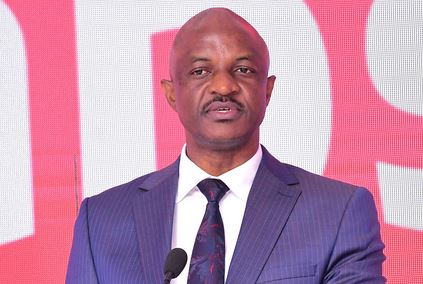
Speaking at the forum held at the Sheraton Kampala Hotel, Permanent Secretary and Secretary to the Treasury Dr. Ramathan Ggoobi argued that global financial tightening, geopolitical tensions and shifting trade patterns present opportunities for stable reform-oriented economies. Uganda, he said, is positioning itself among them.
Uganda’s strong showing in the 2025 Africa Financial Markets Index — ranking third on the continent behind South Africa and Mauritius — has been presented as proof of progress. Notably, it was ranked ahead of Nigeria, Africa’s largest economy. The Index measures market depth, access to foreign exchange, transparency and macroeconomic stability across 29 countries.
However, analysts note that a higher index ranking does not necessarily mean deeper access to capital for domestic businesses. Governor Michael Atingi-Ego of the Bank of Uganda acknowledged this gap directly, stating that Uganda’s biggest constraint is not regulatory sophistication but capital mobilization and market depth.
Dr. Ggoobi projected economic growth of between 6.5% and 7% in an election year, expansion of GDP to USD 68.4 billion and inflation averaging 3.5%. Yet election cycles historically heighten fiscal pressures and public spending. Whether macroeconomic discipline can be sustained through the political cycle remains an open test.
Government ambitions are sweeping: a USD 500 billion economy by 2040, rebuilding capital markets, attracting venture capital, capitalizing Uganda Development Bank and even creating an SME-focused stock exchange. The Parish Development Model (PDM), which reportedly delivered over USD 1 billion digitally, is cited as evidence of expanding financial inclusion.
As global liquidity tightens and frontier markets compete for capital, Uganda’s rise in rankings signals progress. The true investigation now lies in whether reforms will unlock affordable financing for enterprises and translate macro-stability into tangible wealth for ordinary citizens.
Still, the structural question persists. Uganda’s financial markets may be stabilizing, as Absa Managing Director David Wandera observed, but depth requires institutional investors, pension reform and long-term savings mobilization — areas still awaiting legislative action.