



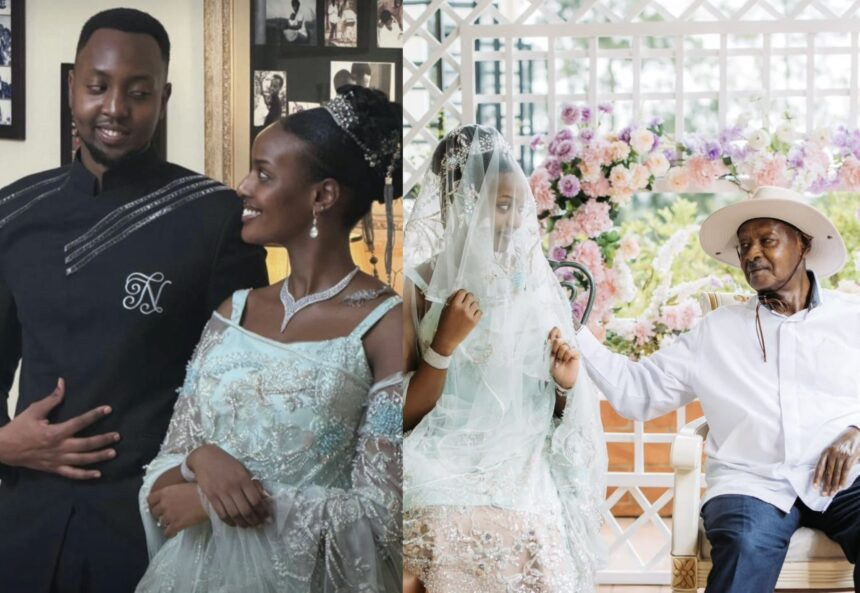
In high-net-worth circles, marriage is seldom a purely romantic pursuit. Beneath the elegance of ceremonies and public celebration lies a more calculated reality—one where unions serve as instruments for consolidating capital, influence and long-term security.
At its core, marriage among elites operates as an economic institution, quietly shaping wealth distribution and opportunity across generations.
Economists describe this pattern as Assortative Mating—the tendency for individuals to partner with those of similar income, education and social standing. Within wealthy families, this is less coincidence and more design. Marriages are often formed within tightly defined social ecosystems, ensuring that financial parity and shared outlooks reinforce the couple’s economic trajectory.
At the upper end of the wealth spectrum, marriage increasingly resembles a strategic merger. Beyond combining assets, these unions integrate networks, reputations and access to power.
The result is not just pooled wealth, but amplified economic potential, as aligned interests and complementary capabilities drive further accumulation. Families, in turn, view such unions as extensions of long-term investment strategy.
The Myth of Love Alone
A common misconception is that elite marriages are devoid of genuine affection. In reality, emotional connection exists—but often within curated environments. Shared education, travel, and social exposure naturally foster compatibility. What appears to outsiders as exclusivity is, in many cases, structured proximity.
Similarity, rather than spontaneity, plays a defining role. When individuals grow within comparable environments, alignment in values and ambition tends to follow, making both emotional and financial compatibility more likely.
Why Wealth Marries Wealth
Several factors explain why affluent families tend to marry within their class.
Risk management is central. Aligning with partners of similar financial standing reduces uncertainty around assets, expectations and lifestyle. For families managing businesses, land and investment portfolios, this minimizes exposure to conflict.
Wealth preservation is equally critical. When high-income individuals marry each other, resources remain concentrated, reinforcing economic positioning at the top. While this may widen inequality at a societal level, for those involved, it ensures continuity and growth.
There is also the consolidation of social capital. Marriage binds networks—corporate, political and diplomatic—unlocking opportunities that extend far beyond the household. In emerging markets like Uganda, such connections often translate into influence, deal-making power and access to decision-making spaces.
Why the Rich Rarely Marry Down
The reluctance of wealthy families to embrace cross-class unions is often framed as prejudice, but the reality is more structural.
Differences in upbringing and financial literacy can introduce friction into relationships, particularly where significant assets are involved. For families focused on generational wealth, such disparities are viewed as governance risks.
Inheritance strategy also plays a role. Marriage is closely tied to succession planning, and introducing a partner unfamiliar with wealth management structures can complicate asset control, especially under marital property laws.
Finally, status preservation remains a powerful, if understated, factor. Among elites, marriage acts as a signal of stability and achievement. Marrying within class reinforces that signal and maintains social positioning.
Stability by Design
Contrary to popular belief, affluent marriages often demonstrate higher stability. Financial security removes many common stressors, while later-life unions—formed after education and career establishment—tend to be more durable.
Beyond this, elite marriages are supported by institutional frameworks: family structures, advisors and shared economic interests. These create a reinforcing system that sustains the union over time.
A Ugandan Perspective
Uganda’s evolving corporate class is increasingly reflecting these global patterns. High-profile unions—such as the traditional introduction ceremony of Saasi Karugire Museveni—illustrate how marriage intersects with legacy, influence and long-term planning.
While such events are rightly framed in cultural and personal terms, they also signal continuity of economic power and social capital. They represent more than family milestones—they are strategic alignments shaping future networks and opportunities.
The Bottom Line
Elite marriages are not random. They are engineered—balancing emotion with economics, and personal connection with long-term strategy.
In a world where wealth is increasingly structured and intergenerational, marriage remains one of the most understated yet powerful tools for preserving and expanding influence. Quietly, and often behind closed doors, it continues to shape the architecture of power.