



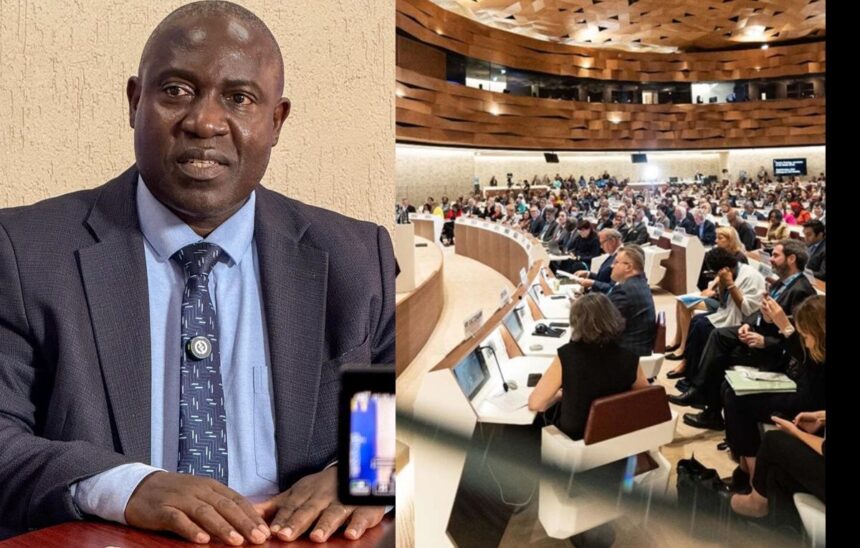
Fresh tensions are emerging ahead of a decisive global health meeting, with activists warning that a proposed pandemic agreement could once again leave developing countries at the back of the queue for life-saving vaccines.
Henry Magala, Country Program Director for AIDS Healthcare Foundation-Uganda Cares, says critical gaps remain in the draft pandemic access and benefit-sharing agreement being negotiated under the World Health Organization. The agreement is expected to be debated at the upcoming World Health Assembly in early May.
The pact is designed as a response to failures exposed during the COVID-19 pandemic, when wealthy nations secured vaccines first, leaving many African countries waiting months for access.
Magala warns that unless revised, the agreement risks repeating those inequalities.
“One of the biggest gaps is that developing countries, which provide the biological samples used to develop vaccines, are not guaranteed fair access to the final products,” he said.
Advocates are now pushing for the inclusion of a binding annex to ensure equitable sharing of vaccines, diagnostics, and treatments. Among the proposals is a requirement that at least 20 percent of all vaccines produced during a pandemic be reserved for developing countries—particularly those where outbreaks originate.
Another key demand is the transfer of vaccine production technology. According to Magala, many African countries have built manufacturing capacity but lack access to the necessary know-how controlled by pharmaceutical firms.
“We have the infrastructure. What we need is technology transfer so we can produce vaccines locally and reduce dependency,” he said.
The debate also extends to accountability. Campaigners argue that pharmaceutical companies should be formally registered and monitored under the agreement to ensure transparency in how vaccines are developed and distributed.
Meanwhile, disagreements persist over the creation of a global pandemic fund. While the proposal suggests all countries contribute based on economic strength, there are concerns that low-income nations may struggle to meet financial obligations. Activists insist that the contribution should depend on the economic strength of the country.
“There is uncertainty about where funding will come from when the next pandemic hits,” Magala noted. “Without a clear financing mechanism, the world risks being caught unprepared again.”
Tibesigwa Diana, the Regional Policy and Advocacy Manager at AHF Uganda Cares, said the stakes are high as this marks the final round of negotiations.
“This is likely the last opportunity to secure a fair deal. If equity is not embedded now, developing countries will continue to suffer the most during future pandemics,” she said.
Health advocates are now urging governments, including Uganda’s Ministry of Health and Members of Parliament, to actively engage in the negotiations and push for a more balanced agreement.
“The public also has a role,” Magala added. “Through civic engagement and advocacy, citizens can pressure leaders to ensure that no country is left behind when the next pandemic strikes.”