



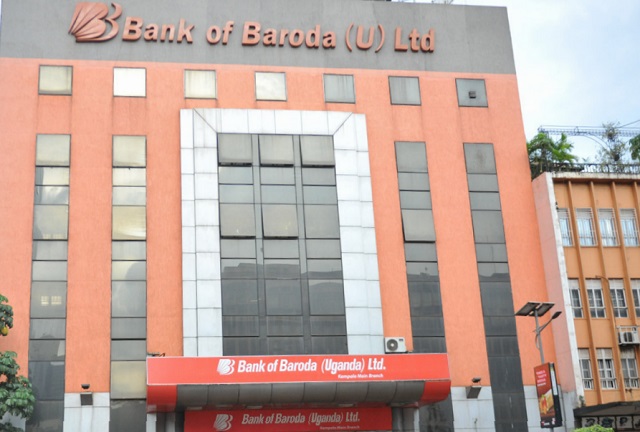
By all traditional measures, Bank of Baroda Uganda is not the largest company on the Uganda Securities Exchange.
It is not the exchange’s biggest telecom operator. Nor is it the most valuable listed counter.
Yet in recent weeks, the lender has quietly become something arguably more important in Uganda’s shallow capital markets: one of the country’s most liquid tradable banking stocks.
Fresh trading data from the Uganda Securities Exchange shows Bank of Baroda Uganda (BOBU) accounted for 7.82 million shares traded in April alone, representing nearly 15% of total market trading volume.
That made it one of the most actively traded counters on the bourse, outperforming several larger and better-known listed firms in raw market activity.
The development is emerging as a significant signal for both investors and market analysts tracking liquidity trends on Uganda’s exchange.
In frontier markets, liquidity is often as important as profitability.
According to a stock broker, “this trend is mainly because of growth in dividend payout, from Ugx 4 per share to Ugx 6 per share. Analysis shows the stock is undervalued , hence a good pick for investors. Many Investors also bought at a low price, as low as Ugx 14 per share, so its a good time for the sellers too”, they remarked.
Institutional investors, fund managers and brokers tend to gravitate toward counters where they can efficiently enter and exit positions without severely distorting prices.
In Uganda’s case, where many listed stocks can go days or even weeks without meaningful trades, active counters attract a premium of their own.
That is increasingly where Bank of Baroda Uganda appears to be positioning itself.
The lender generated nearly UGX 422 million in turnover during the month, accounting for close to 10% of total market turnover, according to USE trading statistics.
While telecom giant MTN Uganda still dominated overall market value traded with more than UGX 1 billion in turnover, analysts say BOBU’s surge in volume is arguably more revealing because it reflects active participation across the market.
“This is becoming one of the exchange’s most tradable local banking stocks,” a Kampala-based equities analyst said. “Liquidity itself is becoming part of the investment case.”
The stock’s average traded price of roughly UGX 54 per share also places it within reach of both retail and institutional investors, helping sustain market participation while allowing brokers to move sizeable positions more efficiently.
Behind the trading momentum are improving fundamentals.
Bank of Baroda Uganda has recently posted strong earnings growth supported by higher interest income, disciplined lending and resilient profitability in Uganda’s banking sector. Investors are also increasingly drawn to banking counters offering stable dividend yields at a time when fixed-income returns are beginning to stabilize.
The renewed interest in BOBU may therefore signal a broader rotation back into financial stocks.
For years, trading activity on the USE has remained heavily concentrated around a small cluster of companies, particularly telecom and cross-listed regional counters. Many domestic listings continue to suffer from chronic illiquidity, with some counters recording virtually no trades during the month.
The latest market data indicated that divide sharply.
Several listed companies, including dfcu, EABL and KCB, registered little or no trading activity during the same period, highlighting the growing separation between active and dormant counters on the exchange.
That dynamic could ultimately work in Bank of Baroda Uganda’s favor.
As investors prioritize tradability, transparency and reliable dividends, liquid banking stocks are becoming increasingly valuable in a market still struggling to deepen participation.
The stock’s growing prominence may also attract more foreign investor attention, particularly from frontier-market funds seeking exposure to East African banking growth without the liquidity constraints common across smaller exchanges.
For the Uganda Securities Exchange, the rise of BOBU offers a rare positive signal.
A more actively traded local banking counter improves price discovery, strengthens investor confidence and broadens participation beyond telecom-heavy activity that has dominated the exchange in recent years.
Whether the momentum is sustained will depend on earnings performance, dividend consistency and broader macroeconomic conditions.
However for now, Bank of Baroda Uganda is increasingly becoming one of the clearest indicators of where liquidity and investor attention is flowing on Uganda’s stock market.