



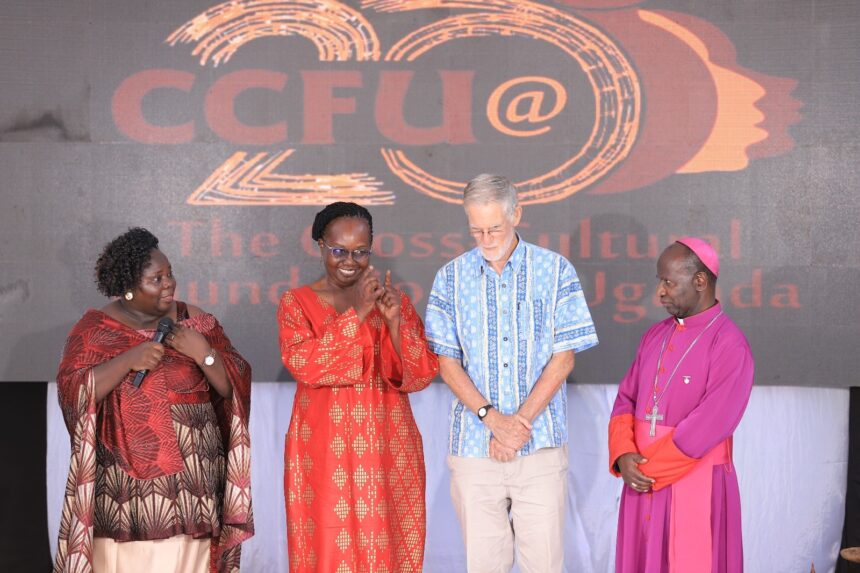
Uganda’s leading cultural heritage advocates used the 20th anniversary of the Cross-Cultural Foundation of Uganda to mount a renewed push for the creation of a standalone Ministry of Culture, arguing that one of Africa’s most culturally diverse nations continues to treat heritage as an afterthought despite its growing economic and social value.
Speaking at celebrations held at Hotel Africana, CCFU founders, executives and cultural leaders said Uganda risks undermining its identity, tourism potential and indigenous knowledge systems without stronger state backing for the sector.
“We need to have a Ministry of Culture,” said co-founder Emily Drani, drawing applause from guests that included academics, diplomats and development partners. “Any country that has a real desire to be recognized for its identity should have a Ministry of Culture.”
Drani described Uganda’s current arrangement — where culture falls under a department within the Ministry of Gender, Labour and Social Development — as inadequate for a country with more than 50 ethnic communities and a rapidly expanding creative economy.
“It’s 20 years and we still don’t have it,” she said. “And it’s a shame.”
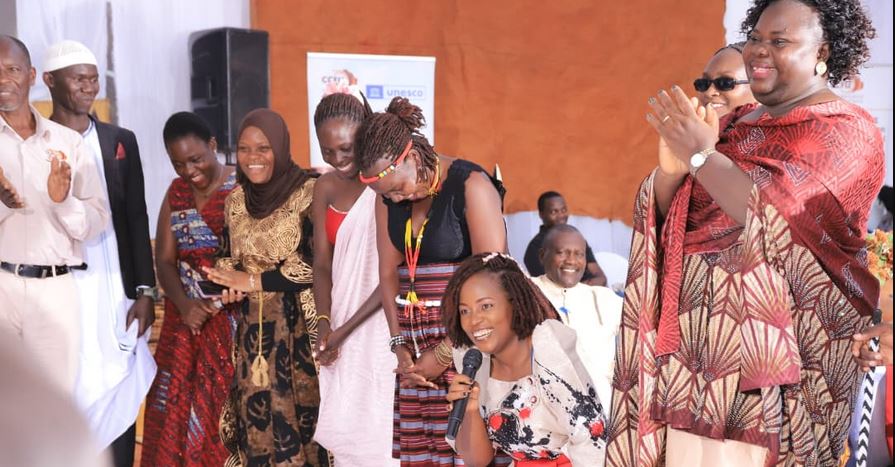
The call emerged as a dominant theme during celebrations marking two decades of CCFU, an organization founded by Drani and Belgian-born Ugandan citizen John De Coninck from what speakers described as an idea first scribbled on a restaurant napkin.
What began as a niche advocacy platform arguing that culture could drive development has evolved into one of Uganda’s most influential heritage institutions, shaping conversations around indigenous knowledge, climate adaptation, women’s rights and cultural entrepreneurship.
CCFU Executive Director Barbra Babweteera said the organization has spent the last two decades repositioning culture from being viewed as a “hindrance to development” into a tool for social transformation and economic inclusion.
“At the heart of our work has been the commitment to social justice,” Babweteera said. “We have illuminated the link between culture and the rights of women and girls.”
She said the organization has increasingly positioned indigenous knowledge systems as part of climate resilience strategies, adding that CCFU now serves as the secretariat for the Climate Heritage Network covering African and Arab states.
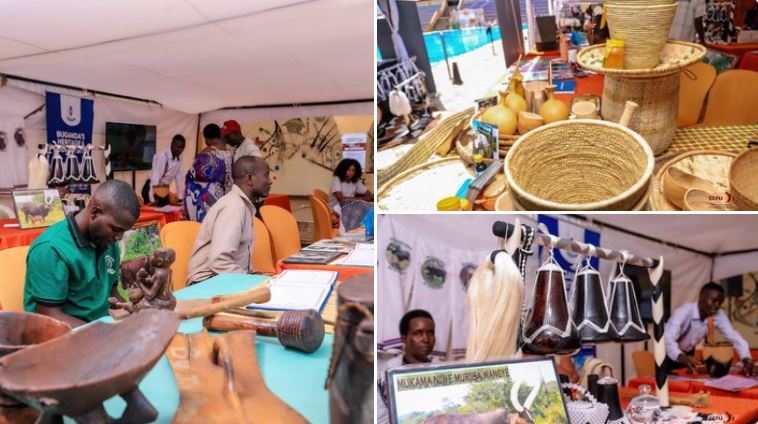
The organization also cited milestones including integrating cultural education into Uganda’s curriculum and influencing national institutions such as the Equal Opportunities Commission and the Uganda Human Rights Commission to include cultural rights in official reporting.
But speakers warned that modernization, urban migration and digital culture are accelerating the erosion of local languages and traditions.
Chief guest Fr. Rev. Dr. Robert Mpiirwe Akiiki said many young Ugandans increasingly perceive culture as backward, while fluency in English is often treated as superior to indigenous languages.
“A tree without roots cannot stand,” he said.
Akiiki praised CCFU for supporting marginalized communities including the Batwa in Rubanda and Bundibugyo District, where the organization partnered with local Catholic institutions to expand access to education.
He said 49 Batwa children are currently enrolled in primary and secondary schools under the initiative, though girls continue to face resistance from families who prioritize domestic labor over education.
The event also became a reflection on leadership transition and institutional survival in Uganda’s nonprofit sector.
Board members and long-time partners credited Drani and De Coninck for stepping away from operational leadership while allowing younger managers to scale the organization.
Recalling CCFU’s uncertain beginnings in 2006, Drani said many initially mocked the idea that culture could positively influence development policy.
“People thought we were just looking for work,” she said. “They asked, ‘What positive aspects of culture are there?’”
Today, however, CCFU’s founders say Uganda’s cultural sector has gained international legitimacy, with the organization now working alongside bodies including UNESCO, UN Women, the British Council and the European Union.
For De Coninck, seeing young Ugandans openly embrace their identity remains the organization’s biggest achievement.
“For very long, Ugandan culture was the culture of the oppressed,” he said. “What warms my heart is seeing young people say, ‘I’m proud of my culture.’”
As the evening closed, CCFU leaders vowed to continue lobbying government officials until Uganda establishes a fully fledged Ministry of Culture — a campaign they say will define the institution’s next decade.
“We are going to hang on to this bone,” Drani said. “And we shall keep drumming it in until we finally get results.”