



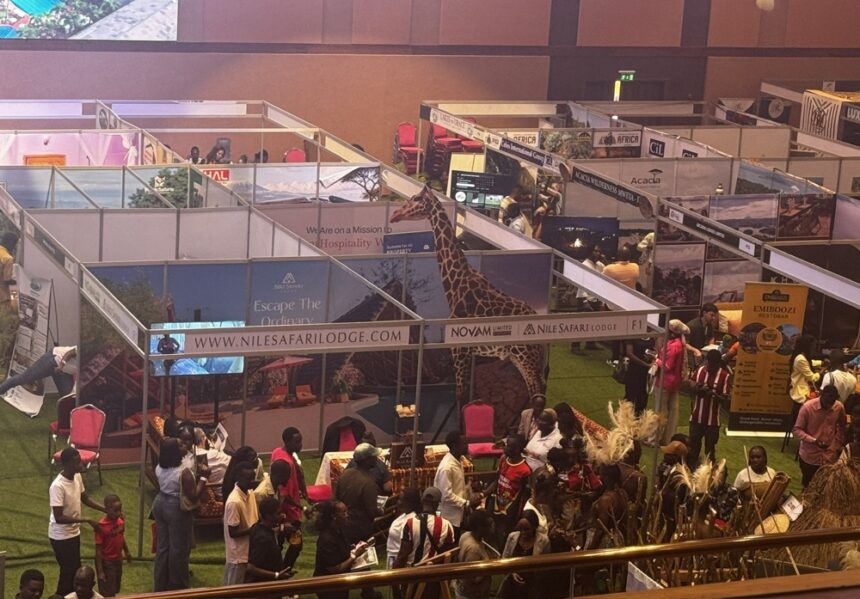
East African tourism leaders are warning that fragmented visa systems, expensive regional travel and weak transport infrastructure are slowing the region’s ability to compete for global tourism revenue despite growing international demand for African travel experiences.
Speaking at the Pearl of Africa Tourism Expo (POATE) in Munyonyo, Kenya’s Principal Secretary for the State Department of Tourism, John Lekakeny Ololtuaa, called for deeper regional cooperation, arguing that East Africa must position itself as a single tourism destination rather than isolated national markets.
“Tourists do not see borders the way governments do,” Ololtuaa said, urging countries to harmonize visa policies, improve transport connectivity and strengthen joint destination marketing.
The call comes as global tourism spending rebounds sharply. According to the UN World Tourism Organization, international tourism receipts exceeded $1.5 trillion in 2025, yet Africa still captures less than 5 percent of global tourism revenue despite its globally recognized wildlife and cultural attractions.
Industry players say one of the biggest obstacles remains the high cost of movement across Africa. The African Airlines Association estimates that taxes and airport charges account for nearly half the cost of some regional air tickets, making intra-African travel among the most expensive globally.
While Uganda, Kenya and Rwanda introduced the East African Tourist Visa to ease regional travel, implementation gaps and limited regional integration continue frustrating multi-country tourism packages increasingly preferred by international travelers.
Tourism stakeholders also warned that environmental degradation threatens the sector’s long-term growth.
Jody Thom, Director of Dream Kenya Safaris and Coral Spirit, said stronger conservation policies and community-led eco-tourism initiatives are becoming essential as environmentally conscious travelers increasingly choose destinations based on sustainability practices.
Africa loses an estimated four million hectares of forest annually, according to the Food and Agriculture Organization, while climate shocks continue threatening wildlife habitats and coastal tourism ecosystems.
“Conservation is central to the future of tourism,” Thom said.
Infrastructure gaps were also highlighted as a major constraint, particularly in island tourism destinations dependent on water transport.
Clifford Kengara Nyairo, Head of Marketing at La Fang Eco Resort Dolwe, said limited ferry schedules are inflating transport costs and discouraging tourism growth by forcing travelers to rely on expensive private boats.
Analysts say inadequate transport systems continue reducing visitor movement, limiting tourism spending and undermining domestic tourism growth across the region.
Tourism contributes between 7 and 10 percent of GDP in several East African economies. In Uganda, the sector generated more than $1.6 billion annually before the pandemic, making it one of the country’s leading foreign exchange earners.
But sector players argue that without coordinated reforms, stronger conservation policies and better infrastructure investment, East Africa risks falling behind rival tourism markets despite possessing some of the continent’s strongest tourism assets.