



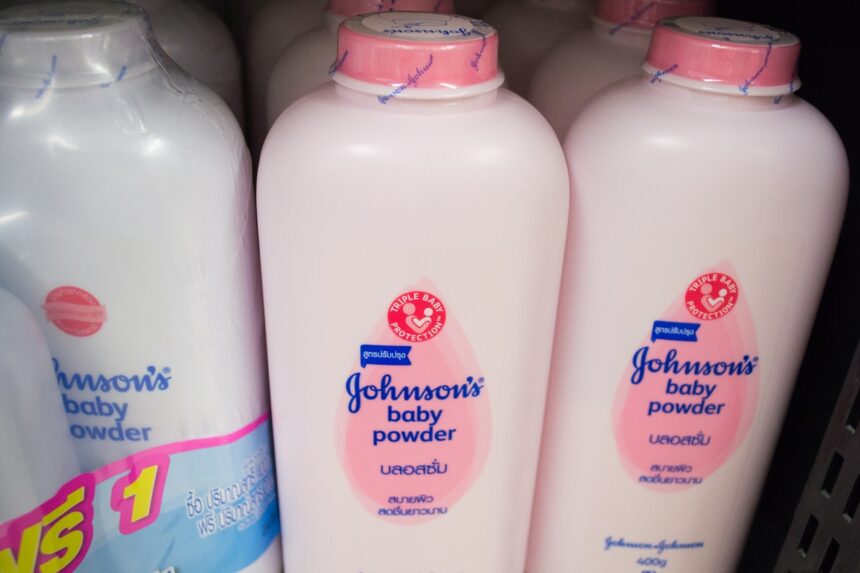
Kenya’s High Court has dismissed a petition seeking an immediate ban on the manufacture, importation, sale and distribution of talc-based Johnson & Johnson baby powder, ruling that the petitioner failed to provide sufficient evidence proving the product poses a cancer risk to consumers.
The case, filed by consumer rights petitioner Frederick Bikeri, argued that the continued sale of the talc-based baby powder violated constitutional rights to life, health, consumer protection and access to information.
Bikeri also sought orders compelling authorities to withdraw all existing stocks from the Kenyan market and direct regulators to conduct comprehensive safety testing on the product.
However, the High Court found that the claims presented did not meet the legal threshold required to justify such sweeping orders. The judge ruled that the petitioner had failed to demonstrate that Johnson & Johnson baby powder sold in Kenya was carcinogenic or presented a proven danger to public health.
The court further held that the dispute should first have been pursued through Kenya’s statutory consumer protection and product safety mechanisms before being elevated to a constitutional petition.
The petition relied heavily on a July 2024 assessment by the World Health Organization’s International Agency for Research on Cancer (IARC), which classified talc as “probably carcinogenic to humans.”
Bikeri also cited thousands of lawsuits filed against Johnson & Johnson in the United States linking prolonged use of talc-based baby powder to ovarian cancer, as well as restrictions imposed in several countries.
He argued that despite Johnson & Johnson’s global decision announced in 2022 to phase out talc-based baby powder in favour of cornstarch formulations, talc-based products remained available in Kenya.
Johnson & Johnson opposed the petition, maintaining that there was no credible scientific evidence showing that products sold in Kenya contained asbestos or were unsafe.
The company said its decision to transition to cornstarch-based baby powder was driven by commercial considerations and changing consumer preferences rather than safety concerns.
The ruling comes as the healthcare giant continues to face extensive litigation globally over its historic talc products.
While Johnson & Johnson has paid billions of dollars in settlements and compensation in some jurisdictions, the company has consistently denied that its talc products cause cancer and continues to defend outstanding lawsuits.
The Kenyan judgement represents a significant legal victory for the company in East Africa, allowing talc-based Johnson & Johnson baby powder to remain on the country’s shelves under existing regulatory approvals.