



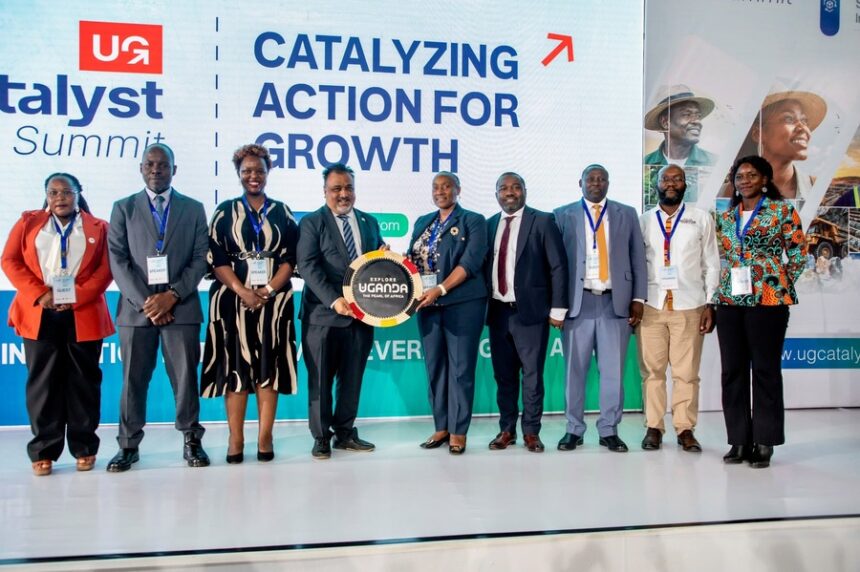
Uganda’s tourism industry is positioning itself for accelerated growth after the UG Catalyst Summit 2026 outlined a strategy that places infrastructure, innovation and private sector-led investment at the heart of the country’s economic transformation agenda.
Held at MoTIV Bugolobi, the summit brought together policymakers, business leaders, entrepreneurs and development partners to discuss practical pathways for delivering Uganda’s ambitious tenfold economic growth target under the Fourth National Development Plan (NDP IV).
Setting the tone for the discussions, National Planning Authority Chairperson Prof. Pamela Mbabazi challenged stakeholders to focus on lasting economic impact.
“Every generation receives a defining assignment. Our generation has been assigned the responsibility of economic transformation. History will judge us not by the speeches we gave, but by the opportunities we created,” she said.
Tourism and the creative industries emerged as one of the summit’s key focus areas, with participants highlighting the urgent need to improve supporting infrastructure, strengthen destination competitiveness and increase visitor spending beyond traditional sightseeing.
Industry leaders argued that Uganda must move beyond simply attracting tourists to creating experiences that encourage repeat visits, longer stays and stronger linkages with local businesses.
The discussions come as Uganda continues to expand its international tourism marketing efforts, including promotional campaigns in Europe where branded buses carrying images of the country’s wildlife, landscapes and attractions have been deployed on the streets of Paris.
Delegates noted that such marketing initiatives will deliver greater returns when backed by improved transport infrastructure, better visitor experiences and coordinated investment.
One of the summit’s most significant announcements came from Minister Sanjay Tana, who revealed a three-year income tax holiday for qualifying startups.
The incentive is expected to stimulate investment across tourism-related enterprises, including hospitality businesses, tour operators, cultural attractions, transport providers and creative industry ventures.
The government also unveiled an Opportunity Dashboard while confirming that the Startup Development Policy will soon be presented to Cabinet, signalling a stronger commitment to creating an enabling environment for entrepreneurs.
Delegates also acknowledged persistent challenges affecting tourism enterprises, particularly micro, small and medium-sized businesses. They noted that limited bank-ability, fragmented value chains and weak participation in the African Continental Free Trade Area continue to constrain growth.
Despite these hurdles, the summit concluded that Uganda possesses globally competitive tourism assets anchored in its biodiversity, cultural heritage and adventure experiences.
With stronger infrastructure, consistent policy implementation and improved access to finance, stakeholders believe the sector can become one of the country’s biggest drivers of investment, employment and foreign exchange earnings as Uganda pursues its long-term economic transformation agenda.