



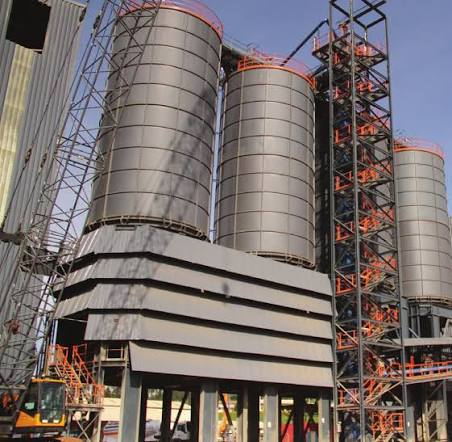
Uganda’s once-ambitious cement manufacturer, Kampala Cement, has become a cautionary tale of how weak corporate governance, aggressive borrowing and unresolved shareholder disputes can unravel even the most promising industrial investments.
The company, which entered receivership after lenders moved to recover outstanding loans, is now at the center of one of Uganda’s biggest corporate collapses in recent years.
While rising competition and mounting debt have long been cited as the immediate triggers, recent remarks by shareholder and businessman Charles Mbiire have revealed deeper governance issues that may have accelerated the company’s downfall.
Mbiire, who owns a 20 percent stake in Kampala Cement, disclosed that he resigned from the company’s board in December 2022 after raising concerns over governance practices.
According to his account, the board was not consistently approving certain related-party and inter-company transactions, limiting directors’ ability to exercise effective oversight over the company’s affairs.
He further alleged that Kampala Cement’s resources were being used to support shareholder-linked businesses in Kenya, claims that have not been publicly responded to by the other shareholders.
If accurate, such practices would represent significant governance lapses capable of weakening the financial position of any capital-intensive manufacturing business.
The revelations suggest that Kampala Cement’s troubles extended far beyond slowing sales and a challenging market environment.
They point to a breakdown in board oversight at a time when the company was carrying substantial financial obligations and required disciplined management.
Financial pressure eventually proved overwhelming. The company accumulated debts estimated at nearly $83 million, including a $49.3 million facility from the Eastern and Southern African Trade and Development Bank (TDB).
When the company failed to meet its obligations, the lender enforced its security, leading to the appointment of a receiver and manager.
Yet debt alone rarely destroys a business of Kampala Cement’s scale.
Uganda’s cement industry has become increasingly competitive over the past decade, with established manufacturers and new entrants investing heavily in production capacity.
The resulting price competition squeezed margins across the sector, making it increasingly difficult for highly leveraged producers to generate sufficient cash flow.
Industry observers have also pointed to high logistics costs associated with transporting raw materials, rising operating expenses and the capital-intensive nature of cement manufacturing, all of which placed additional strain on Kampala Cement’s balance sheet.
Taken together, the company’s collapse illustrates how governance failures can amplify financial risks.
Heavy borrowing may create vulnerability, but weak oversight, disputed transactions and a lack of board accountability can quickly erode investor confidence and limit management’s ability to respond to deteriorating market conditions.
As Uganda continues to attract private investment into manufacturing, Kampala Cement’s collapse offers an important lesson for investors, lenders and policymakers alike, that ambitious industrial projects require more than capital.
They demand transparent governance, independent boards, prudent debt management and rigorous financial discipline.
Without those foundations, even a multimillion-dollar manufacturing venture can crumble under the combined weight of debt, competition and poor corporate oversight.
According to available public records and statements, Kampala Cement Company Ltd. is primarily owned by two principal shareholders: Charles M. Mbire, who holds a 20% stake, and Kenyan businessman Rajinder Singh Baryan, who acts as the controlling shareholder through his industrial conglomerate, Multiple Group (Multiple Industries Ltd.)
While Multiple Group is recognised as the company’s historical promoter, the exact distribution of the remaining shares has not been publicly disclosed.
The company’s latest active filings list Rajinder Singh Pritam, Manvir Singh Baryan, Sukhminder Singh Baryan, and Charles M. Mbire as directors, though Mbire has publicly stated that he resigned from the board in December 2022 due to governance concerns while retaining his equity.