




In 2022, Makerere University celebrated a century of excellence, a milestone that underscores its pivotal role in shaping not just Uganda but the broader African landscape.
Established in 1922 as a modest technical school with just 14 students, Makerere has evolved into one of Africa’s most esteemed universities, now boasting over 35,000 students.
The university’s alumni network is a testament to its legacy, with influential leaders such as Julius Nyerere, Paul Kagame, and Yoweri Museveni among its graduates.
The institution’s motto, “We build for the future,” encapsulates its mission to educate and empower future leaders. Makerere has made invaluable contributions to both local and global communities through its alumni, who have taken up vital roles across various sectors.
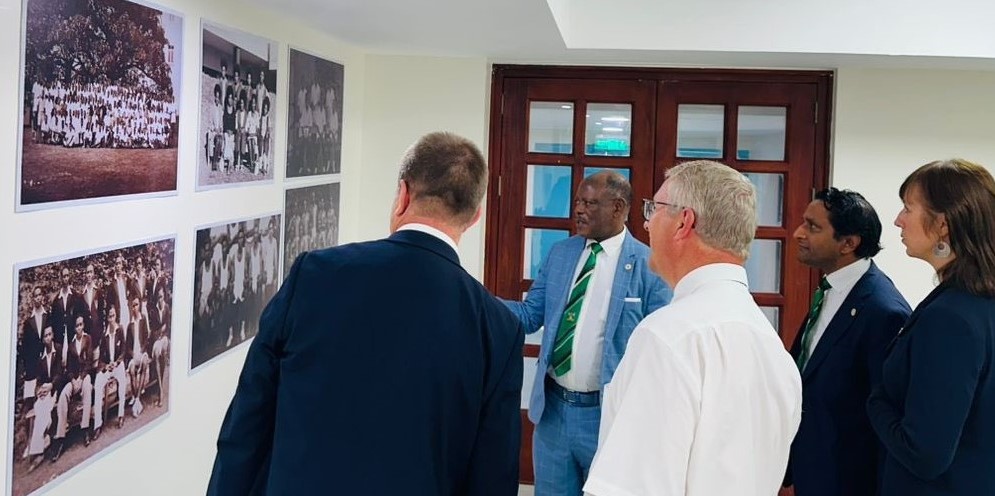
Notably, the late Prof. Senteza Kajubi, the first African Fulbright Scholar in the United States, exemplifies this impact. During the recent Senteza Kajubi Fulbright Memorial Lecture, Vice Chancellor Prof. Barnabas Nawangwe lauded Kajubi’s trailblazing efforts that opened doors for African scholars in America.
Since the 1950s, over 300 Ugandans have benefited from the Fulbright grant, highlighting the university’s commitment to fostering educational opportunities.
Beyond academic instruction, Makerere actively engages in research on pressing social, economic, and political issues, thereby informing policy decisions that ultimately shape governance in Uganda.
The university’s courses on civic education and leadership cultivate an environment where students are not just passive recipients of knowledge, but active participants in societal transformation.
One prominent example of this transformative environment is Kyagulanyi Sentamu, popularly known as Bobi Wine. His rise from a Makerere student to a prominent social change advocate illustrates the university’s role in nurturing talent.
Through his impactful music, Bobi Wine has effectively raised awareness on critical societal issues, proving that education is not solely about acquiring knowledge; it’s also about using that knowledge to effect change.
The importance of student governance in strengthening democracy was echoed by U.S. Ambassador to Uganda, H.E. William W. Popp, during the Memorial Lecture. He emphasized that leadership experiences gained within university settings empower students to advocate for their peers and engage meaningfully in civic life.
As a student representative myself, I’ve experienced firsthand the significance of such involvement—lobbying for changes like extended assignment deadlines has not only engaged me in decision-making processes but also honed my ability to address broader national issues.
Makerere fosters a culture of public debate and discourse, providing students with platforms to engage on national matters.
Guild President H.E. Lubega Nsamba’s critique of the education system’s shortcomings in producing capable citizens is a poignant reminder of the challenges we face. He argued that an overemphasis on theoretical knowledge neglects the development of essential soft skills, ultimately limiting graduates’ potential to contribute meaningfully to society.
Moreover, speakers like Dr. Biyinzika Ruth of the Private Sector Foundation Uganda and Dr. Pamela Tibihikirra-Kalyegira have emphasized the necessity of cultivating soft skills—interpersonal skills, emotional intelligence, and ethical behavior are as crucial as academic knowledge. Such skills not only enrich our personal development but also enhance our community engagement.
Yet, as we reflect on what Makerere offers us, we must also consider how we can give back. The university provides invaluable resources—knowledge, innovation, and a network of support.
Mrs. Lorna Magara, Chairperson of the Makerere University Council, challenges us to think about our contributions. Giving back does not solely refer to financial support; it involves creating a supportive community for our peers.
In conclusion, while Makerere University plays an essential role in fostering active citizenship and leadership, it is our responsibility as students and alumni to nurture this legacy. By uplifting one another and engaging critically with our communities, we honor the institution that has shaped us and continues to inspire generations.
The writer is a student leader at Makerere University.
NAKYANZI EVE 21/U/16080/EVE