



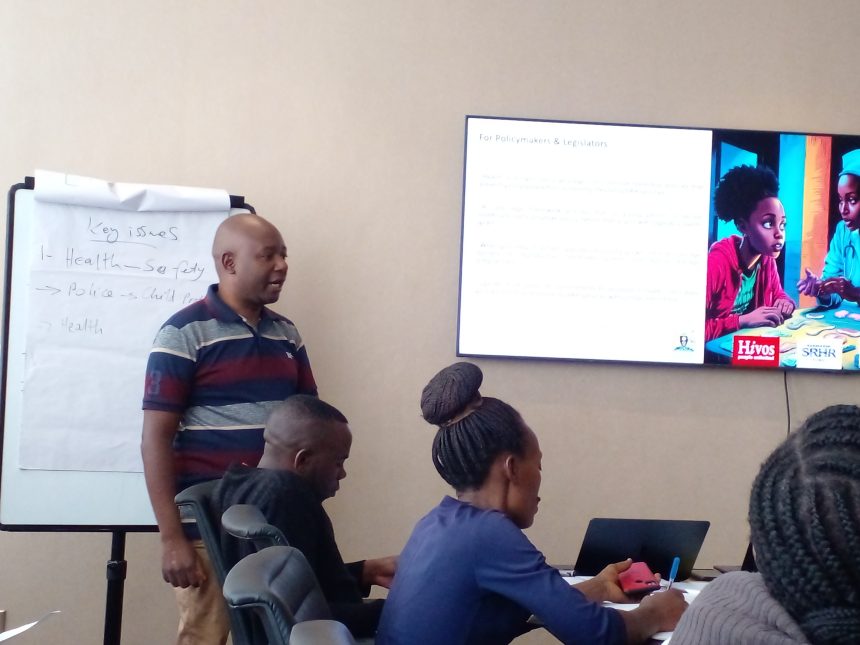
In a bid to enhance accurate and responsible reporting on adolescent and sexual reproductive health, journalists recently participated in the Media Orientation on Adolescent and Sexual Reproductive Health Workshop.
The session provided crucial insights into the challenges young people face regarding reproductive rights, access to healthcare, and the role of the media in shaping informed public discourse.
The workshop, attended by media professionals from various outlets, emphasized the importance of ethical and evidence-based reporting on issues affecting adolescents.
Experts in adolescent health and reproductive rights led by Dr.Rose Achola , a specialist in Sexual and Reproductive Health, engaged with journalists, providing them with up-to-date information and answering pressing questions to ensure a well-informed media landscape.
One of the key discussions revolved around the barriers adolescents face in accessing reproductive health services, including stigma, lack of information, and policy gaps.
Journalists were encouraged to adopt a youth-friendly approach in their reporting, ensuring that information is not only accurate but also accessible to young audiences.

“The media plays a critical role in shaping perceptions and influencing policy decisions. By reporting responsibly on adolescent and sexual reproductive health, journalists can help bridge knowledge gaps and advocate for better health outcomes for young people,” said Tatenda Songore an officer with the Zimbabwe Youth Advocates.
Participants also explored ways to strengthen collaboration between media professionals and health experts to ensure sustained and informed coverage of adolescent reproductive health topics.
The interactive session provided an avenue for open dialogue, fostering partnerships that will contribute to improved storytelling and public awareness campaigns.
As the workshop concluded, journalists expressed their commitment to amplifying adolescent health issues in their reporting, with a focus on fostering awareness and driving policy changes that benefit young people.
The initiative marks a significant step toward ensuring the media remains a powerful tool for education and advocacy in adolescent and sexual reproductive health.