



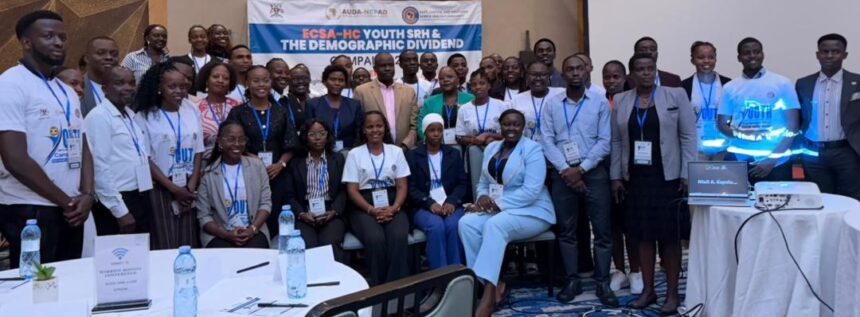
Uganda has renewed calls for stronger investment in youth health and meaningful participation in policymaking, as government officials and regional partners convened for a high-level inter-ministerial youth dialogue.
Speaking at the opening session, Eastern, Central and Southern Africa Health Community (ECSA-HC) Executive Director, Dr. Ntuli Kapologwe, said the region must urgently translate commitments on youth development into action, noting that over 60 percent of Africa’s population is under the age of 25.
“This is a historic opportunity, but also an urgent responsibility,” Kapologwe said, warning that limited access to youth-friendly sexual and reproductive health services and exclusion from decision-making continue to undermine progress.
He commended Uganda for strides in developing youth-focused policies, describing the country as “one of the exemplars” in the region, while urging stakeholders to ensure that dialogue outcomes result in tangible improvements at community level.
Youth and Child Affairs Minister Balaam Barugahara echoed the need for practical outcomes, emphasizing the importance of defining and preparing the ideal Ugandan youth through education, productivity and health awareness.
“With nearly 71 percent of Uganda’s population below 30, we must ask ourselves how to turn this demographic advantage into national transformation,” Barugahara said.
He highlighted persistent challenges including child marriage and teenage pregnancies, warning that failure to address them could erode the country’s human capital. He called for stronger enforcement of laws, cross-sector coordination, and engagement of institutions such as Parliament and the justice sector.
Health Ministry Commissioner for Maternal Reproduction and Child Health Services, Dr. Richard Mugahi,enphasized the need for integrated investment in sexual and reproductive health as a driver of economic growth and human capital development.
“The demographic dividend will remain out of reach unless we address systemic barriers, including stigma, limited access to services, and lack of youth involvement,” Mugahi said.
He added that government is strengthening inter-ministerial collaboration to ensure youth are not only beneficiaries but active partners in shaping policies.
The dialogue builds on regional commitments made earlier this year and is expected to generate actionable strategies to improve youth health outcomes and accelerate Uganda’s development agenda.