



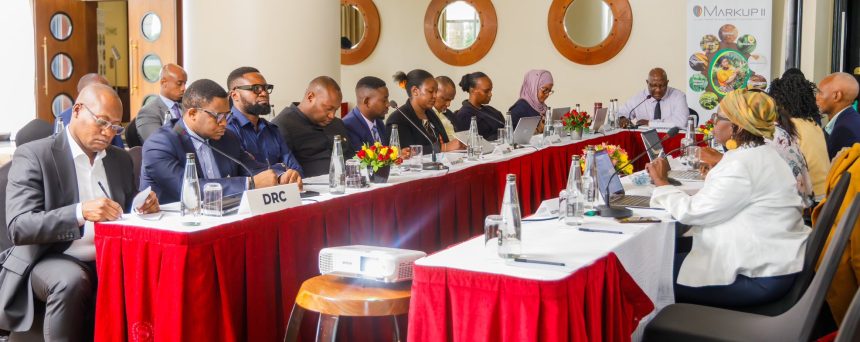
The East African Community (EAC) Trade Promotion Organizations (TPOs) Technical Working Group (TWG) has taken significant steps toward enhancing trade across the region.
Meeting in Kampala, Uganda, from March 24 to 27, 2025, the TWG gathered key stakeholders to discuss trade development strategies, supported by the International Trade Centre (ITC) in collaboration with the EAC Secretariat and Partner States.
The meeting was a milestone in the European Union (EU)-funded EU-EAC Market Access Upgrade Programme (MARKUP II), which aims to enhance market opportunities for businesses in the region.
Among the key topics discussed were the refinement of the TWG’s work programme and the EAC’s participation in the 2025 Intra-African Trade Fair (IATF), scheduled to take place in Algiers, Algeria, from September 4 to 10, 2025.
Commitment to Strengthening Trade
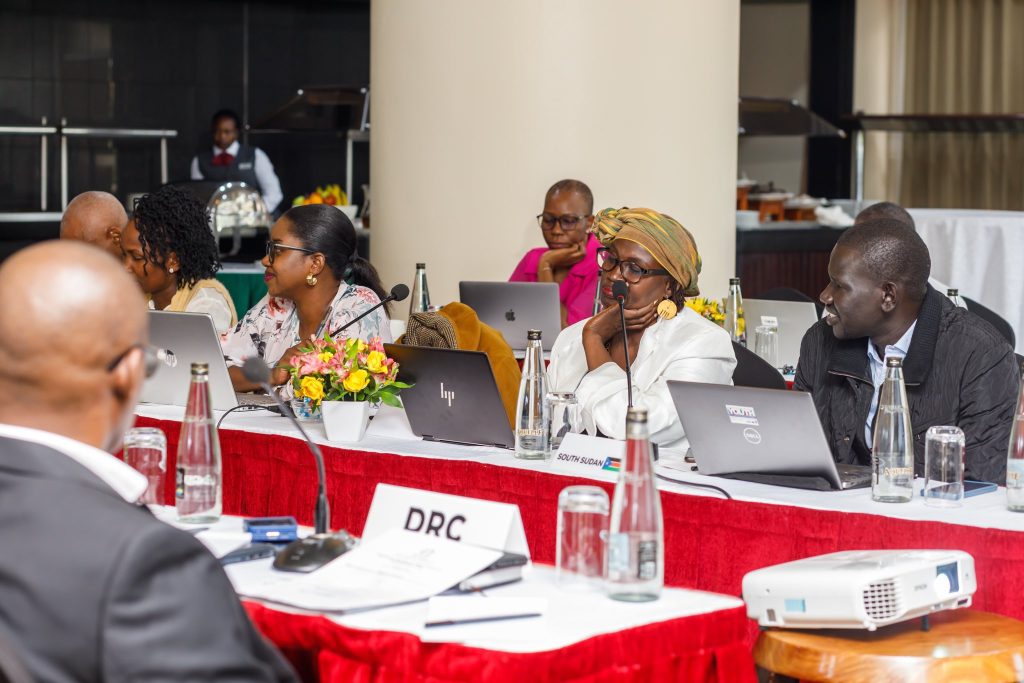
Speaking at the meeting, Mr. Cleopas Ndorere, Commissioner of External Trade at Uganda’s Ministry of Trade, Industry, and Cooperatives, emphasized Uganda’s commitment to positioning itself as a global and regional trade hub. He highlighted the growing trade opportunities within various regional and international trade blocs, including the EAC, COMESA, the Tripartite Free Trade Area, the African Continental Free Trade Area (AfCFTA), and the EU.
Ms. Annete Ssemuwemba, Deputy Secretary General for Customs, Trade, and Monetary Affairs at the EAC, lauded the collaboration between the EAC, ITC, and the EU, stating that the TWG serves as a vital platform for addressing trade challenges and fostering economic growth. She noted that such cooperation enhances the EAC’s visibility in global markets and opens doors for new opportunities.
Mr. Sagoh Djete, EU Programme Manager for Regional Cooperation and Infrastructure, underscored the importance of a well-coordinated EAC TPO network in supporting businesses, particularly MSMEs, by facilitating access to new markets and boosting competitiveness.
Driving Trade Through Cooperation
Ms. Miyoba Lubemba, Senior Programme Officer for Institutions and Ecosystems at ITC, outlined the EU-EAC MARKUP II initiative’s efforts in supporting TPOs. She acknowledged that while these organizations play a crucial role in trade promotion, many face resource and capacity challenges. The TWG’s collaborative approach aims to address these issues through shared knowledge, joint trade missions, exhibitions, and resource optimization.
The initiative also aligns with decisions made during previous EAC ministerial meetings. In May 2024, the Sectoral Council of Ministers on Trade, Industry, Finance, and Investment (SCTIFI) approved the establishment of the TWG. This was followed by the endorsement of its Terms of Reference and Memorandum of Understanding, further strengthening cooperation among EAC TPOs. The November 2024 SCTIFI meeting then directed the EAC Secretariat to develop a comprehensive work programme, a task that the Kampala meeting has advanced.
Networking for Future Growth
Following the discussions, the ITC organized a Networking Debrief, bringing together representatives from the EAC Secretariat, Partner States’ TPOs, and the EU delegation. This session provided updates on the ongoing support from EU-EAC MARKUP II and fostered engagement among key stakeholders.
The TWG’s work is set to play a pivotal role in advancing the objectives outlined in the EAC Export Promotion Strategy, ensuring long-term benefits for MSMEs and the broader EAC region. By fostering trade development at national, regional, and global levels, the group aims to position the EAC as a competitive player in international markets.
About EU-EAC MARKUP II
EU-EAC MARKUP II is an EU-funded initiative designed to promote economic development in the EAC through enhanced trade within Africa and between Africa and the EU.
The programme focuses on improving livelihoods, employment, and export competitiveness, particularly for MSMEs. By addressing trade barriers, supporting value addition, ensuring quality compliance, and facilitating technology transfer, EU-EAC MARKUP II plays a key role in driving sustainable economic growth in the region.