



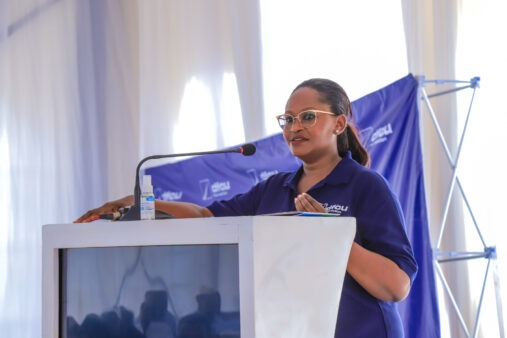
By Mabel Ndawula, Executive Director, Dfcu Foundation
On June 12, 2025, Uganda’s Finance Minister, Hon. Matia Kasaija, presented a UGX 72.3 trillion national budget for FY 2025/26, projecting a resilient 7% economic growth. Agriculture remains at the heart of Uganda’s economy—employing 70% of the population and contributing 24% to GDP. This year’s budget reflects that reality, allocating over UGX 1.6 trillion to agriculture through programs like the Parish Development Model (PDM), the Agricultural Credit Facility (ACF), and agro-industrialisation. An additional UGX 2.43 trillion supports broader wealth creation efforts.
Yet, despite these interventions, persistent challenges remain: high interest rates (averaging 17.7%), sluggish private sector credit growth (6.4%), and a strong rural focus in government programs. Alone, public funding cannot overcome these systemic barriers.
This is where the private sector must step in. The launch of the Dfcu Foundation on May 29, 2025, in Mbarara marks a bold new chapter in private sector-driven agricultural transformation. Evolving from Dfcu Bank’s Agribusiness Development Centre (ADC), the Foundation aims to support 100,000 farmers, SMEs, women, and youth over the next five years—with a deliberate focus on 60% women and 40% youth, reflecting Uganda’s youthful demographic.
Building on the ADC’s track record of 59,000 supported beneficiaries and USD 22 million in business linkages since 2018, the Foundation now expands its scope to include financial literacy, mentorship, access to credit, and market linkages—key enablers of commercial agriculture.
These efforts complement government initiatives. For instance, the PDM is delivering UGX 100 million to each of Uganda’s 10,589 parishes, benefiting over 2.6 million people. Meanwhile, the ACF has issued over UGX 1 trillion in loans to more than 14,000 farmers, focusing on grain trading and on-farm investments. Agro-industrialisation has also created over 181,000 jobs across 628 companies.
However, credit remains a major constraint. Many SMEs and smallholder farmers struggle to access affordable financing. This is where dfcu Foundation steps in—leveraging dfcu Bank’s network and resources to deliver customized credit solutions, climate-smart training through the SOMA eLearning platform, mentorship, and market access.
The Foundation’s emphasis on gender equity—reflected in 52% female participation in ADC programs—mirrors national efforts like the UGX 231.3 billion GROW program targeting women entrepreneurs. Additionally, the Foundation’s work aligns with state-led investments in irrigation, mechanisation, and research, including the distribution of 20 million anti-tick vaccine doses by NARO.
Together, public infrastructure and grassroots private sector initiatives can accelerate Uganda’s transition from subsistence to commercial agriculture. The government lays the groundwork; the private sector drives implementation and inclusivity.
As Dfcu Foundation expands its reach across Uganda’s five regions, and as government addresses gaps in urban agriculture and credit affordability, a powerful model of collaboration emerges—one rooted in shared purpose, innovation, and sustainability.
Uganda’s ambition to become a USD 500 billion economy by 2040 will only be realised through partnerships like these—where government and private sector co-invest in a future of agricultural prosperity for all.