



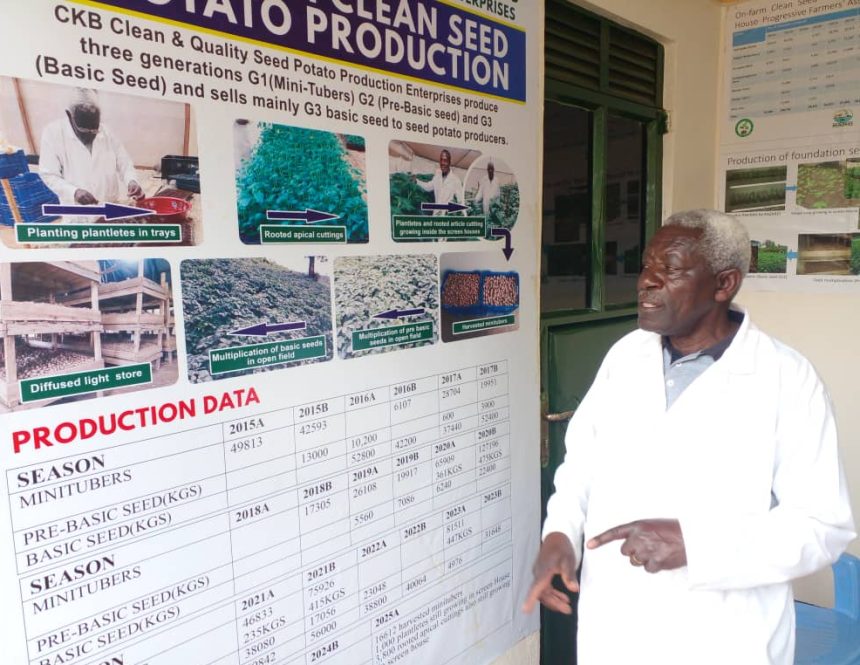
On a quiet stretch of farmland in southwestern Uganda, greenhouses shimmer under the morning sun. Inside them, rows of delicate potato plantlets stretch upwards, nurtured under carefully regulated conditions. This is not just another farm—it is the home of CKB Clean & Quality Seed Potato Production Enterprises, a company that has become a lifeline for farmers in search of reliable, disease-free potato seed.
At the heart of this transformation is Charles K. Byarugaba, a man who has risen from humble beginnings with home-saved seed to become a recognized player in Uganda’s potato seed industry. His story is one of resilience, faith, and the power of partnerships to change not just a business, but an entire community.
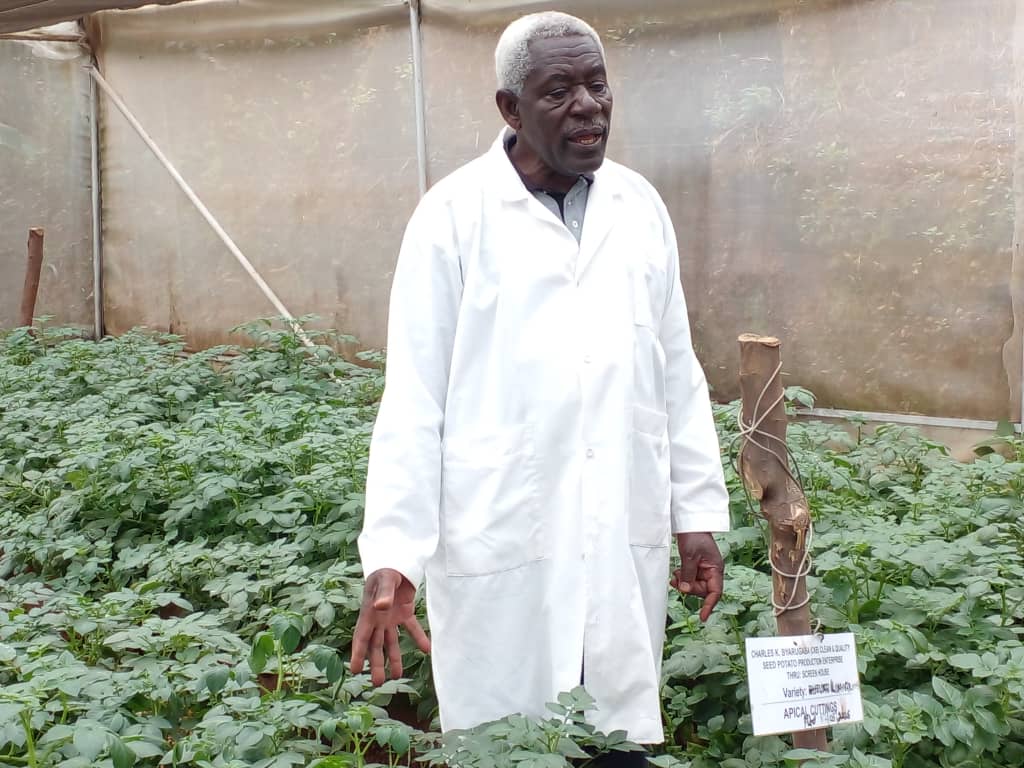
“When I started, I was at first using home-saved seed,” he recalls. “I had the seed from my application, but it was never enough. Even when I joined the Uganda National Seed Potato Association, the seed we received from the research organizations was not enough for all the members.”
Faced with scarcity and rising demand, Byarugaba dreamt of producing his own seed. But the challenge was capital. “I had a wish to produce my own seed on my behalf,” he says, “but I had no money to start the multiplication.”
That breakthrough came unexpectedly during a workshop organized by the International Fertilizer Development Center (IFDC). Byarugaba remembers vividly: “By God’s grace, it happened at a workshop which I had joined, invited by IFDC, where I got a chance to read in the New Vision. I found that there was a grant supported by IFDC to support commercial farmers in the production of potatoes. I made my application and it was assessed, and by God’s grace, I was passed.”
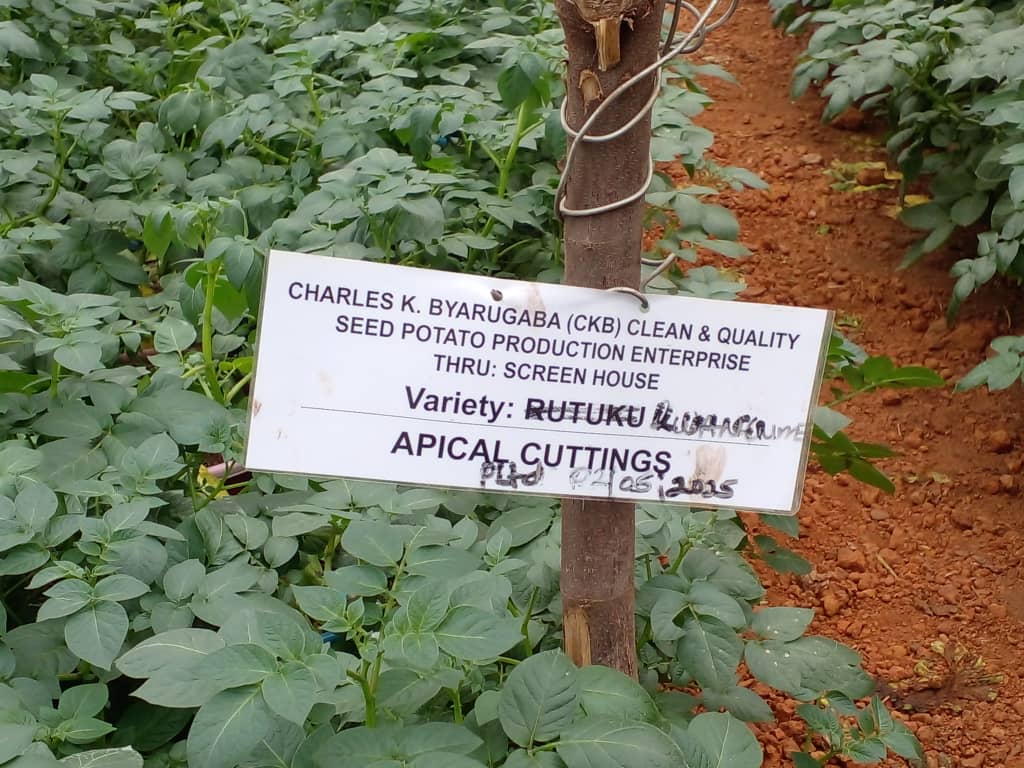
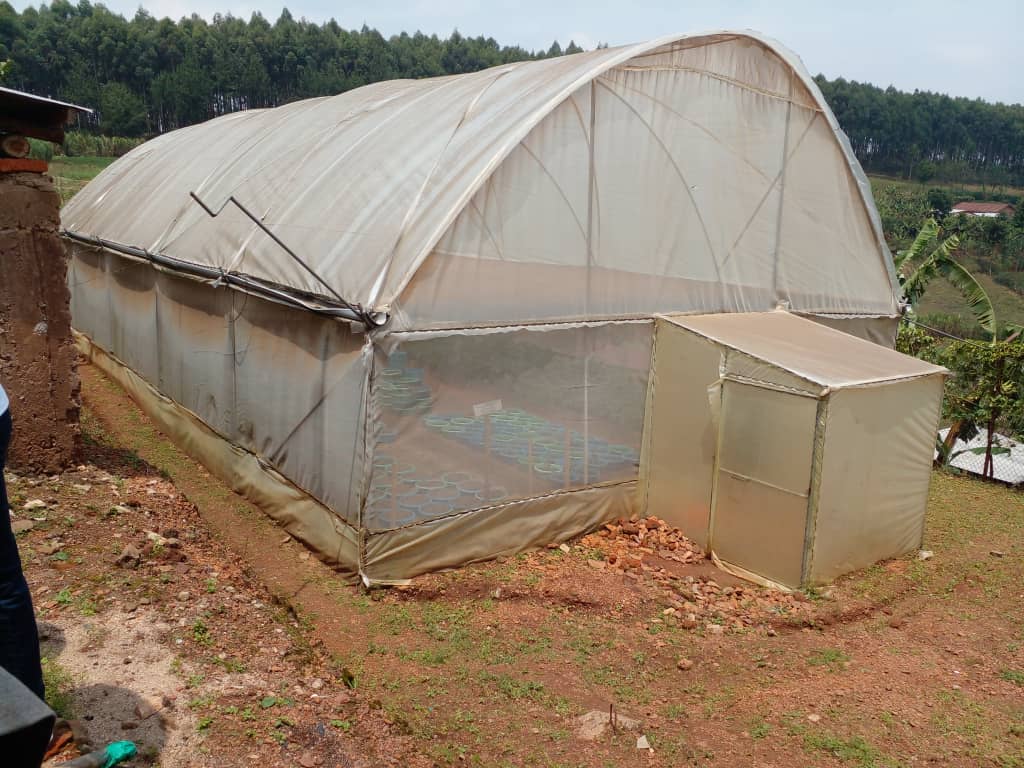
The grant was structured on a 70-30 cost-sharing model—IFDC contributing 70 percent and the enterprise 30 percent. With that support, CKB constructed modern screen houses, a light-diffused storage facility, and a water pond for irrigation. “We want to first thank IFDC,” he says with gratitude. “They helped us construct the screen houses, the light store, and the water pond we now use in the dry spell for irrigation. IFDC has done a wonderful job for our project and our area.”
Inside these screen houses, the enterprise produces three generations of seed: minitubers, pre-basic, and basic seed. Byarugaba and his team work closely with research institutions such as Kachwekano and Kazadi, who supply plantlets and training. “We are collaborating with them because they are the ones providing us plantlets,” he explains. “We plant them in the screen houses and produce minitubers, which then become pre-basic and later basic seed.”
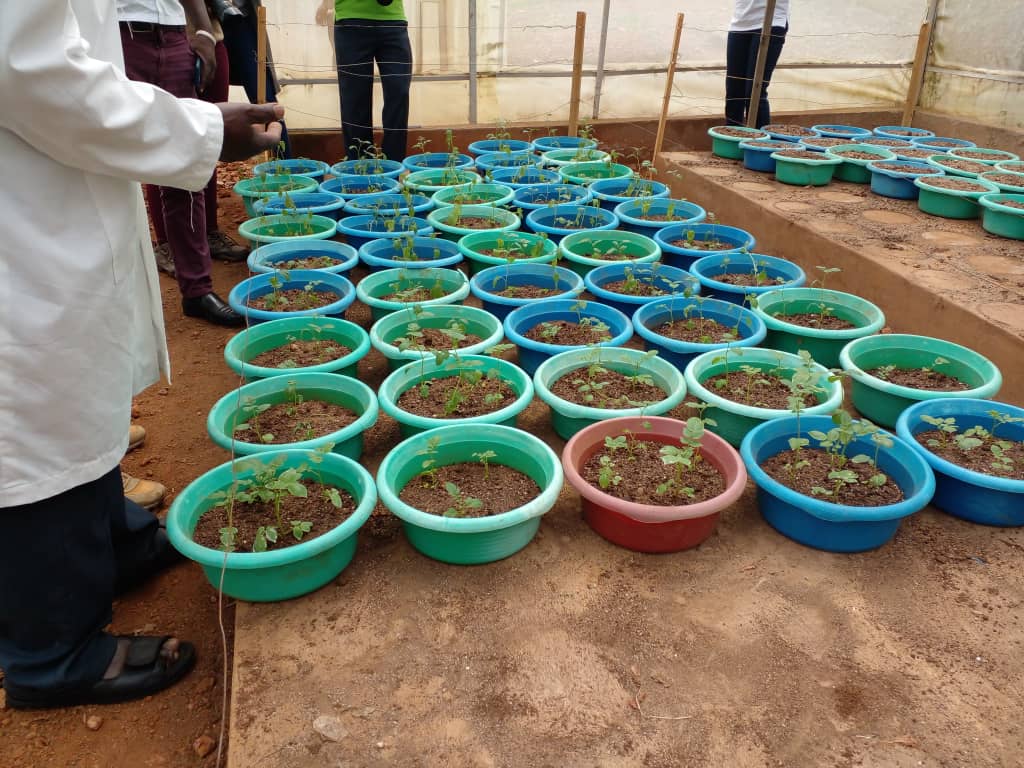
The enterprise has also created the Nyabyumba Farmers Innovative Resource Center, an umbrella initiative that trains farmers, supports local seed businesses, and facilitates further multiplication of seed. “We have that umbrella that collaborates with CKB Clean & Quality Seed Potato Production to multiply more,” he says. “They multiply polybasic seed to produce basic seed that we give to other farmers as trained farmers, so they can also multiply and provide to others.”
The impact has been transformative. Today, the enterprise employs about 30 workers on a daily basis and provides the community with clean seed that was once scarce. “Many members of the community and other surrounding areas are now getting quality seed from our enterprise,” Byarugaba notes. “This has helped farmers to increase productivity since they are using clean seed. Even production in the community has gone up.”
Training is another pillar of the enterprise. “We have trained many farmers from different destinations on how they can access quality seed and use it to produce more. We have also helped to train local seed businesses because our enterprise is acting as a resource center.” Through these efforts, CKB has strengthened cooperatives such as Nyabyumba Farmers Cooperative, whose members specialize in potato farming and rely on the enterprise for support.
The clean seed produced by CKB has reached beyond local farmers. The enterprise has supplied NGOs, farmer groups, and even won a contract with the National Agricultural Advisory Services (NAADS). “We had a chance to supply NAADS with a contract,” he recalls proudly, “and our product was successfully passed on.”
Beyond sales, CKB has become a learning hub. “IFDC has been supporting us with many trainings and has brought different organizations to come to our enterprise for more learning. They have even helped us get markets from other organizations and farmers.”
The journey has not been without challenges. Financing expansion remains tough, and climate change adds pressure on production cycles. Yet Byarugaba remains confident that the systems in place will sustain growth. “During the dry season, we are using the water pond for irrigation,” he says. “That is how we keep producing in time and in large quantities.”
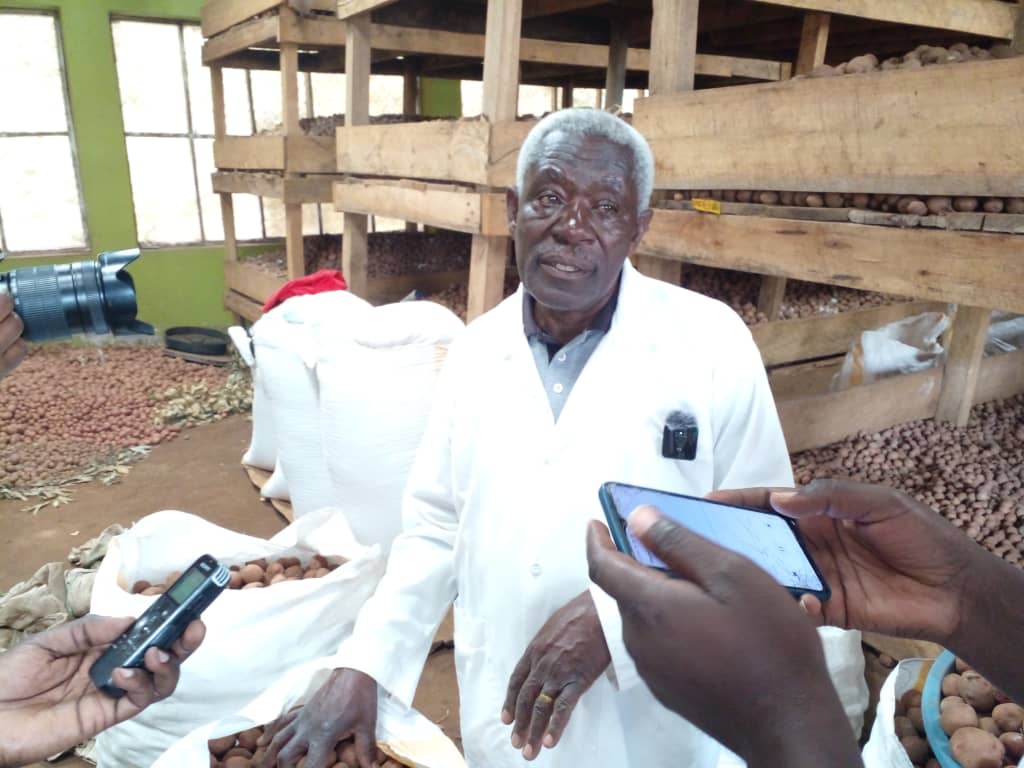
Looking ahead, Byarugaba sees even bigger opportunities. He hopes to expand production to reach wider markets across Uganda and eventually the East African region. He is also considering diversification into value addition, ensuring farmers not only access clean seed but also better markets for their produce.
Reflecting on the journey, his gratitude remains clear. “We want to extend our appreciation towards IFDC. They have done good and wonders, and they continue to support us. Even now, you can still see how the project is succeeding.”
From a farmer struggling with home-saved seed to the proprietor of a thriving enterprise employing dozens and supplying countless farmers, Charles K. Byarugaba has shown what vision, persistence, and partnerships can achieve. “With God’s grace,” he says simply, “and with the right support, small farmers can become big players in agriculture.”
To the government he cautions that some seed policies are unfair and affecting them negatively,including high regulatory burdens and competition from counterfeit products while struggling with ensuring quality and controlling costs.