




In a judgment that has sent ripples through Kenyan newsrooms, the High Court has ordered Nation Media Group to pay Sh6.5 million for defamation in a case involving an article that never explicitly named its subjects.
The ruling, which scrutinised the widespread journalistic reliance on unnamed sources and veiled references, is being regarded as a precedent with far-reaching implications for newsroom practice.
Justice Janet Mulwa found that a 2021 Sunday Nation article, published under the headline “Lawmaker pushes wife’s hiring as judge,” was unmistakably defamatory to Senator Erick Okong’o Mogeni and his wife, Lady Justice Jacqueline Mogeni.
The court ruled that a publication might still be held liable for defamation when it relies on indirect descriptions that, while avoiding names, are so specific that they identify the complainants to a knowledgeable audience.
Industry insiders argue that the financial sting may have less to do with the article than with the Nation’s legal missteps. One critic described the defence as a “reckless disregard to the client’s interests,” arguing that a simple apology would have cost far less than a bruising court battle fought on shaky ground.
The offending article, published on November 7, 2021, alleged that an unnamed lawyer and member of Parliament’s Justice and Legal Affairs Committee (JLAC) had used his “position and connections” to secure his wife’s appointment as a judge. It claimed the wife, who had “never practiced law,” received interview questions in advance and was “coached by the husband and other lawyers.”
The piece ended with a warning that the “end game” was to create “a cabal of friendly judges in Nairobi.”

The Nation Media Group’s defence leaned heavily on the argument that the story did not name the Mogenis. Its lawyers also cited public interest, arguing that the media has a constitutional mandate to expose potential abuse of office. However,Justice Mulwa’s 36-page ruling delivered on 25th September dismantled this position, citing the doctrine of “true innuendo,” where words that appear general or anonymous can still be defamatory if a specific audience can identify the individuals being referred to.
For the politically and legally informed, the ruling noted, the subjects were obvious. At the time, Senator Mogeni was the only lawyer serving on JLAC in the Senate whose wife had recently been appointed a judge.
Justice Mogeni was, likewise, the only newly appointed judge married to a sitting senator. “It is difficult not to see the imputation the article portrayed with respect to the plaintiffs’ person and character,” Justice Mulwa stated.
The article’s language, phrases such as “used his position and connections” and “cabal of friendly judges”, imputed dishonesty, corruption and abuse of power.
The court further criticised the Nation Media Group’s failure to seek comment from the Mogenis before publication, describing it as a serious professional lapse. The court found the defendants’ actions “clearly reckless and malicious,” especially given the “falsity of the publication” and the failure to verify the facts or seek comment from the plaintiffs prior to publication.
This was not robust journalism in the public interest; it was, in the eyes of the court, a character assassination built on sand, the court ruled.
The damages awarded reflected both the seriousness of the claims and the evidentiary standards of defamation law. Senator Mogeni was awarded Sh5 million in general damages, consistent with precedents for public officials.
Justice Mogeni, however, was awarded only Sh500,000, with the court stressing the requirement of third-party testimony to prove reputational harm. Witnesses had testified about the Senator’s reputational damage but not the Judge’s. The court also imposed Sh1 million in exemplary damages, citing reckless publication.
The court, however, refused to order the Nation Media Group to publish an apology, adopting the recent appellate reasoning in Rutto v Langat and another that “damage to one’s reputation may not fully be cured by counter-publication or apology; the harmful statement often lingers on in people’s minds.”

The judgment has been described by legal analysts and media experts as a reminder that public interest is not an absolute defence for defamatory publications. Kenyan jurisprudence has long recognised that media freedom under Article 33 of the Constitution must be balanced against the right to dignity and reputation.
Legal expert William Oketch says the case highlights the need for serious diligence. “The journalistic principle of protecting sources is still sacrosanct,” he explains, “but editors must go out of their way to verify the accuracy and authenticity of such stories, especially gossip and rumours.”
He adds that the law requires balance, pointing to the doctrine of Audi Alteram Partem – no one should be condemned unheard. The failure to seek the Mogenis’ comment by the newspaper, he says, was “a fundamental error of judgment.” In his view, sensitive stories must now “pass through several layers of approval prior to publication to ensure unverified rumours or outright lies are omitted.”
The judgment has reinforced long-standing standards set out in the Code of Conduct for the Practice of Journalism. Verification, corroboration and the right of reply, previously regarded mainly as ethical duties, are now affirmed as legal requirements.
Media practitioners observe that the ruling does not prohibit the use of anonymous sources but raises the threshold for their responsible application. Editors and media trainers note that while investigative reporting will remain central to journalism, it must now be underpinned by demonstrable verification, fairness and accountability.
Professor George Nyabuga, Associate Dean at the Aga Khan University’s Graduate School of Media and Communications, offers a complementary perspective. “I don’t think innuendo has posed a challenge to investigative journalism,” he observes. “Innuendo has always been there, and media houses and their legal counsel should understand what that means when it comes to defamation.”
What matters, he says, is thorough verification and fairness. “The right of reply has always been key to good journalism. We always demand some response from those mentioned adversely. This is a cardinal rule in good and ethical journalism.”
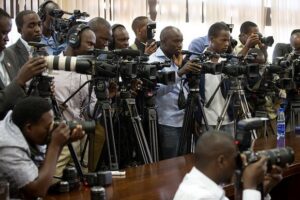
Industry stakeholders say the ruling has drawn attention to a longstanding reliance on anonymous sources in Kenyan journalism, particularly in political and governance reporting.
Veiled references have often been used to report on alleged corruption, nepotism and state capture while shielding sources from reprisals. However, the judgment underlines that such practices carry legal risks if the description provided enables identification.
Editors and reporters have also acknowledged that the ruling compels a reassessment of newsroom routines. Newsroom managers’ point out that ruling has highlighted the urgent need for stronger editorial oversight, with stories based on anonymous sources expected to undergo more rigorous internal checks before publication.
The judgment has also been seen as part of a wider trend in which courts are subjecting media practices to closer legal scrutiny. Comparable cases in the United Kingdom and South Africa have confirmed that anonymity does not shield publishers from liability and that even indirect references can be defamatory if the person concerned can reasonably be identified.
Kenyan media practitioners note that the High Court’s decision is consistent with this international approach and provides clearer guidance for handling future disputes.
Source: Journalism Hub EA