



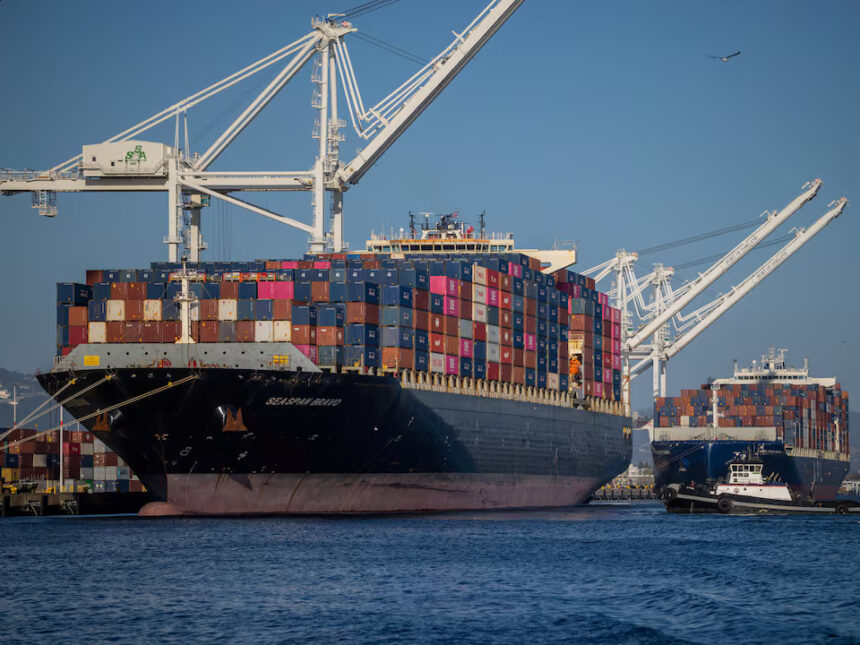
The East African Community recorded a strong improvement in its external trade performance in the third quarter of 2025, underpinned by robust export growth that helped narrow the region’s trade deficit, according to the latest EAC Quarterly Statistics Bulletin.
Total international merchandise trade rose by 21.9 percent to USD 40.3 billion during the quarter, driven largely by a sharp expansion in exports, which increased by 32.3 percent to USD 19.6 billion.
Imports grew at a slower pace of 13.3 percent to USD 20.6 billion, resulting in a trade deficit of USD 1.0 billion, significantly lower than the USD 3.4 billion recorded in the same period of 2024.
Trade within Africa remained an important anchor for the region, accounting for 32.2 percent of total trade valued at USD 10.1 billion. Intra-EAC trade expanded by 15.0 percent to USD 4.8 billion, reflecting ongoing gains from regional integration efforts and trade facilitation measures.
Stable trade flows with neighbouring blocs such as COMESA and SADC further highlighted the EAC’s deepening economic linkages across the continent.
The bulletin shows that the region’s export basket continued to be dominated by base metals, precious stones and metals, mineral fuels and key agricultural commodities. Major export destinations included China, the United Arab Emirates, South Africa, Hong Kong and Singapore, which together absorbed 58 percent of total exports.
On the import side, petroleum products, machinery, vehicles and cereals remained critical to supporting infrastructure development, industrial expansion and food security across Partner States.
Despite the positive trade performance, inflationary pressures intensified across the region. Annual headline inflation rose to 28.3 percent in September 2025 from 24.2 percent a month earlier, more than double the 14.8 percent recorded in September 2024.
The surge was largely driven by exceptionally high inflation in South Sudan and Burundi. Core inflation eased slightly on a monthly basis but remained elevated on an annual average.
Monetary conditions were broadly stable, with most Partner States recording declines in 91-day Treasury bill rates, except Rwanda. Credit conditions supported economic activity, as private sector credit grew by 13.2 percent and broad money supply expanded by 15.0 percent.
A 21.9 percent increase in net foreign assets pointed to an improvement in the region’s external position, reinforcing the EAC’s resilience amid global economic uncertainties.