



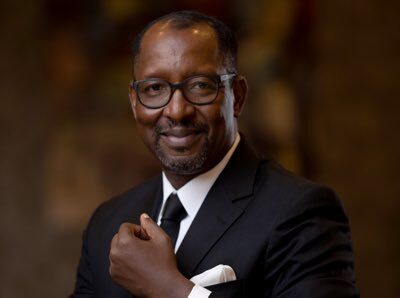
Richard Byarugaba’s appointment as Senior Presidential Advisor to the exports and industry advisory secretariat signals a decisive shift toward financial engineering and institutional discipline at the heart of Uganda’s export strategy.
At a time when government is moving from opening markets to building scalable export systems, his selection suggests that capital mobilisation and structured financing are now central to the country’s industrial ambitions,according to the export sector analysts.
President Yoweri Museveni named Byarugaba alongside Moses Sabiti to reinforce the Presidential Advisory Committee on Exports and Industrial Development (PACEID), chaired by Odrek Rwabwogo.
The committee is transitioning into what it describes as PACEID 2.0 — a more data-driven and investment-focused phase aimed at addressing structural bottlenecks in export growth,according to Odrek Rwabwogo.
Byarugaba’s appointment means the export agenda is no longer being treated solely as a trade or diplomatic issue, but increasingly as a capital allocation challenge.
Uganda’s exporters have long struggled with limited access to long-term financing, weak aggregation systems, and insufficient investment in value addition. Addressing these gaps requires experience in managing large institutional funds and structuring sustainable financial frameworks.
As former Managing Director of the National Social Security Fund, Byarugaba oversaw significant asset growth, with the fund’s portfolio expanding to over UGX 17 trillion. His tenure strengthened NSSF’s liquidity position and institutional governance, positioning it as one of the most capitalised entities in the country. Earlier, he led Nile Bank before its acquisition by Barclays Bank, gaining experience in corporate finance and banking consolidation.
This background gives him credibility in tackling one of Uganda’s core export constraints: financing scale. If leveraged effectively, his expertise could help design mechanisms that crowd in pension capital, commercial banks and development partners to fund aggregation centres, logistics infrastructure and value-addition investments.
In essence, his appointment is widely seen as a recognition that achieving ambitious export targets will depend less on policy statements and more on disciplined financial execution by sector players.