


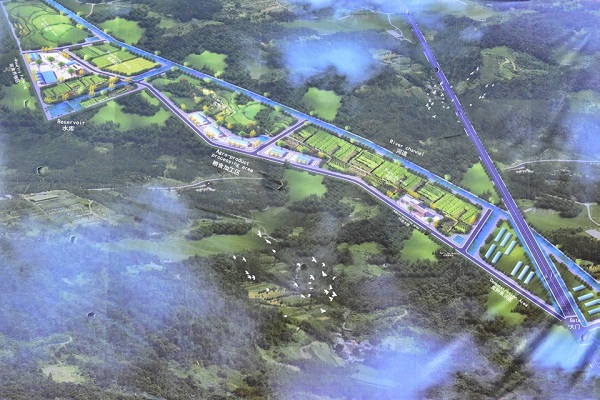
The China‑Uganda Agriculture Cooperation Industrial Park in Luwero District is emerging as a significant investment driver with potential to transform Uganda’s agro‑industrial landscape, complementing existing public and private industrial parks nationwide.
Developed and supported by Chinese investors through Kehong Uganda Industrial Development Ltd., the Luwero park has recorded notable progress in mechanisation, poultry production, chili export expansion and farmer training – efforts that anchor Uganda’s broader economic transformation agenda.
Plans for a proposed USD 300 million expansion include a five‑million‑layer hen integrated production chain designed to strengthen the poultry value chain from breeding to processing and tap into local and export markets.
The expansion could significantly scale output, addressing gaps in Uganda’s poultry industry where demand for processed and quality protein remains high. The park’s focus on mechanised agriculture positions it as a key node for value addition and export development, aligning with the government’s industrialisation priorities.
By comparison, Uganda’s flagship Kampala Industrial and Business Park (Namanve) spans about 2,209 acres and hosts hundreds of industries, with projections to reach over 500 factories and create more than 200,000 jobs once fully developed — making it the largest industrial hub in the country.
Other parks such as Luzira, Bweyogerere, Soroti, Mbale and Kasese have smaller footprints but contribute collectively to over 122,000 direct and indirect jobs and host more than 620 companies allocated land nationwide. Public and private parks like Liao Shen Kapeeka, MMP Buikwe, and Tian Tang Mukono demonstrate diversified contributions to employment and production.
China’s involvement in Uganda’s industrial park development reflects deepening bilateral ties that extend beyond infrastructure into industrial cooperation — building capacity, transferring skills, and unlocking export potential.
Chinese enterprises already operate multiple processing and manufacturing facilities within Ugandan parks, contributing to technology transfer and enhanced productivity.
Despite progress, challenges remain: reliable electricity, infrastructure improvements, tax incentives and supply chain logistics are critical enablers for scaling operations and attracting further investment.
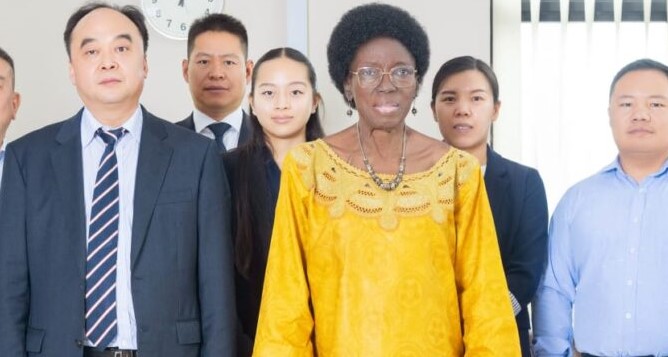
During a recent meeting with Rebecca Alitwala Kadaga, Uganda’s First Deputy Prime Minister and Minister for East African Community Affairs, Mr. Luo Heng emphasised these needs and invited government support for the park’s next phase.
Kadaga commended the project’s contributions to agricultural modernisation and job creation, pledging to engage relevant authorities to support its continued growth.