



By Amina Toure
Economics was never designed to measure Africa’s progress; it was designed to measure what could be extracted from it.
Africa’s development challenge today is not only rooted in domestic constraints. It is also embedded in the very tools used to define and quantify progress. The continent continues to be assessed through frameworks that were never intended to capture its internal dynamism or long-term structural transformation.
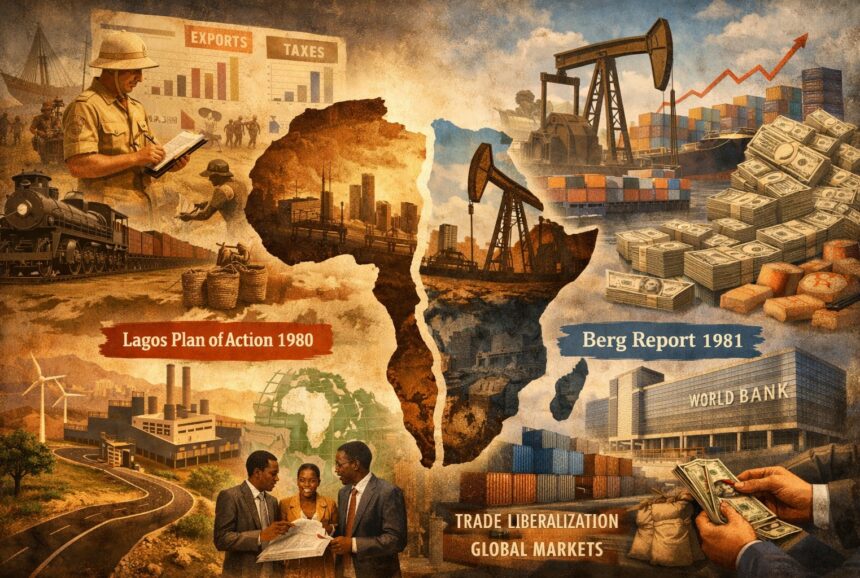
Economics did not arrive in Africa as a neutral science of growth. It arrived as an administrative technology of empire. Colonial governments constructed statistical systems to answer practical questions: How much could be taxed? How much could be exported? How efficiently could resources be transported to the metropolis? Data collection was precise where it served extraction—export volumes, railway freight, mine output, and taxable labor were meticulously recorded.
What was not measured with equal rigor were the foundations of domestic prosperity: local production systems, internal trade networks, technological learning, or industrial linkages.
An economy became “productive” when its resources moved outward. What sustained African societies internally rarely entered the ledger.
Independence did not dismantle this statistical architecture. Much of it endured. Development knowledge continued to categorize African economies primarily through commodity output and export performance—metrics aligned closely with extractive trade.
Even today, reliable long-term data on export earnings are often easier to access than consistent measures of industrial capacity or domestic value chains.
The divergence in development thinking became stark in the early postcolonial period. In 1980, African governments adopted the Lagos Plan of Action, defining development as structural transformation.
The plan emphasized industrialization, regional integration, technological capability, and reduced dependence on primary commodities. Its diagnosis was historical: African economies had been organized around external extraction rather than internal integration.
Reversing that structure required infrastructure connecting African markets to one another—not merely to ports—and industrial policies building domestic linkages instead of export enclaves.
A year later, the Berg Report advanced a contrasting view. Africa’s stagnation was attributed largely to policy distortions. The prescription prioritized trade liberalization, export competitiveness, and market incentives. Industrialization became secondary to global market integration.
This intellectual shift reshaped what counted as progress. For more than a century, the most consistently measured variables have tracked the outward flow of resources and capital.
Development statistics still reflect that architecture—one designed less to understand African economies than to make them legible and useful to external markets.
If economics was built to measure extraction, then measuring Africa differently may be inseparable from developing it differently.
The Writer is a Researcher in African Studies and a Master of Philosophy Student at the University of Cambridge.