



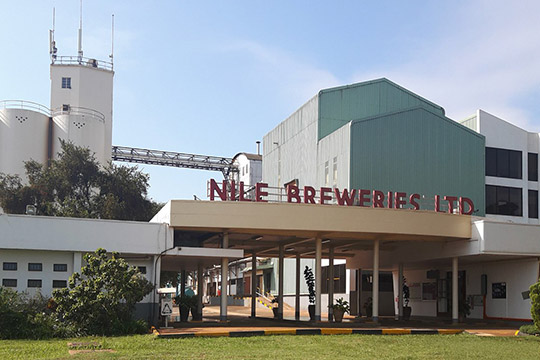
Nile Breweries Limited (NBL), one of the country’s largest beer producers, has been ordered to pay Uganda Revenue Authority (URA) Shs 18.5 billion following a protracted legal battle over allegedly misclassified sales.
The ruling, delivered by Justice Susan Abinyo, dismissed NBL’s bid to stop the tax body from collecting the amount while its appeal proceeds.
The dispute stems from transactions between January and November 2022, during which URA contended that NBL had wrongly declared certain beer sales as exports rather than domestic transactions.
Nile Breweries, which exports to markets such as South Sudan and the Democratic Republic of Congo, had appointed Kabaco Uganda Limited and Ituri Investments Limited as its export agents.
URA later argued that some sales through these agents were actually local, resulting in a tax liability of Shs 18.5 billion—comprising Shs 8 billion in Value Added Tax (VAT) and Shs 10.46 billion in Local Excise Duty.
NBL denied wrongdoing, insisting that the agents merely facilitated exports and that the sales were not domestic. After URA rejected its objection, the dispute escalated to the Tax Appeals Tribunal (TAT), where NBL sought to overturn the assessment.
The tribunal ruled in URA’s favor in November 2025, prompting the brewer to appeal to the High Court and simultaneously request a stay on tax collection.
Through its legal team, led by Henry Agaba of Meritas Advocates, NBL warned that URA could issue agency notices to banks, effectively seizing funds before the appeal was heard.
The company also noted it had paid 30 percent of the disputed taxes—about Shs 5.55 billion—during the objection process, arguing this should be sufficient security while the appeal was pending.
URA, represented by former Education Minister Amanya Mushega, countered that NBL had not demonstrated the risk of substantial financial loss, and that the partial payment was a legal requirement rather than security for a court order.
Justice Abinyo agreed, noting that a stay of execution requires proof of potential substantial loss, a real threat of enforcement, and provision of security for the decree.
NBL failed to meet two key conditions: it did not convincingly show it would suffer substantial loss if URA collected the taxes, nor could its prior payment be treated as security.
“This court… finds that Nile Breweries has not met all the conditions for the orders sought in this application. Accordingly, this application is dismissed with costs,” Justice Abinyo ruled.
The decision clears the way for URA to collect Shs 18.5 billion from Nile Breweries, reinforcing the authority’s power to enforce tax demands even as appeals are pending.
The outcome highlights the legal risks companies face when export transactions are misclassified and highlights the careful scrutiny tax authorities apply in balancing compliance enforcement with procedural fairness.
NBL now faces the immediate challenge of settling the tax or managing the impact on cash flow while its appeal continues, setting a precedent for how commercial disputes over export declarations may be handled in Uganda.