



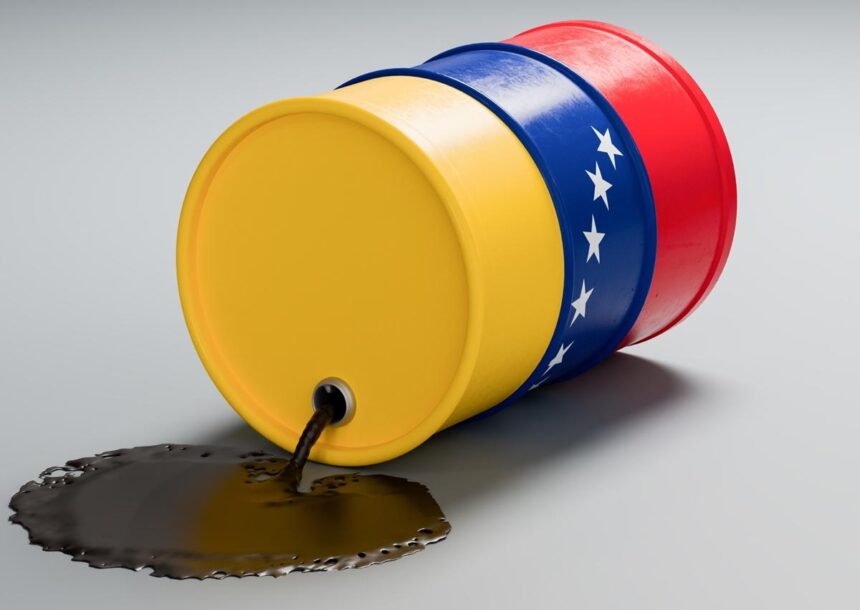
A surge in global oil prices triggered by tensions between the United States and Iran is reshaping energy markets, but analysts say Venezuela’s long-awaited comeback may not fully align with the current geopolitical window.
Disruptions in the Strait of Hormuz — a key artery for roughly 20% of global oil trade — have tightened supply and pushed crude prices sharply higher. Prices spiked by about 60% in March to $120 per barrel before easing to between $92 and $95 in April, as buyers across Europe and Asia scrambled for alternative supplies.
In theory, the supply shock presents a major opportunity for Venezuela, which holds the world’s largest proven oil reserves at over 300 billion barrels. However, years of U.S. sanctions and underinvestment have weakened the country’s production capacity, limiting its ability to respond quickly to short-term market demand.
Output has fallen significantly from a peak of three million barrels per day in 1998 to around 900,000 barrels per day in 2025. While recent policy shifts in Washington — including expanded licenses allowing foreign firms to operate in Venezuela — have signaled a thaw, production recovery remains gradual.
Recent data shows some momentum. Venezuelan crude exports surpassed one million barrels per day in March 2026 for the first time in six months, driven by increased shipments to the United States, India and Caribbean markets. U.S. imports rose by 32% in February, with new supply contracts signed in March.
Energy firms are also repositioning. Chevron has expanded its footprint in Venezuela’s Orinoco Belt through a deal with state oil company PDVSA, signaling renewed investor interest.
Still, structural constraints persist. Industry leaders caution that while geopolitical shocks can create temporary opportunities, they do not resolve underlying challenges such as infrastructure decay, policy uncertainty and financing gaps.
“Geopolitical disruption can create opportunity, but it doesn’t fix fundamentals,” said NJ Ayuk, Executive Chairman of the African Energy Chamber.
The issue, analysts say, is one of timing. The current supply crunch may be short-lived, while Venezuela’s recovery is expected to take years. If Middle East tensions ease before production significantly ramps up, the window for a meaningful market shift could close.
The debate is set to feature prominently at African Energy Week 2026, where industry leaders will examine whether Venezuela’s resurgence represents a lasting shift in global oil flows or another temporary upswing driven by external shocks.
For now, Venezuela appears to be benefiting from higher prices — but whether it can turn this moment into a sustained comeback remains uncertain.