



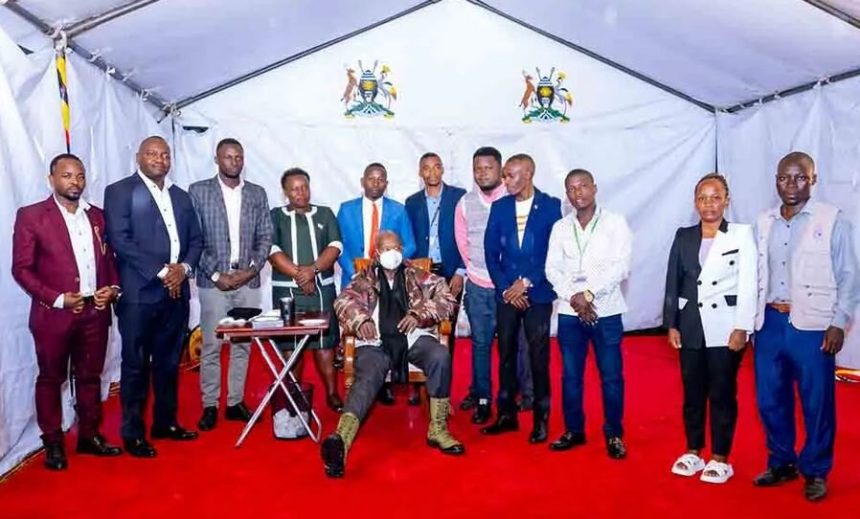
Journalists from NBS TV, NTV, and Daily Monitor were on Wednesday denied access to cover President Yoweri Museveni’s commissioning of Bunyoro University, a move that has sparked fresh concerns over press freedom in Uganda.
The affected journalists—Alex Ashaba (Daily Monitor), Joseph Kasumba (NTV), and Allan Mwesigwa (NBS TV)—were reportedly stopped by a soldier from the Special Forces Command (SFC). The officer allegedly informed them that there were “orders from above” preventing them from attending the event.
“They told them that you know what is happening and asked us to turn around and go away,” a source in Bunyoro told this publication.
In contrast, journalists from government-affiliated media houses, including New Vision, Bukedde TV, UBC, Tayari TV, and select local radio stations, were granted access to cover the high-profile function.
This development follows recent reports of violence against journalists covering the Kawempe North by-election, where members of the press from NBS TV, NTV, and Daily Monitor were allegedly assaulted by security operatives. It remains unclear whether the Bunyoro incident is linked to the earlier altercations.
When contacted for comment, Maj Jimmy Omara, the spokesperson for the SFC, stated that he was unaware of the incident and advised reaching out to the president’s press team for further clarification.
The barring of independent media from covering government functions raises concerns about transparency and press freedom in Uganda. Media rights organizations and civil society groups have previously condemned similar restrictions, urging the government to uphold the principles of free and fair journalism.The Uganda Journalists Association (UJA) has since condemned the incident, calling for an immediate explanation from authorities. “The press plays a crucial role in informing the public, and such restrictions undermine the democratic principles that Uganda stands for,” a UJA representative stated.
Meanwhile, opposition figures and human rights activists have also voiced concerns, arguing that selective media access undermines fair reporting and accountability.